EventThe Twenties and the Great Depression
The New Deal
Franklin D. Roosevelt’s programs of relief, recovery, and reform, 1933–1939
March 4, 1933 – 1938Washington, D.C., and nationwide
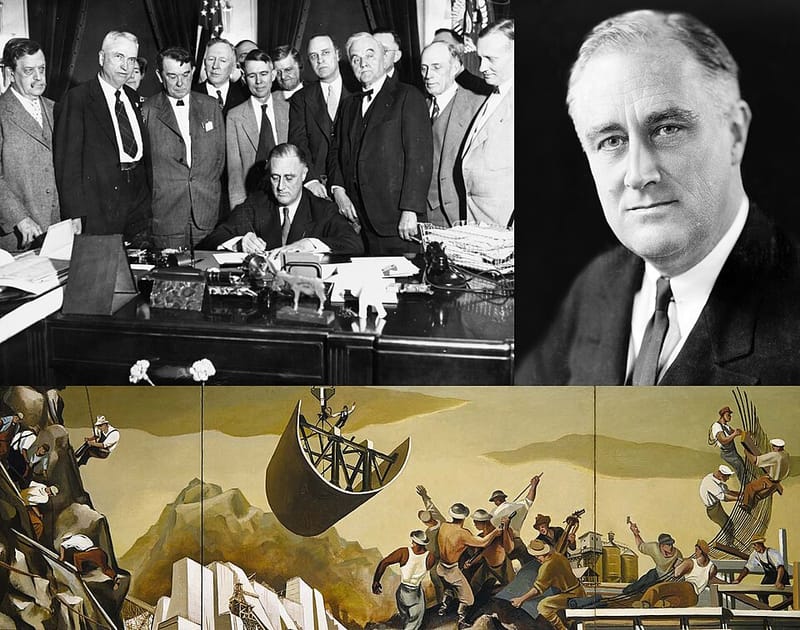
The New Deal was President Franklin D. Roosevelt’s response to the Great Depression: a burst of federal programs to stabilize banks, put the unemployed to work, raise farm prices, protect workers, and create a safety net for the elderly and jobless. It did not end the Depression, and it left racial and gender inequalities largely in place. But it transformed the role of the federal government and built a Democratic coalition that dominated politics for a generation.
Key facts
- Date
- March 4, 1933 – 1938
- Location
- Washington, D.C., and nationwide
- Dating note
- From Roosevelt’s inauguration to the Fair Labor Standards Act of 1938, which many historians treat as the last major New Deal measure.
- Phrase
- From FDR’s 1932 acceptance speech: “I pledge you, I pledge myself, to a new deal for the American people”
- First Hundred Days (1933)
- Emergency Banking Act, CCC, FERA, TVA, AAA, National Industrial Recovery Act, Glass-Steagall Act (FDIC)
- Second New Deal (1935)
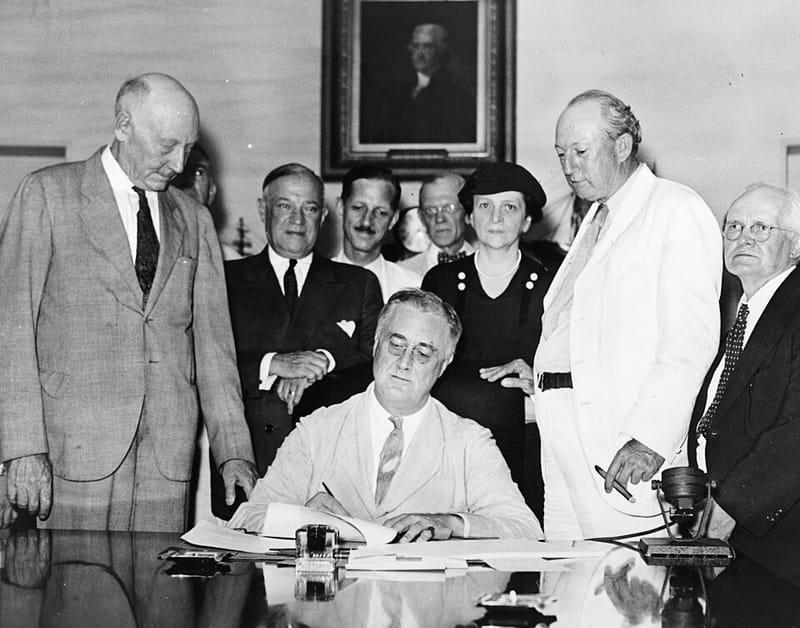
- Works Progress Administration, Wagner Act, Social Security Act
- Last major measure
- Fair Labor Standards Act (1938): the modern minimum wage
- Setbacks
- Supreme Court rulings, the failed court-packing plan (1937), the 1937 recession
Why it matters
The New Deal created the modern American state and reshaped the relationship between citizens and the federal government.
Historical background
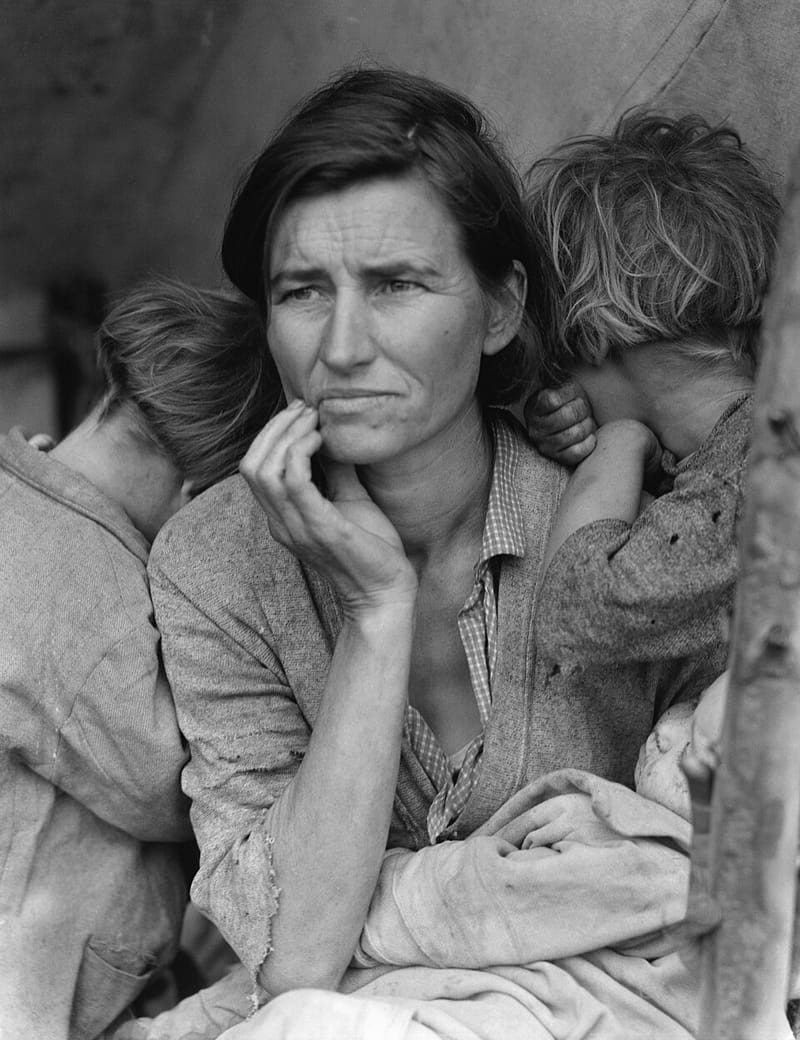
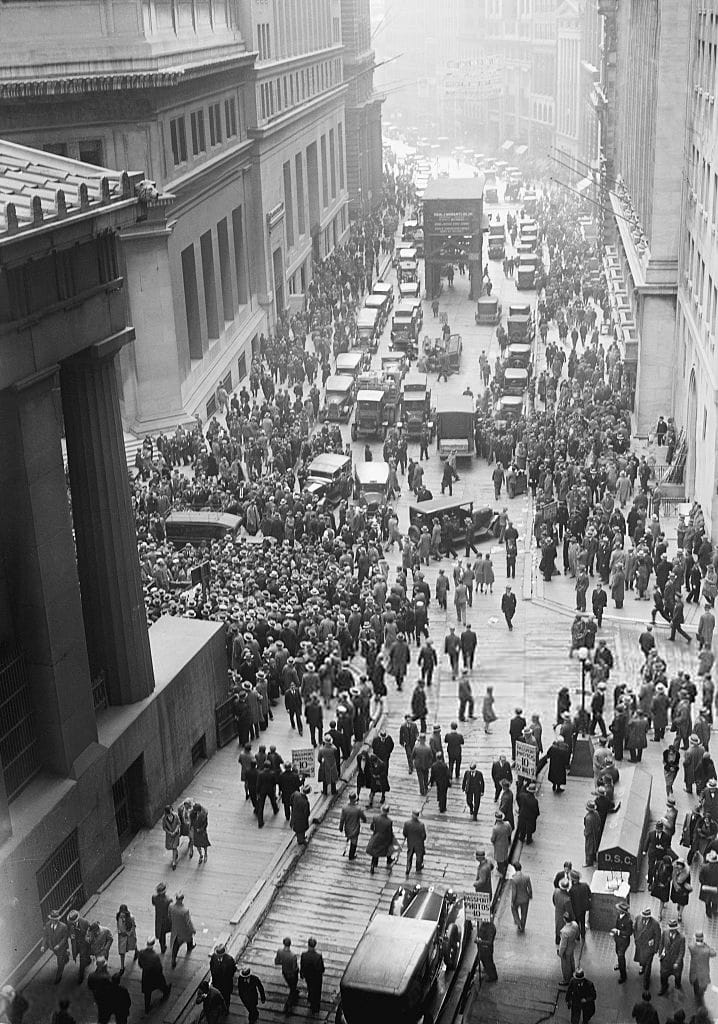
By early 1933 unemployment had peaked at about 25 percent, two of every five banks open in 1929 had closed, and private charities were overwhelmed. Roosevelt had promised bold experimentation. In his inaugural address on March 4, 1933, he declared that “the only thing we have to fear is fear itself.”
Causes and contributing factors
Roosevelt drew on Progressive traditions and on his experience as governor of New York, where his relief agency had provided work and aid to one in ten families. He assembled a “Brain Trust” of academic advisers and recruited reformers such as Frances Perkins, who became the first woman cabinet secretary.
What happened
The First Hundred Days (1933). Roosevelt declared a national bank holiday and pushed the Emergency Banking Act through Congress. On March 12 he gave the first of his radio “fireside chats,” and when banks reopened, deposits outpaced withdrawals. The Glass-Steagall Act created federal deposit insurance (the FDIC) and separated commercial from investment banking. The Civilian Conservation Corps put young men to work on conservation projects; the Federal Emergency Relief Administration funded state relief; the Tennessee Valley Authority built dams to control floods and generate cheap electricity; the Agricultural Adjustment Administration paid farmers to limit production and raise prices; and the National Industrial Recovery Act created the National Recovery Administration, which supervised more than 500 industry codes of fair competition.
The Second New Deal (1935–1936). After the Supreme Court struck down the NRA’s code system in Schechter Poultry Corp. v. United States (1935), and facing critics like Senator Huey Long, who demanded “Share the Wealth,” Roosevelt pushed further. The Works Progress Administration employed millions building roads, bridges, schools, and post offices — and painting murals and recording oral histories. The Wagner Act protected workers’ right to organize unions, and the Social Security Act created old-age pensions and unemployment insurance.
The end of the New Deal (1937–1939). After a landslide reelection in 1936, Roosevelt proposed adding a justice to the Supreme Court for each sitting justice over seventy. The “court-packing” plan failed, though the Court thereafter upheld New Deal laws. Spending cuts triggered a sharp recession in 1937, and a conservative coalition of Southern Democrats and Republicans gained strength in the 1938 elections. The Fair Labor Standards Act of 1938, creating the minimum wage, is often considered the last major New Deal law.
Immediate consequences
The New Deal brought relief to millions and stabilized banking, but it did not end the Depression: unemployment was still in double digits in 1940. Its benefits were unequally shared. To keep the support of Southern Democrats, Roosevelt refused to back anti-lynching legislation, and many programs excluded farm and domestic workers — the jobs held by most Black Southerners. AAA payments led landowners to push Black tenants and sharecroppers off the land. Many programs assumed that men were breadwinners, steering women into lesser, means-tested relief.
Long-term significance
After the New Deal, Americans came to see the federal government as an ally in finding work, earning a fair wage, and organizing a union. Voter turnout jumped in 1932 and 1936, and the newly mobilized voters, together with the New Deal coalition of liberals, urban workers, farmers, and white Southerners, kept Democrats dominant into the 1960s. Programs such as Social Security, deposit insurance, the minimum wage, and federal protection for unions remain part of American life, and the New Deal’s battle lines still shape debates about the role of government.
Study this entry
Check your understanding
Try answering in your own words, then open the answer.
1.What led to the New Deal?Show answerHide
Roosevelt drew on Progressive traditions and on his experience as governor of New York, where his relief agency had provided work and aid to one in ten families. He assembled a “Brain Trust” of academic advisers and recruited reformers such as Frances Perkins, who became the first woman cabinet secretary.From “Causes and contributing factors” above.
2.What happened?Show answerHide
The First Hundred Days (1933). Roosevelt declared a national bank holiday and pushed the Emergency Banking Act through Congress. On March 12 he gave the first of his radio “fireside chats,” and when banks reopened, deposits outpaced withdrawals.From “What happened” above.
3.What were the immediate consequences?Show answerHide
The New Deal brought relief to millions and stabilized banking, but it did not end the Depression: unemployment was still in double digits in 1940. Its benefits were unequally shared.From “Immediate consequences” above.
4.Why does it still matter?Show answerHide
After the New Deal, Americans came to see the federal government as an ally in finding work, earning a fair wage, and organizing a union.From “Long-term significance” above.
Turn this entry into 11 flashcards (key facts, dates, and why it matters) and review them in Learn.
Related History
How this connects to the rest of the atlas.
Events

People
Documents
Movements
Institutions

Sources
- 1.The American Yawp, “The Great Depression”
The American Yawp (eds. Joseph Locke and Ben Wright; Stanford University Press) · Scholarly · cited for crash, Depression, New Deal, Dust Bowl
- 2.Franklin D. Roosevelt: Life in Brief
Miller Center, University of Virginia · Scholarly · cited for life, New Deal, war leadership
- 3.Franklin D. Roosevelt: Impact and Legacy
Miller Center, University of Virginia (William E. Leuchtenburg) · Scholarly · cited for assessment of the New Deal and presidency
- 4.National Industrial Recovery Act (1933) — Milestone Documents
National Archives · Primary source · cited for NRA codes, Schechter decision
- 5.Tennessee Valley Authority Act (1933) — Milestone Documents
National Archives · Primary source · cited for TVA
- 6.National Labor Relations Act (1935) — Milestone Documents
National Archives · Primary source · cited for Wagner Act
- 7.Social Security Act (1935) — Milestone Documents
National Archives · Primary source · cited for provisions, passage, payroll financing
- 8.Great Depression Facts
Franklin D. Roosevelt Presidential Library and Museum (National Archives) · Institutional · cited for statistics
Image credits
- New Deal collage, LordHarris at English Wikipedia, 11 January 2008 (original upload date). Via Wikimedia Commons · Public domain · Source
Written for American History Atlas from the sources above. See how entries are researched.
Atlas by Alexander. More on Telegram.