PersonThe Twenties and the Great Depression
Franklin D. Roosevelt
Thirty-second president, architect of the New Deal and wartime leader
1882–1945
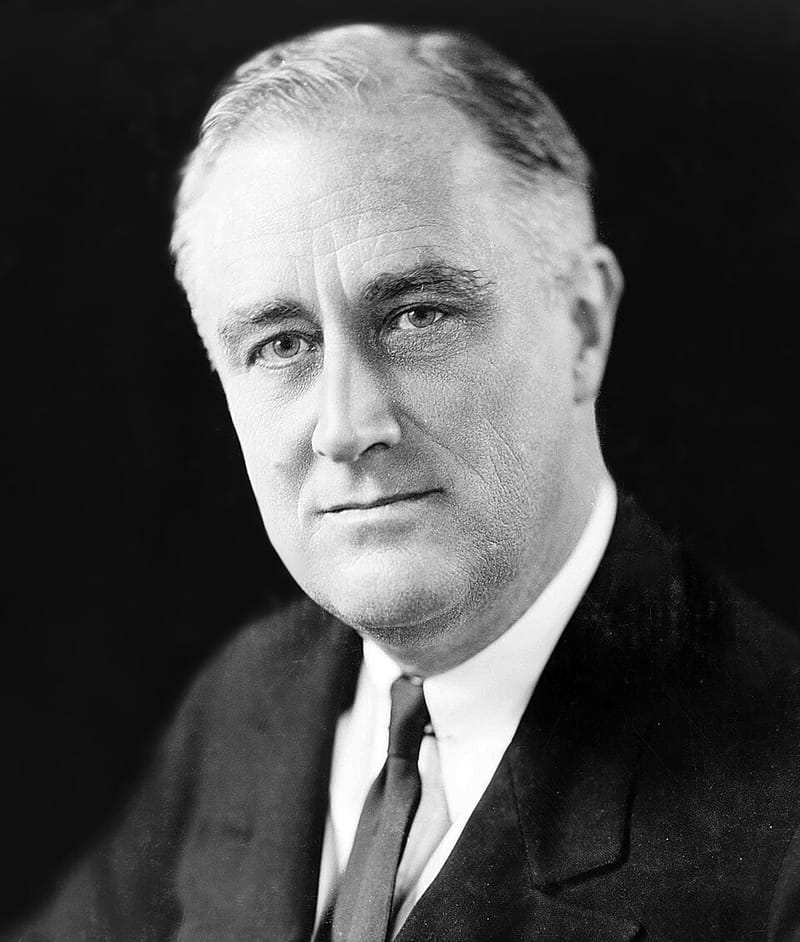
Franklin Delano Roosevelt, the thirty-second president of the United States (1933–1945), led the country through the Great Depression and most of World War II and is the only president to serve more than two terms. Paralyzed by polio at thirty-nine, he fought his way back into politics and, with the New Deal, transformed the federal government’s role in American life — from bank regulation to Social Security. As commander in chief he built the alliance that defeated Germany and Japan and laid the groundwork for the United Nations, but he died in April 1945, on the eve of victory.
Key facts
- Born
- January 30, 1882, Hyde Park, New York
- Died
- April 12, 1945, Warm Springs, Georgia
- Roles
- Assistant Secretary of the Navy (from 1913); Governor of New York (two terms, elected 1928 and 1930); Thirty-second president (1933–1945)
- Presidency
- 1933–1945; Democrat; elected 1932, 1936, 1940, and 1944
- Spouse
- Eleanor Roosevelt, married 1905
- Signature programs
- The New Deal: banking reform, CCC, WPA, TVA, Social Security, the Wagner Act
- War
- Lend-Lease (March 1941); led the nation after Pearl Harbor (December 7, 1941)
- Death
- Stroke at Warm Springs, Georgia, April 12, 1945
Why it matters
Franklin Roosevelt created the modern American state and led the nation through its two greatest crises of the twentieth century.
Early life and context
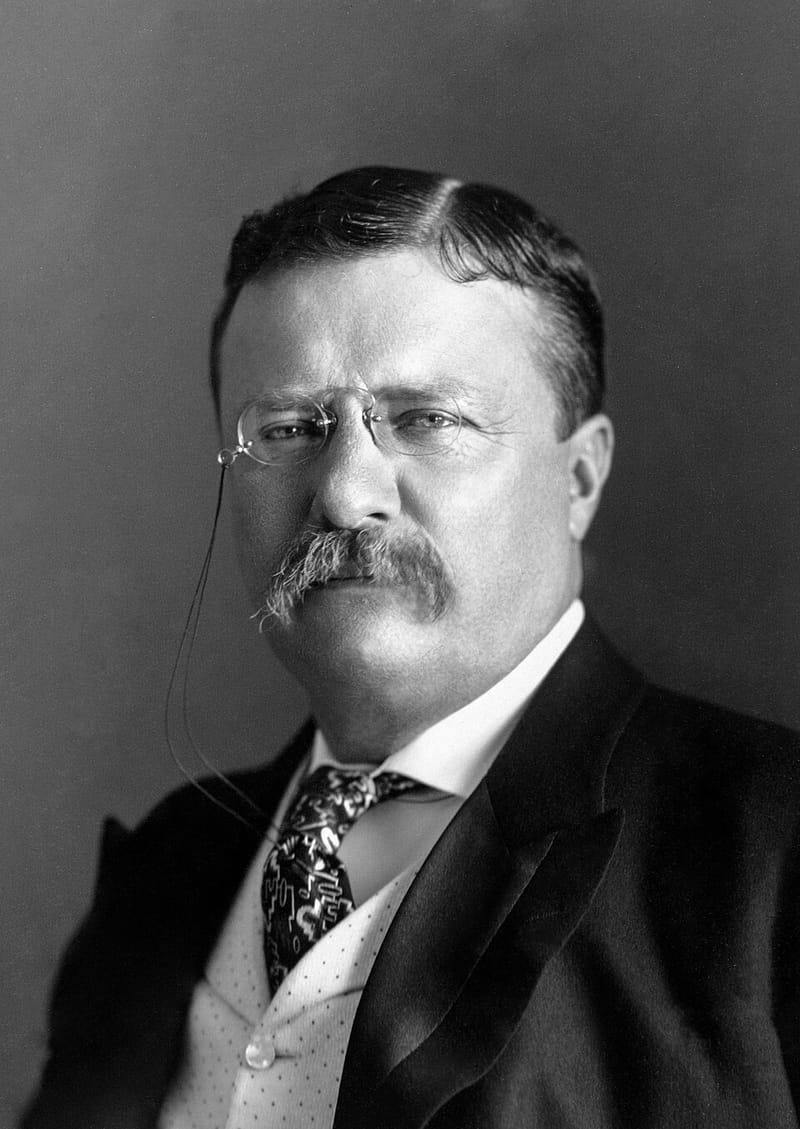
Roosevelt was born on January 30, 1882, at Hyde Park, New York, the only child of a wealthy landowner and his much younger wife, Sara Delano, who devoted almost all her energies to him. Taught at home by tutors until fourteen, he then went to Groton, an elite boarding school where he was never among the popular boys, and to Harvard, where he edited the student newspaper and admired his distant cousin Theodore Roosevelt. In 1905 he married another distant cousin, Eleanor Roosevelt, Theodore’s niece; the president gave the bride away. He disliked practicing law and in 1910 won a state senate seat in a Republican district, campaigning tirelessly against corrupt machine politics.
Under Woodrow Wilson he served as assistant secretary of the Navy (1913–1920) — the same post his cousin had held — championing a “big Navy” and U.S. entry into World War I. In 1918 Eleanor discovered his affair with her social secretary, Lucy Mercer; they stayed married, but their marriage became chiefly a political partnership. In 1920 he was the Democrats’ losing candidate for vice president. The next summer, after a swim at Campobello Island, he was struck by polio and never regained the use of his legs. Through years of painful rehabilitation, aided by Eleanor and his adviser Louis Howe, he learned to “walk” short distances with braces by swinging his hips — and founded a center at Warm Springs, Georgia, for other polio patients. “I never heard him say he was afraid of anything,” Eleanor recalled.
Major actions and achievements
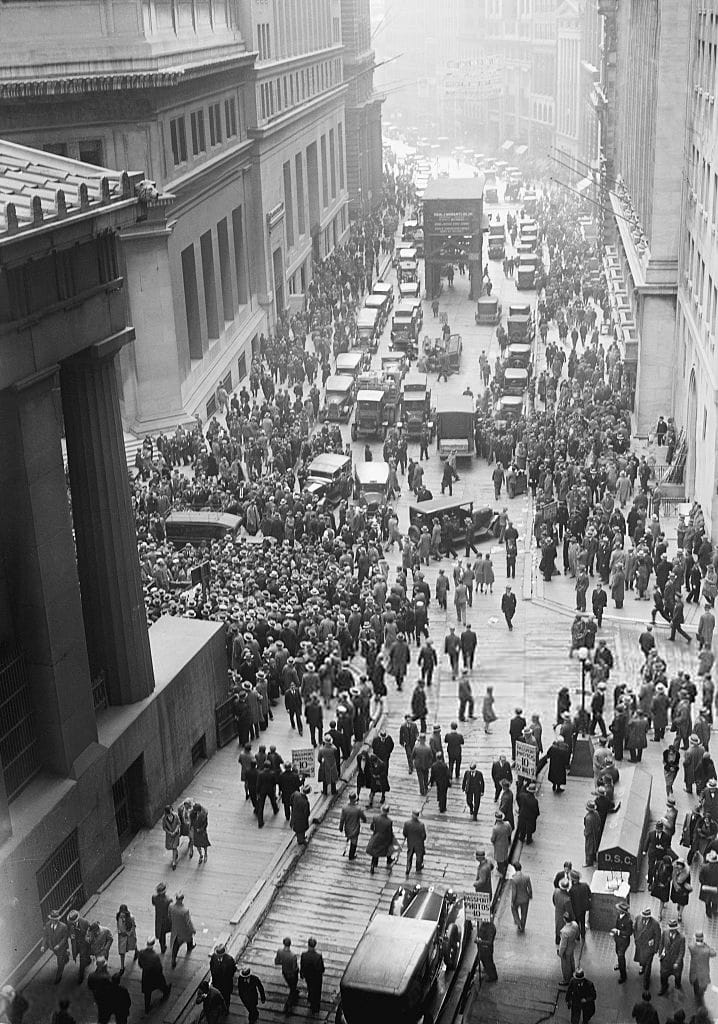
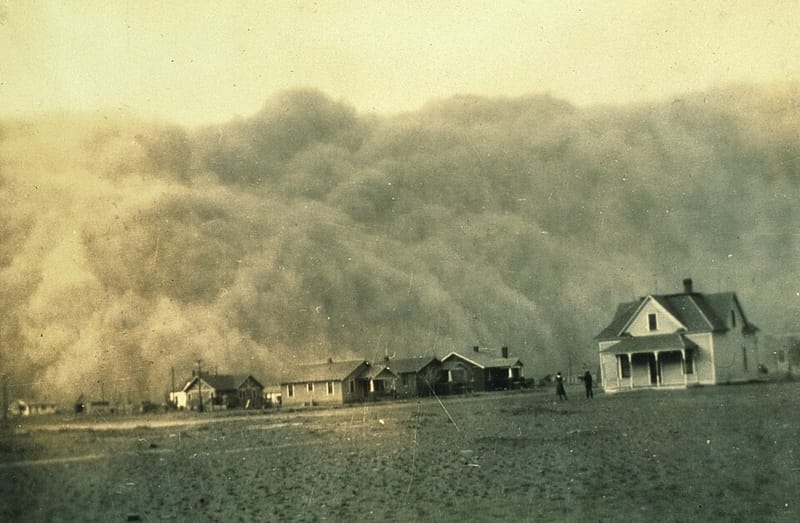
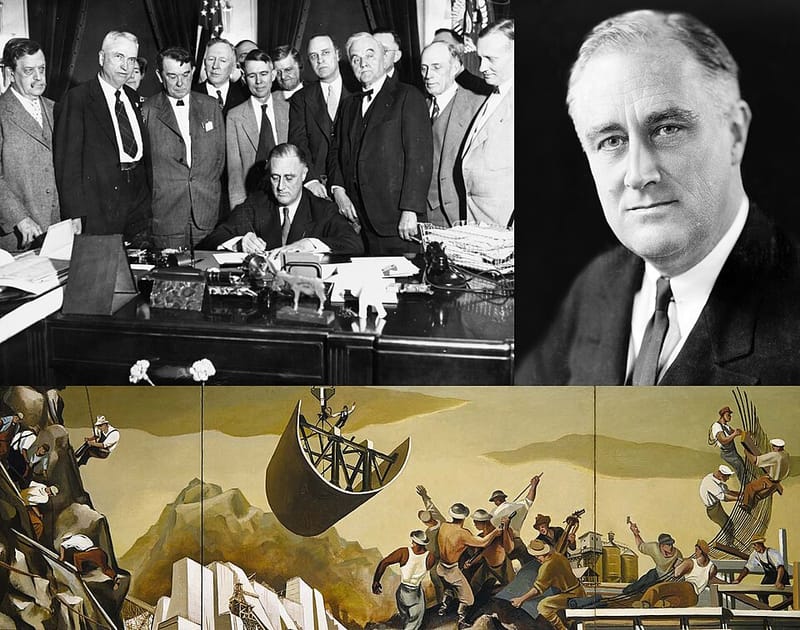
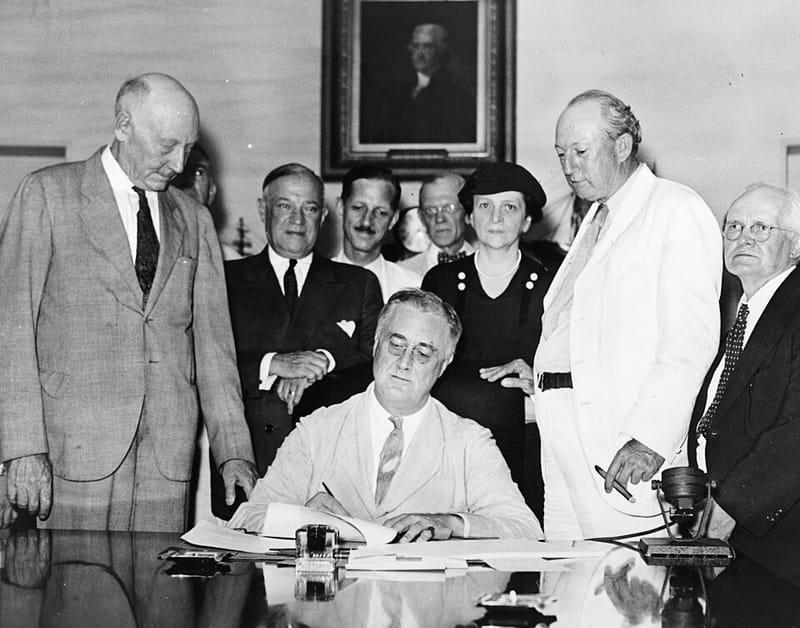
In 1928 Roosevelt was elected governor of New York by half a percentage point, and his bold relief efforts in the Depression made him the Democrats’ natural candidate in 1932. Breaking tradition, he flew to Chicago to accept the nomination in person, promising “a new deal for the American people,” and defeated Herbert Hoover by seven million votes. On March 4, 1933, he told a frightened nation that “the only thing we have to fear is fear itself.” He closed the banks to stop the panic, then worked with Congress through the famous “Hundred Days” to pass a flood of measures — the Civilian Conservation Corps for young men, farm price supports, bank deposit insurance, stock market regulation, and mortgage relief. In 1935 came the Works Progress Administration, which employed laborers, artists, and writers, and the Social Security Act. His radio “fireside chats” spoke to Americans in their living rooms.
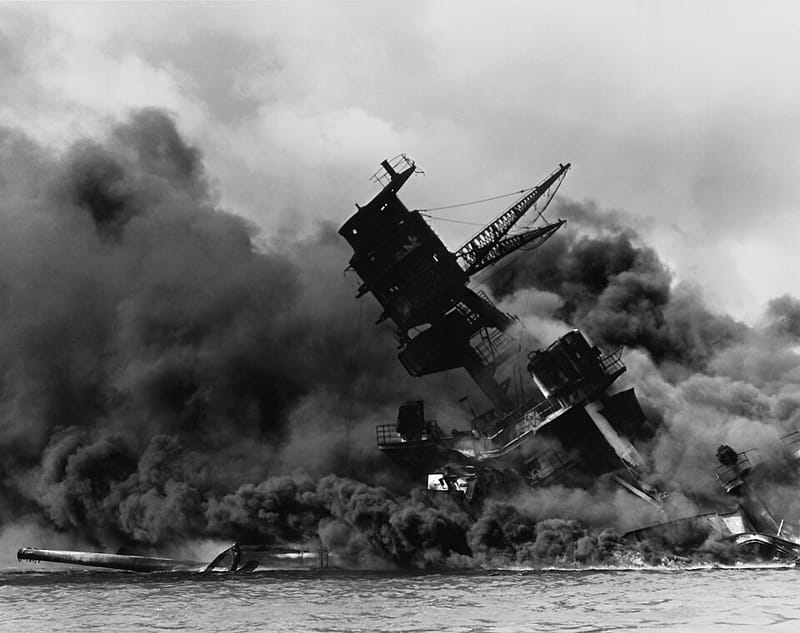
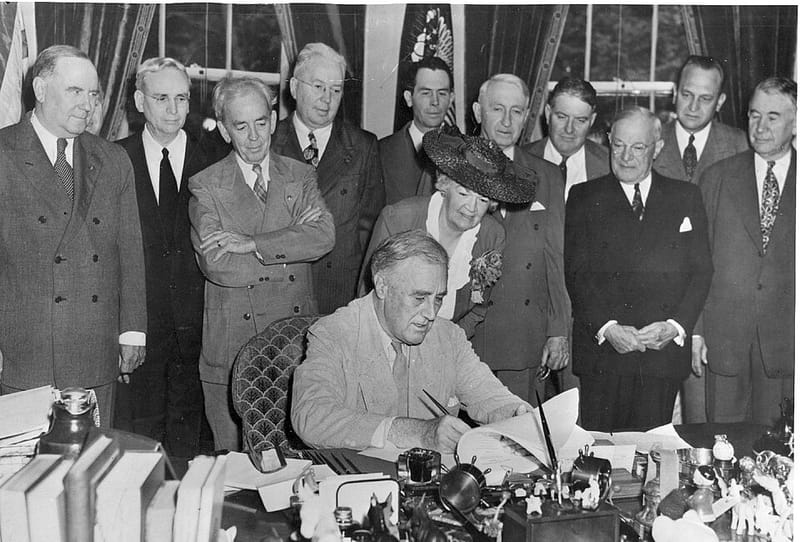
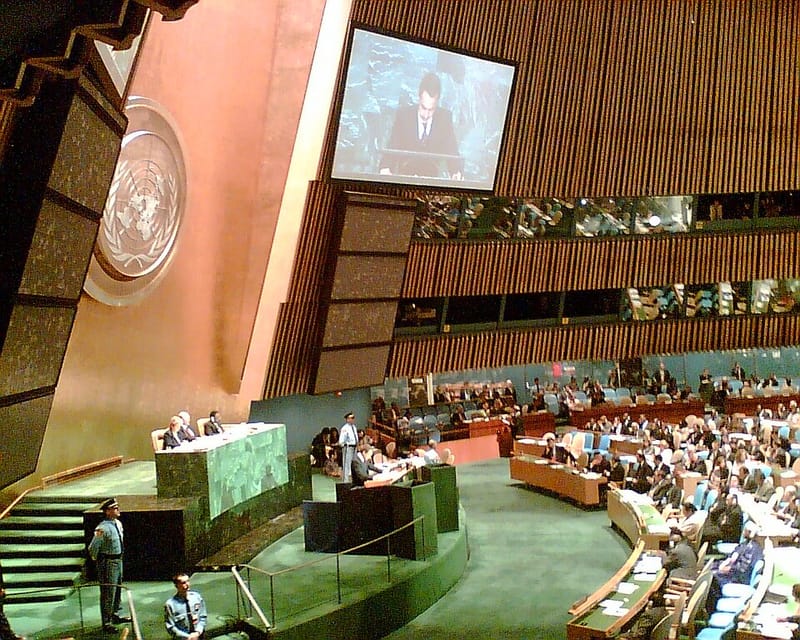
As war spread in Europe, Roosevelt pushed aid to Britain past isolationist opposition: Congress passed a peacetime draft, and the Lend-Lease Act of March 1941 made the country “the arsenal of democracy.” After Japan attacked Pearl Harbor on December 7, 1941, he took an active hand in strategy as commander in chief, gave priority to defeating Germany, and on January 1, 1942, joined the Allies in the Declaration of the United Nations, the seed of the postwar United Nations.
Beliefs and ideas
Roosevelt was a pragmatist rather than an ideologue, willing to experiment until something worked. Like his cousin Theodore, he believed government must protect individuals from concentrations of economic and political power, and that relief for the unemployed was owed “not as a matter of charity, but as a matter of social duty.” In foreign affairs he moved the country from isolation toward the view that American security depended on defeating aggression abroad and building a lasting international organization.
Controversies, limits, and criticism
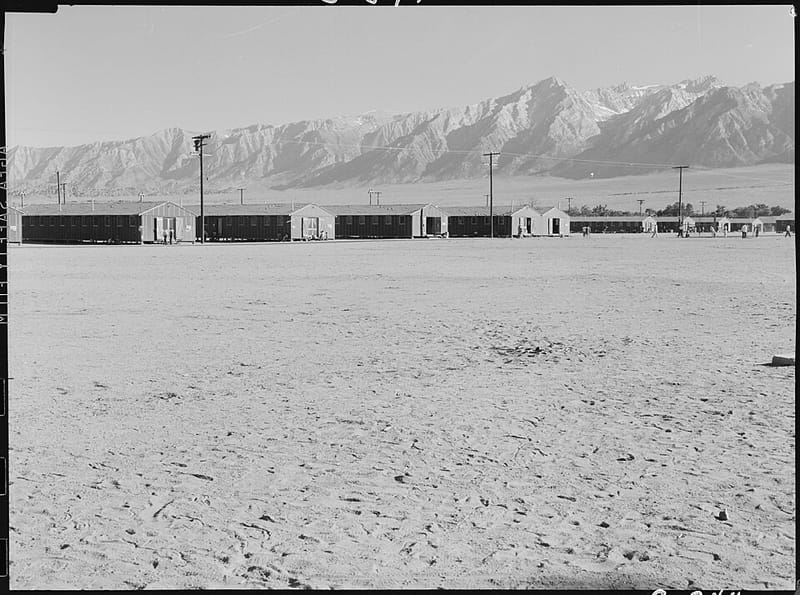
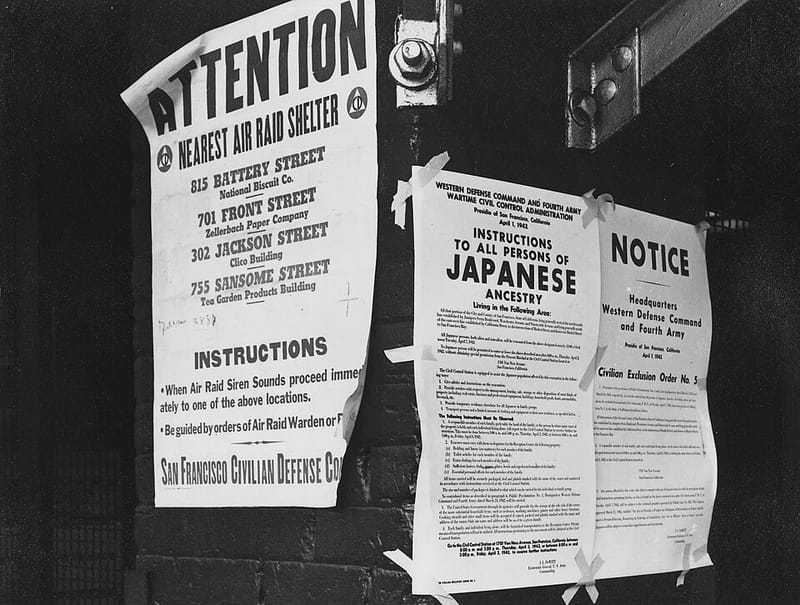
Conservatives accused Roosevelt of unbalancing the budget and expanding federal power beyond constitutional limits. His 1937 plan to add justices to the Supreme Court, attacked as “court packing,” was defeated, and his 1938 attempt to purge conservative Democrats backfired. To hold Southern Democrats in his coalition, he rejected proposals to abolish the poll tax and make lynching a federal crime, and New Deal programs gave African Americans, women, and Latinos far fewer benefits than white men — Social Security initially excluded farm and domestic workers. In February 1942 he signed Executive Order 9066, which led to the forced removal and incarceration of Japanese Americans.
Legacy
By 1944 Roosevelt suffered from serious heart disease. On April 12, 1945, at Warm Springs, he died of a massive stroke at sixty-three, on the eve of victory. He reshaped the presidency — making the president the nation’s chief legislator and building a White House staff unlike any before — and left the United States a global power with global responsibilities. Historian William Leuchtenburg concludes that he greatly enlarged both the responsibilities of the presidency and its capacity to meet them. The Twenty-second Amendment (1951) later limited presidents to two terms.
Study this entry
Check your understanding
Try answering in your own words, then open the answer.
1.What shaped Franklin D. Roosevelt early in life?Show answerHide
Roosevelt was born on January 30, 1882, at Hyde Park, New York, the only child of a wealthy landowner and his much younger wife, Sara Delano, who devoted almost all her energies to him.From “Early life and context” above.
2.What were Franklin D. Roosevelt’s major achievements?Show answerHide
In 1928 Roosevelt was elected governor of New York by half a percentage point, and his bold relief efforts in the Depression made him the Democrats’ natural candidate in 1932.From “Major actions and achievements” above.
3.What criticism or controversy surrounds Franklin D. Roosevelt?Show answerHide
Conservatives accused Roosevelt of unbalancing the budget and expanding federal power beyond constitutional limits. His 1937 plan to add justices to the Supreme Court, attacked as “court packing,” was defeated, and his 1938 attempt to purge conservative Democrats backfired.From “Controversies, limits, and criticism” above.
4.How is Franklin D. Roosevelt remembered?Show answerHide
By 1944 Roosevelt suffered from serious heart disease. On April 12, 1945, at Warm Springs, he died of a massive stroke at sixty-three, on the eve of victory.From “Legacy” above.
Turn this entry into 11 flashcards (key facts, dates, and why it matters) and review them in Learn.
Related History
How this connects to the rest of the atlas.

Sources
- 1.Franklin D. Roosevelt: Life in Brief
Miller Center, University of Virginia · Scholarly · cited for life, New Deal, war leadership
- 2.Franklin D. Roosevelt: Impact and Legacy
Miller Center, University of Virginia (William E. Leuchtenburg) · Scholarly · cited for assessment of the New Deal and presidency
- 3.FDR Biography
Franklin D. Roosevelt Presidential Library and Museum (National Archives) · Institutional · cited for dates, career chronology, four terms, death
- 4.The American Yawp, “The Great Depression”
The American Yawp (eds. Joseph Locke and Ben Wright; Stanford University Press) · Scholarly · cited for crash, Depression, New Deal, Dust Bowl
- 5.Executive Order 9066: Resulting in Japanese-American Incarceration (1942) — Milestone Documents
National Archives · Primary source · cited for Executive Order 9066
- 6.The Constitution: Amendments 11–27
National Archives · Primary source · cited for text and dates of the 18th and 21st Amendments
- 7.Franklin D. Roosevelt: Life Before the Presidency
Miller Center, University of Virginia · Scholarly · cited for upbringing, marriage, early career, polio and recovery
Image credits
- FDR in 1933, Elias Goldensky, 1933-12-27. Via Wikimedia Commons · Public domain · Source
Written for American History Atlas from the sources above. See how entries are researched.
Atlas by Alexander. More on Telegram.