Political Parties
From Federalists and Republicans to the modern two-party system
c. 1790s–present
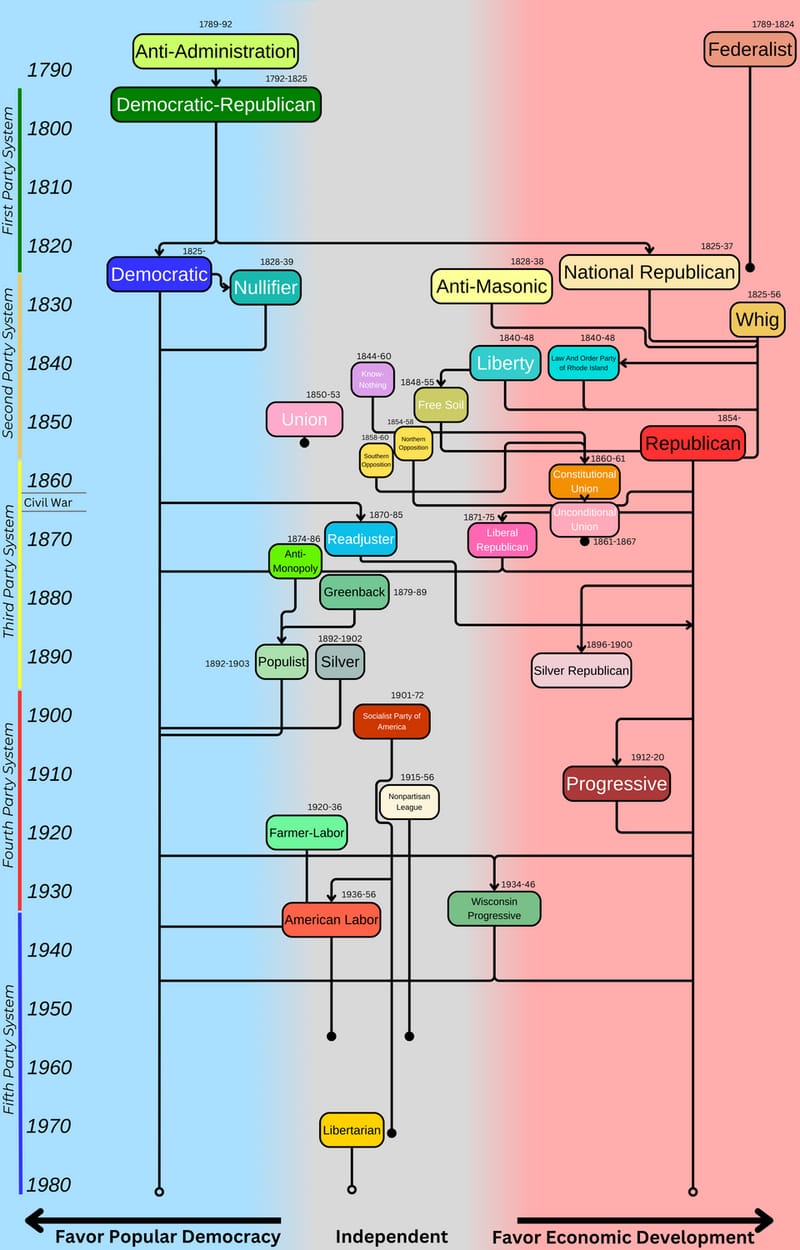
Political parties are not mentioned in the Constitution, and many founders hoped to avoid them. But parties formed almost immediately and have organized American politics ever since. The Federalists and Jefferson’s Democratic-Republicans gave way to Jacksonian Democrats and Whigs, and in the 1850s the antislavery Republican Party was born. Since then Democrats and Republicans have dominated a two-party system, even as their coalitions and ideas have shifted dramatically.
Key facts
- Date
- c. 1790s–present
- First parties
- Federalists vs. Democratic-Republicans, 1790s
- Second party system
- Jacksonian Democrats vs. Whigs, 1830s–1850s
- Republican Party
- Founded 1854 in opposition to slavery’s expansion
- Major realignments
- Civil War era; New Deal coalition (1930s); conservative realignment (1960s–1980s)
- Third parties
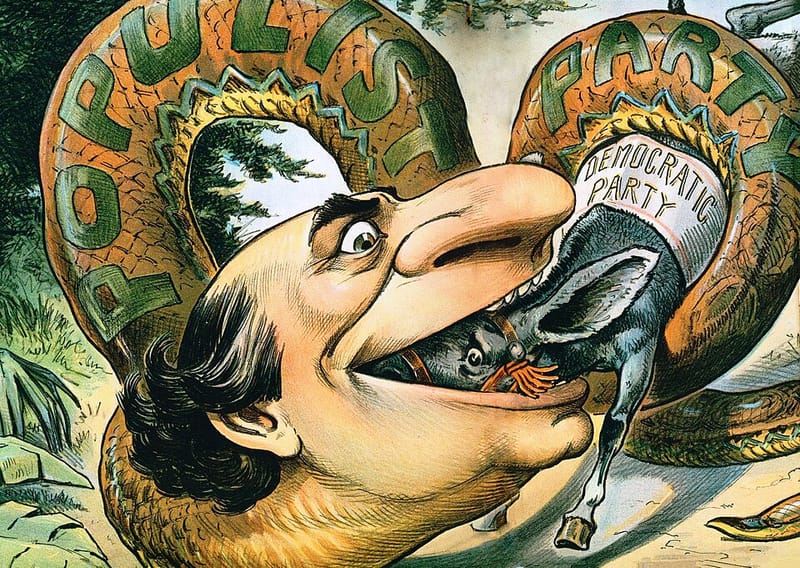
- Populists (1890s) and Theodore Roosevelt’s Progressive Party (1912), among others, challenged the two major parties
Why it matters
Parties are the machinery of American democracy: they turn public opinion into governing coalitions, and their realignments mark the great turning points in American political history.
Origins
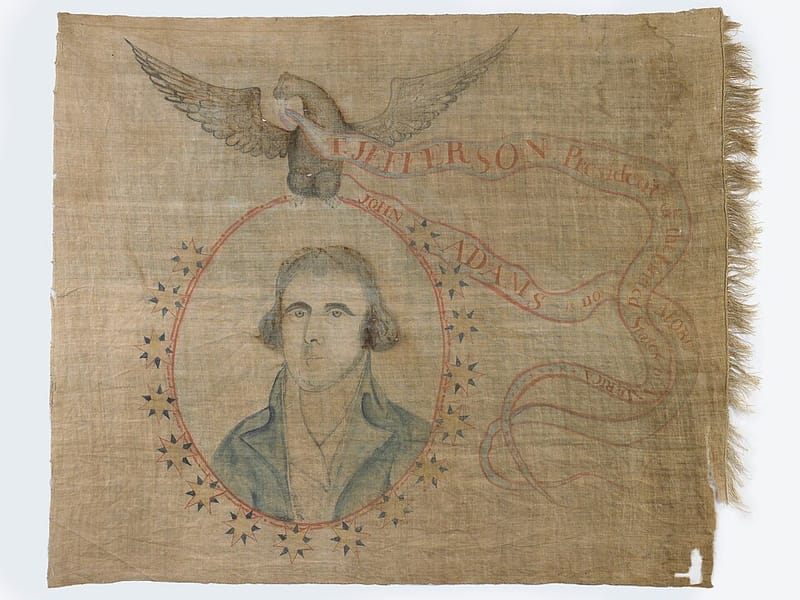
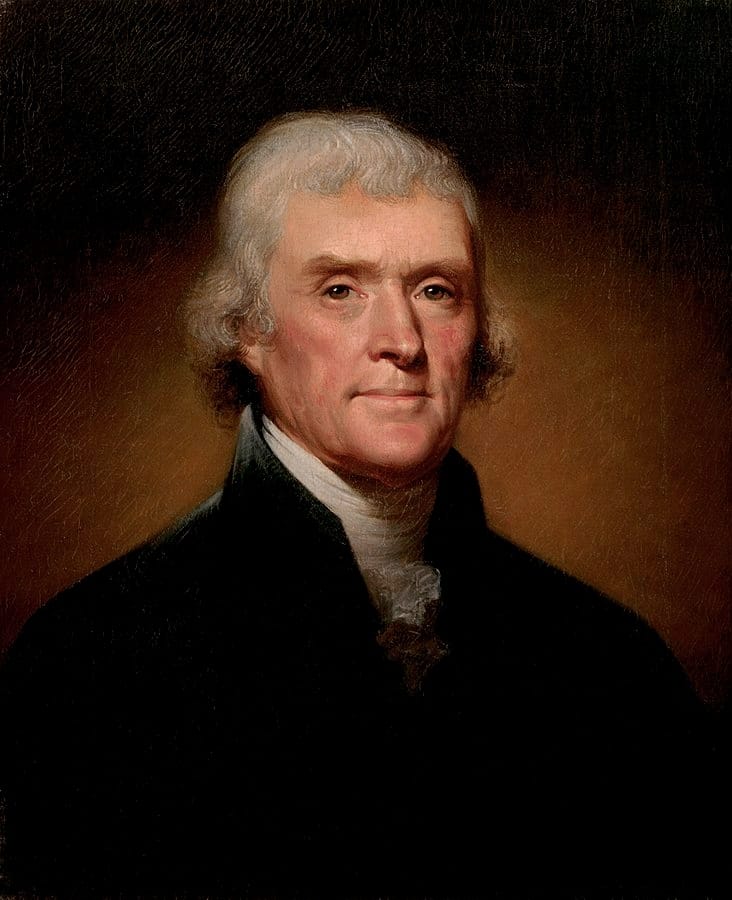
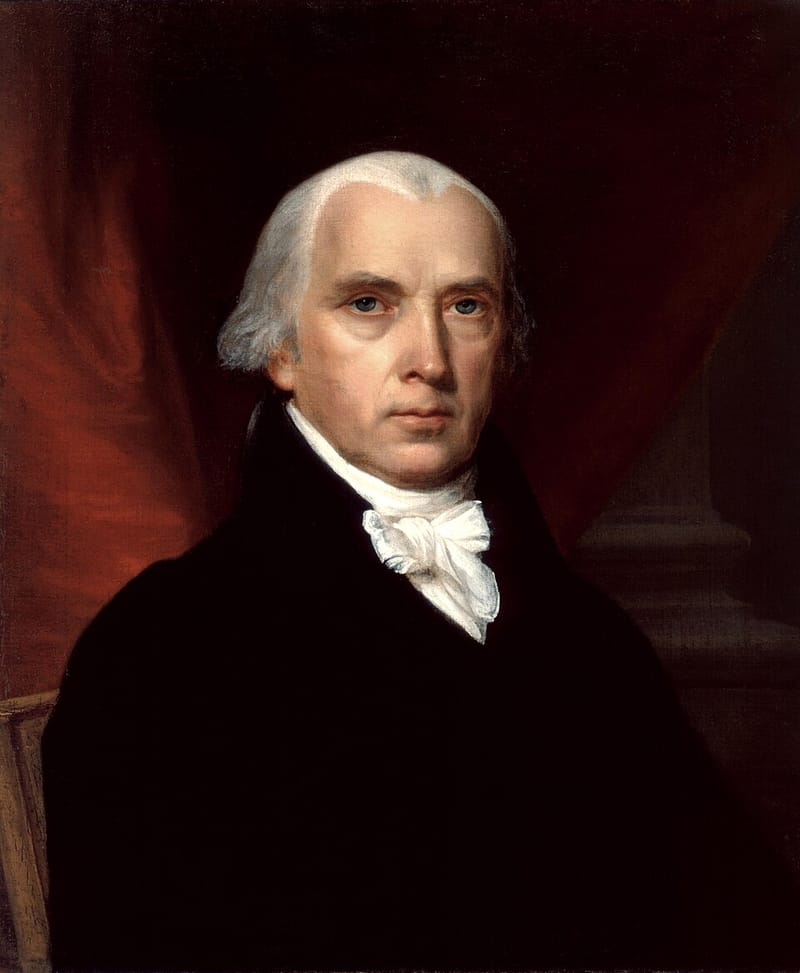
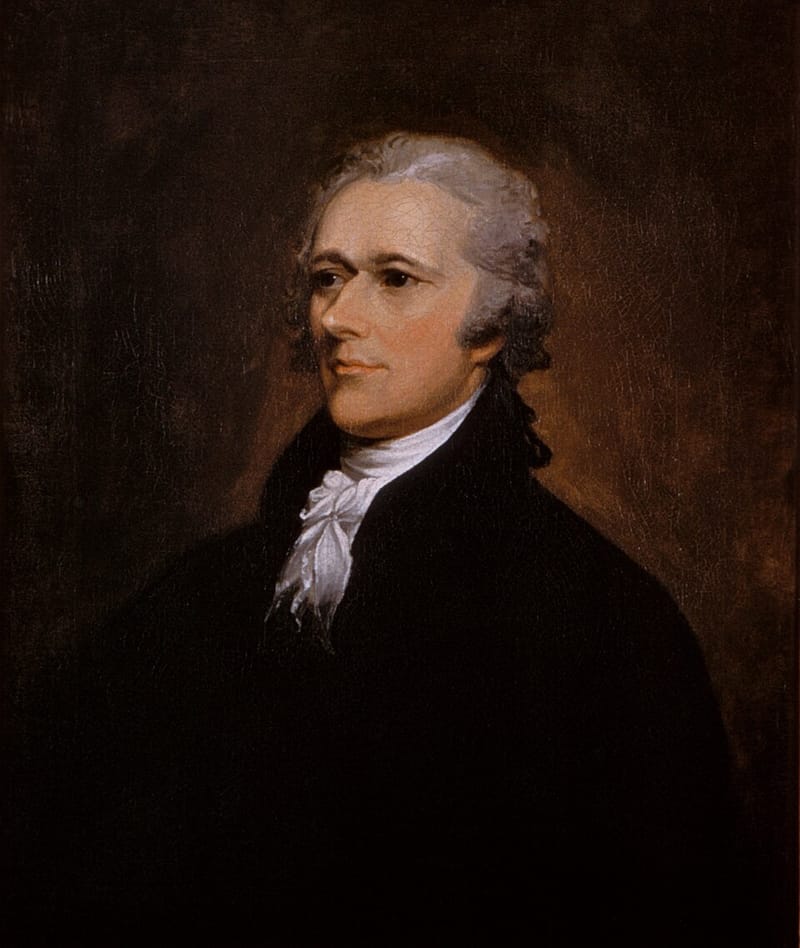
The founding generation tried to create a national government free of parties, but the effort proved unworkable. By the mid-1790s, Federalists led by Alexander Hamilton and Democratic-Republicans led by Jefferson and James Madison divided over the power of the national government, the economy, and foreign policy. Within a decade, the House’s historians note, parties absorbed the various state and local factions. Jefferson’s victory in the election of 1800 brought the first peaceful transfer of power between parties.
Powers and limits
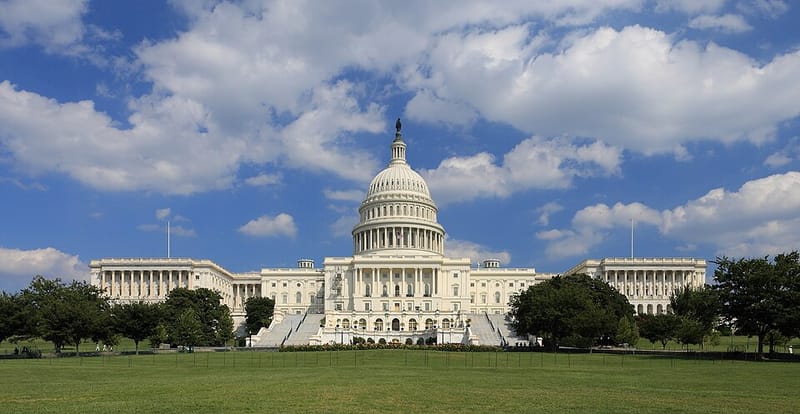
Parties nominate candidates and organize voters. According to the House’s historians, parties quickly proved their worth in organizing the work of the House and in bridging the separation of powers between Congress and the president.
How it changed over time
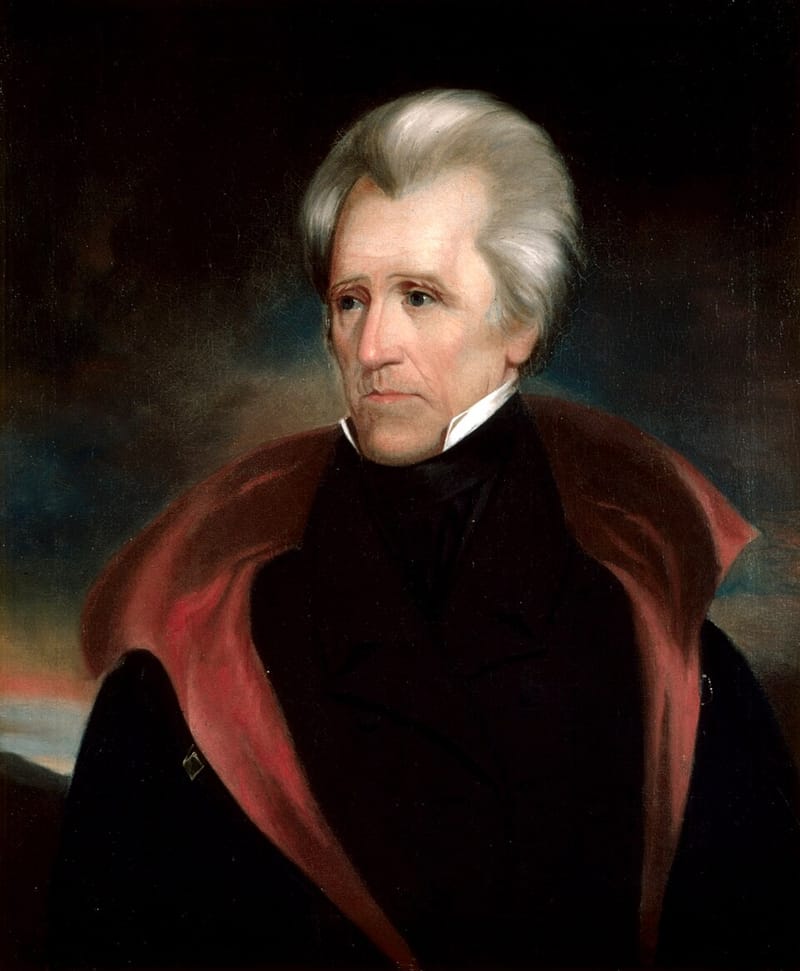
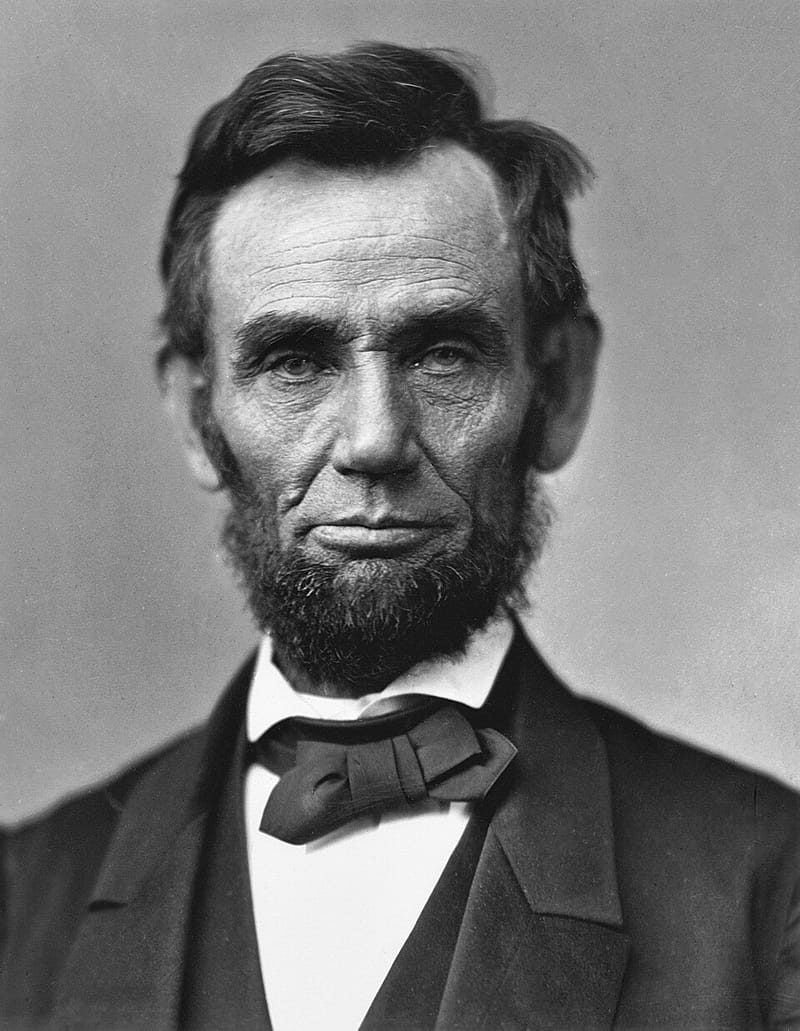
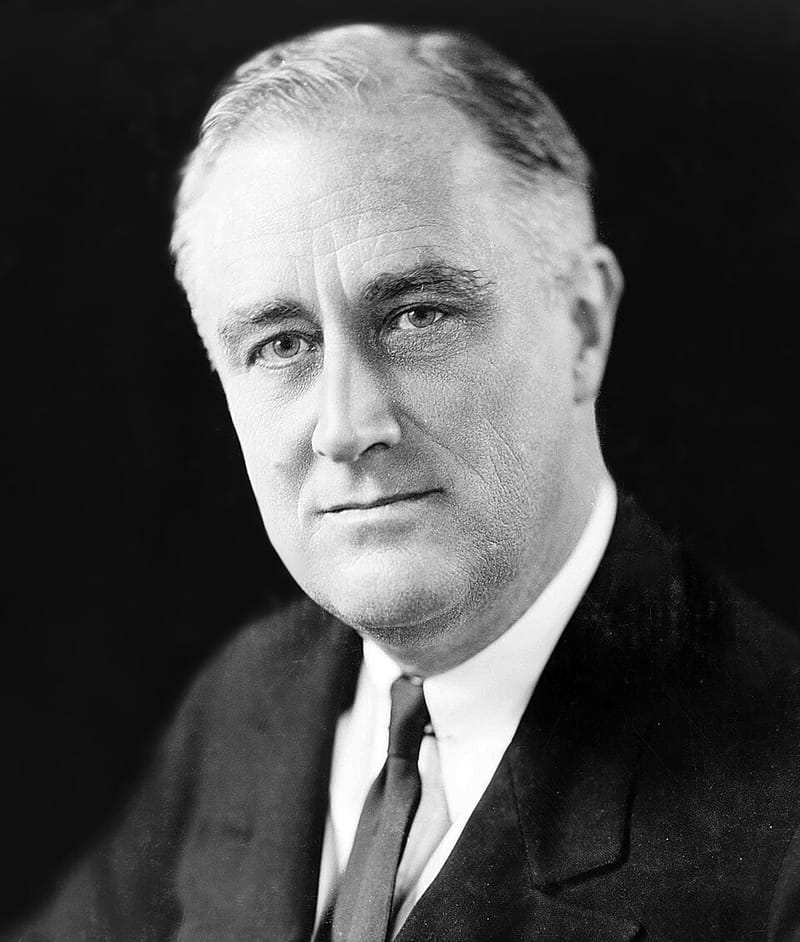
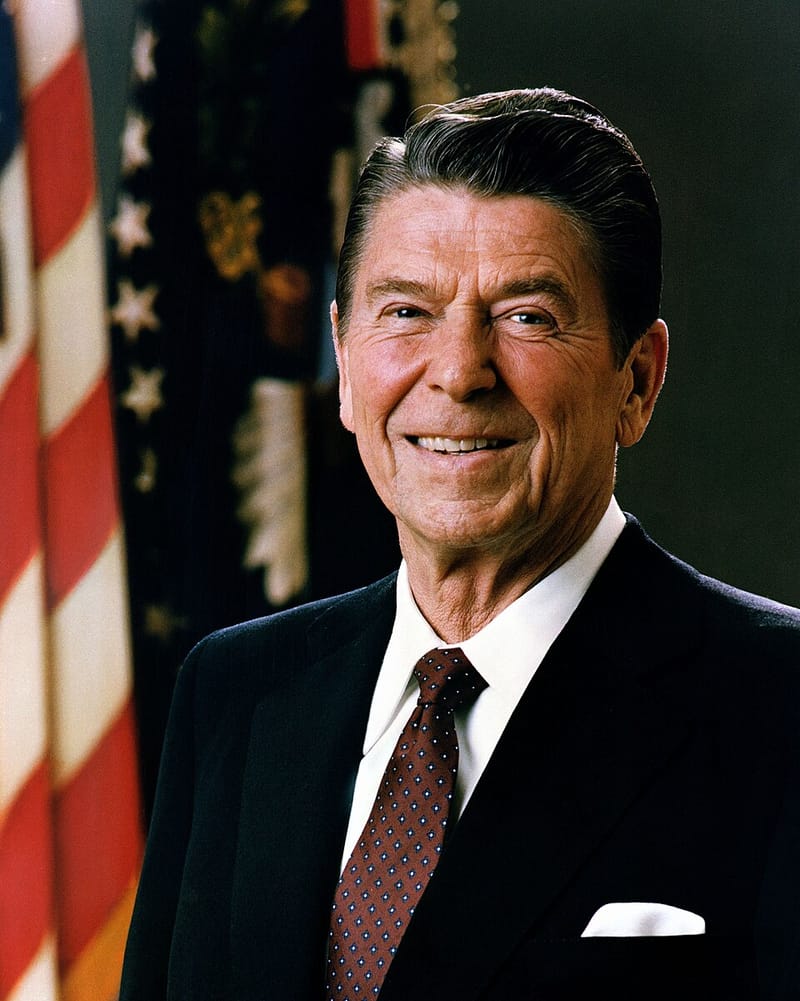
Under Martin Van Buren, Jackson’s supporters built the Democratic Party, the first modern party, with a centralized structure and a consistent program. Jackson’s opponents organized as the Whigs in 1834. In 1854, after the Kansas-Nebraska Act, antislavery forces formed the Republican Party, which elected Abraham Lincoln in 1860. Franklin D. Roosevelt’s New Deal built a Democratic coalition of liberals, urban workers, farmers, and white Southerners that dominated politics into the 1960s. Conservative reaction against the Great Society helped Republicans rise in the South and West, and the rise of the religious right and Ronald Reagan’s victory in 1980 marked a conservative realignment.
Study this entry
Check your understanding
Try answering in your own words, then open the answer.
1.Where did it come from?Show answerHide
The founding generation tried to create a national government free of parties, but the effort proved unworkable.From “Origins” above.
2.What can it do, and what limits it?Show answerHide
Parties nominate candidates and organize voters. According to the House’s historians, parties quickly proved their worth in organizing the work of the House and in bridging the separation of powers between Congress and the president.From “Powers and limits” above.
3.How has it changed over time?Show answerHide
Under Martin Van Buren, Jackson’s supporters built the Democratic Party, the first modern party, with a centralized structure and a consistent program. Jackson’s opponents organized as the Whigs in 1834.From “How it changed over time” above.
Turn this entry into 11 flashcards (key facts, dates, and why it matters) and review them in Learn.
Related History
How this connects to the rest of the atlas.
Events
People


Sources
- 1.Party Divisions of the House of Representatives, 1789 to Present
U.S. House of Representatives, Office of the Historian · Institutional · cited for parties in the House since 1789
- 2.The American Yawp, “The Early Republic”
The American Yawp (eds. Joseph Locke and Ben Wright; Stanford University Press) · Scholarly · cited for Federalists and Democratic-Republicans
- 3.The American Yawp, “Democracy in America”
The American Yawp (eds. Joseph Locke and Ben Wright; Stanford University Press) · Scholarly · cited for Jacksonian Democrats and Whigs
- 4.The American Yawp, “The Sectional Crisis”
The American Yawp (eds. Joseph Locke and Ben Wright; Stanford University Press) · Scholarly · cited for founding of the Republican Party
- 5.The American Yawp, “The Great Depression”
The American Yawp (eds. Joseph Locke and Ben Wright; Stanford University Press) · Scholarly · cited for crash, Depression, New Deal, Dust Bowl
- 6.The American Yawp, “The Sixties”
The American Yawp (eds. Joseph Locke and Ben Wright; Stanford University Press) · Scholarly · cited for civil rights, Great Society, Vietnam, social movements
- 7.The American Yawp, “The Triumph of the Right”
The American Yawp (eds. Joseph Locke and Ben Wright; Stanford University Press) · Scholarly · cited for 1980 election, Reaganomics, Iran-Contra, end of the Cold War
- 8.Franklin D. Roosevelt: Life in Brief
Miller Center, University of Virginia · Scholarly · cited for life, New Deal, war leadership
- 9.Woodrow Wilson: Life in Brief
Miller Center, University of Virginia · Scholarly · cited for life, New Freedom, segregation, WWI, Fourteen Points, treaty fight
Image credits
- Political Evolution of United States Parties, Plan8-63, 2025-03-16. Via Wikimedia Commons · CC BY-SA 4.0 · Source
Written for American History Atlas from the sources above. See how entries are researched.
Atlas by Alexander. More on Telegram.