EventWorld War II and the Early Cold War
D-Day
The Allied invasion of Normandy, June 6, 1944
June 6, 1944Normandy, France
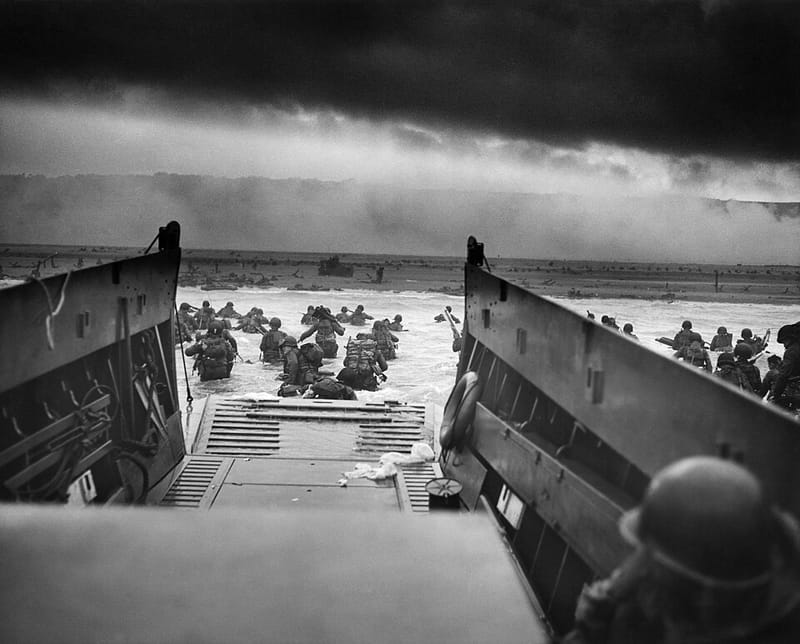
On June 6, 1944, nearly 160,000 American, British, Canadian, and other Allied troops landed along fifty miles of the heavily fortified Normandy coast of France, supported by more than 5,000 ships and 13,000 aircraft. Called Operation Overlord and commanded by General Dwight D. Eisenhower, it was the largest amphibious assault in history. More than 9,000 Allied soldiers were killed or wounded that day, but the Allies gained a foothold in western Europe that led to the liberation of France and the defeat of Nazi Germany.
Key facts
- Date
- June 6, 1944
- Location
- Normandy, France
- Date
- June 6, 1944
- Supreme commander
- General Dwight D. Eisenhower
- Force
- Nearly 160,000 troops; more than 5,000 ships and 13,000 aircraft; 23,400 airborne troops dropped overnight
- Beaches
- Utah, Omaha, Gold, Juno, and Sword
- Casualties
- More than 9,000 Allied soldiers killed or wounded on D-Day
Why it matters
D-Day was the turning point of the war in western Europe and one of the most complex military operations ever carried out.
Historical background
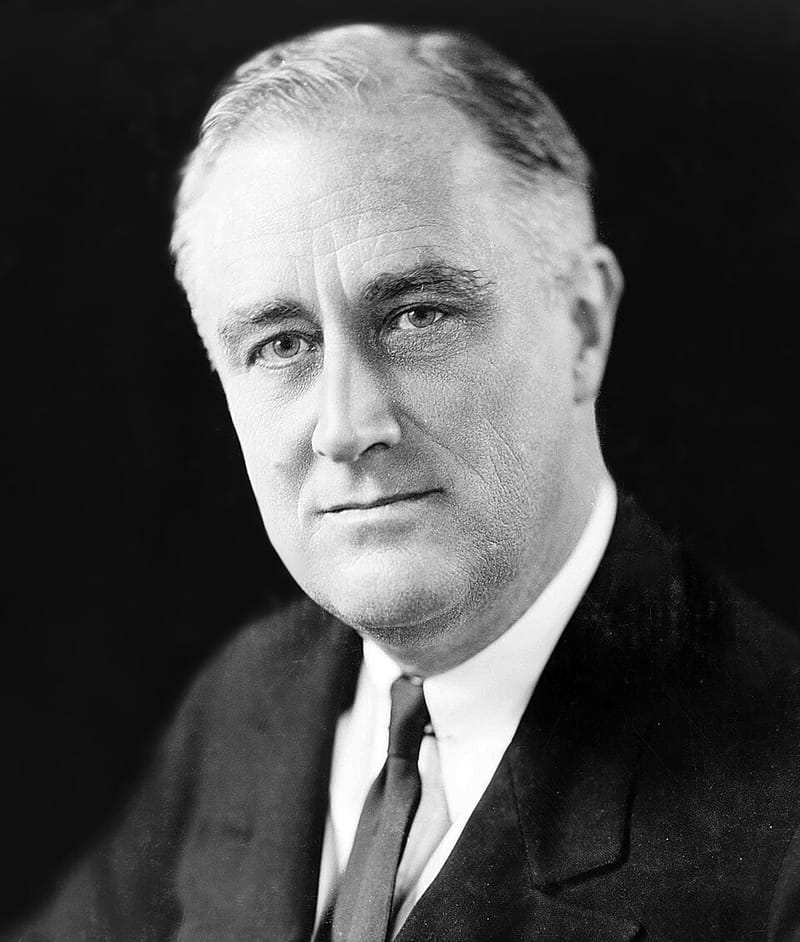
Allied planners had considered a cross-Channel assault since France fell in 1940. At the Tehran Conference in November 1943, Soviet leader Joseph Stalin pressed Britain and the United States to invade France to relieve pressure on the Eastern Front; Roosevelt agreed, and Eisenhower was named to command the operation. By May 1944 nearly 2.9 million Allied troops had gathered in southern England.
Causes and contributing factors
A second front in the west would force Germany to fight on two sides and open a direct route to the German heartland.
What happened
Before dawn on June 5, Eisenhower decided to proceed. In his Order of the Day he told the troops, “The eyes of the world are upon you.” He also wrote out, on a pad of paper, a press release to be issued if the landings failed — mistakenly dating it “July 5.”
Overnight, more than a thousand transport planes dropped 23,400 American, British, and Canadian airborne troops behind the beaches. On June 6 troops came ashore on five beaches code-named Utah, Omaha, Gold, Juno, and Sword. By day’s end the Allies held a foothold on the continent.
Immediate consequences
The assault phase, Operation Neptune, continued through the end of June as the Allies landed more troops and supplies. Progress across France was much slower than hoped, but Paris was liberated about two months after the landings.
Long-term significance
With the Soviet Union advancing from the east, D-Day sealed Germany’s defeat; the war in Europe ended eleven months later. The landings remain the defining image of American and Allied sacrifice in World War II.
Study this entry
Check your understanding
Try answering in your own words, then open the answer.
1.What led to D-Day?Show answerHide
A second front in the west would force Germany to fight on two sides and open a direct route to the German heartland.From “Causes and contributing factors” above.
2.What happened?Show answerHide
Before dawn on June 5, Eisenhower decided to proceed. In his Order of the Day he told the troops, “The eyes of the world are upon you.”From “What happened” above.
3.What were the immediate consequences?Show answerHide
The assault phase, Operation Neptune, continued through the end of June as the Allies landed more troops and supplies. Progress across France was much slower than hoped, but Paris was liberated about two months after the landings.From “Immediate consequences” above.
4.Why does it still matter?Show answerHide
With the Soviet Union advancing from the east, D-Day sealed Germany’s defeat; the war in Europe ended eleven months later. The landings remain the defining image of American and Allied sacrifice in World War II.From “Long-term significance” above.
Turn this entry into 10 flashcards (key facts, dates, and why it matters) and review them in Learn.
Related History
How this connects to the rest of the atlas.
Events
People


Sources
- 1.D-Day — Operation Overlord
U.S. Army · Institutional · cited for troops, ships, aircraft, casualties, beaches
- 2.World War II: D-Day, The Invasion of Normandy
Dwight D. Eisenhower Presidential Library (National Archives) · Primary source · cited for Order of the Day, “In Case of Failure” message
- 3.The American Yawp, “World War II”
The American Yawp (eds. Joseph Locke and Ben Wright; Stanford University Press) · Scholarly · cited for WWII and the home front
Image credits
- Second World War: Europe; " Into the Jaws of Death — U.S. Troops wading through water and Nazi gunfire”, circa 1944-06-06., Chief Photographer's Mate (CPHoM) Robert F. Sargent, Taken on 6 June 1944. Via Wikimedia Commons · Public domain · Source
Written for American History Atlas from the sources above. See how entries are researched.
Atlas by Alexander. More on Telegram.