WarThe Progressive Era and World War I
World War I
The United States enters the Great War, 1917–1918
April 6, 1917 – November 11, 1918Western Front in France and Belgium; the Atlantic; the home front
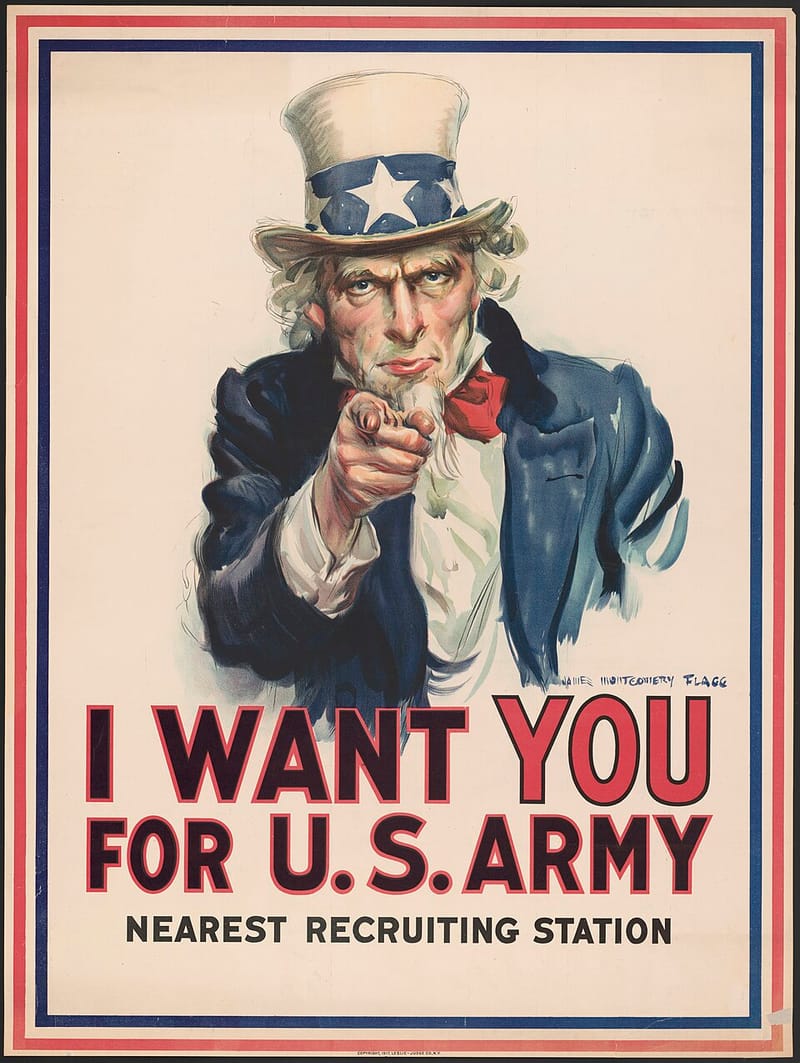
The United States stayed neutral for nearly three years after war broke out in Europe in 1914. Germany’s resumption of unrestricted submarine warfare and its secret proposal of an alliance with Mexico led President Woodrow Wilson to ask Congress for war in April 1917. More than two million American soldiers reached France, helping break Germany’s last offensives in 1918; more than 115,000 died, many from the influenza pandemic. At home, the war brought mobilization, propaganda, and repression of dissent. Wilson’s plans for a peace built on his Fourteen Points and a League of Nations foundered in the Senate.
Key facts
- Date
- April 6, 1917 – November 11, 1918
- Location
- Western Front in France and Belgium; the Atlantic; the home front
- Dating note
- The war in Europe began in 1914; the United States declared war on Germany April 6, 1917; the armistice took effect November 11, 1918.
- U.S. declaration of war
- April 6, 1917 (Senate April 4, House April 6)
- Draft
- Selective Service Act, May 1917
- U.S. military deaths
- More than 115,000
- Armistice
- November 11, 1918
- Peace
- Treaty of Versailles (1919), rejected by the U.S. Senate in 1919 and 1920
Why it matters
World War I made the United States a world power, but the nation’s rejection of the League of Nations signaled a retreat from the international leadership Wilson had envisioned.
Who fought
The Allies — Britain, France, Russia (until it left the war), Italy, and, from 1917, the United States — fought the Central Powers led by Germany and Austria-Hungary. Black Americans served in a segregated military; women volunteered on the home front, and a small number served with the American Expeditionary Forces in France.
Political background
As a neutral trading nation, the United States supplied the Allies with munitions and loans. German submarines targeted shipping around Britain; the sinking of the British liner Lusitania in May 1915 killed more than a hundred Americans. In 1916 Germany pledged to stop attacking passenger ships without warning (the “Sussex pledge”), and Wilson won reelection on the slogan “He Kept Us Out of War.”
Major phases
The road to war (January–April 1917). On January 31, 1917, Germany announced it would resume unrestricted submarine warfare, gambling it could defeat Britain before American troops arrived. Wilson broke diplomatic relations. Then British intelligence revealed the Zimmermann Telegram, in which Germany proposed an alliance with Mexico against the United States. On April 2 Wilson asked Congress for a declaration of war; the Senate approved on April 4 and the House on April 6.
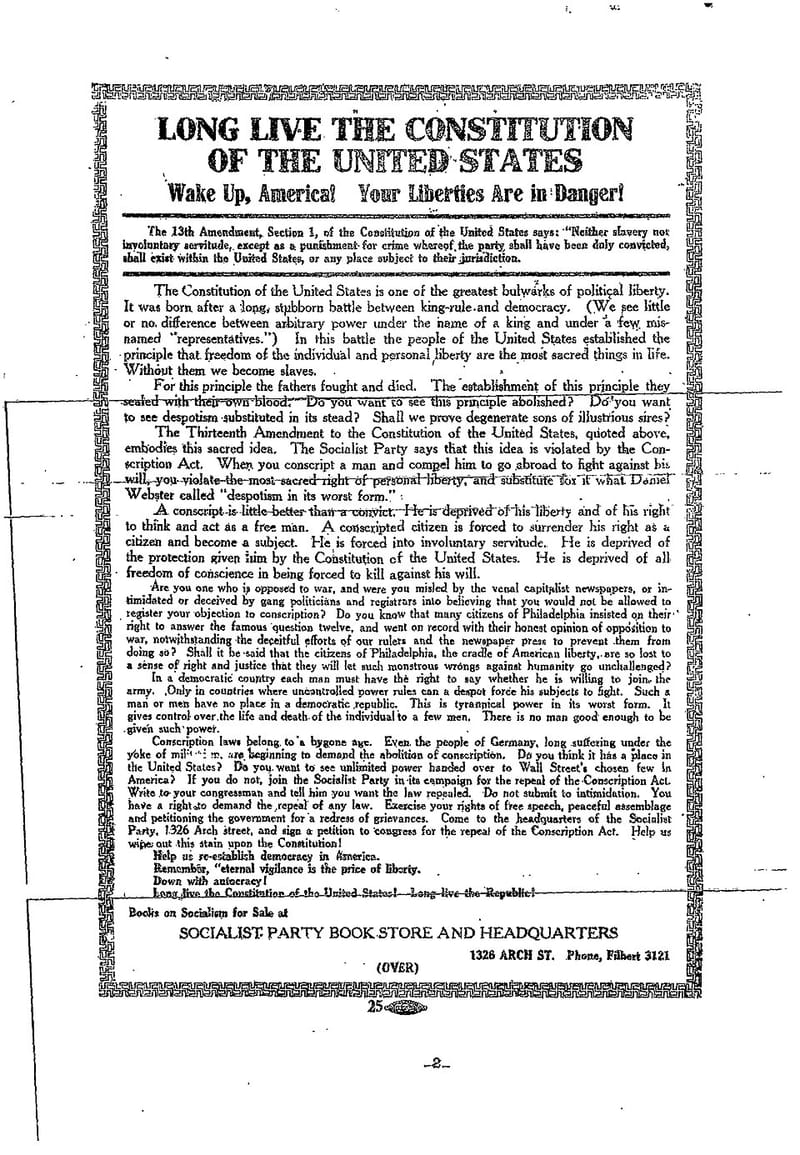
Mobilization (1917–1918). Congress passed the Selective Service Act in May 1917. The government took over the railroads, launched shipbuilding programs, sold Liberty Bonds, and created the Committee on Public Information to promote the war. The Espionage and Sedition Acts outlawed criticism of the government and the war, and dissenters were imprisoned.
The Western Front (1918). After Russia left the war, Germany launched a series of massive spring offensives in 1918; all failed by July. From August, American forces joined British and French counteroffensives that pushed the German lines back across France, culminating for the Americans in the Meuse-Argonne Offensive in the fall. Germany’s kaiser abdicated, and the new government agreed to an armistice, effective November 11, 1918.
Turning points
- Unrestricted submarine warfare and the Zimmermann Telegram (1917): brought the United States into the war.
- The convoy system: American naval escorts helped counter the U-boat threat.
- The failure of Germany’s 1918 spring offensives and the Allied counteroffensives: made German defeat inevitable.
Outcome
The Allies won. In January 1918 Wilson had proposed Fourteen Points for a lasting peace, including open diplomacy, freedom of the seas, reduced armaments, self-government for subject peoples, and a League of Nations. At the Paris Peace Conference, the Treaty of Versailles created the League but imposed harsh terms on Germany. In the United States, Wilson refused to accept Senate reservations; the Senate rejected the treaty in November 1919 and March 1920, and the United States never joined the League.
Consequences for American society
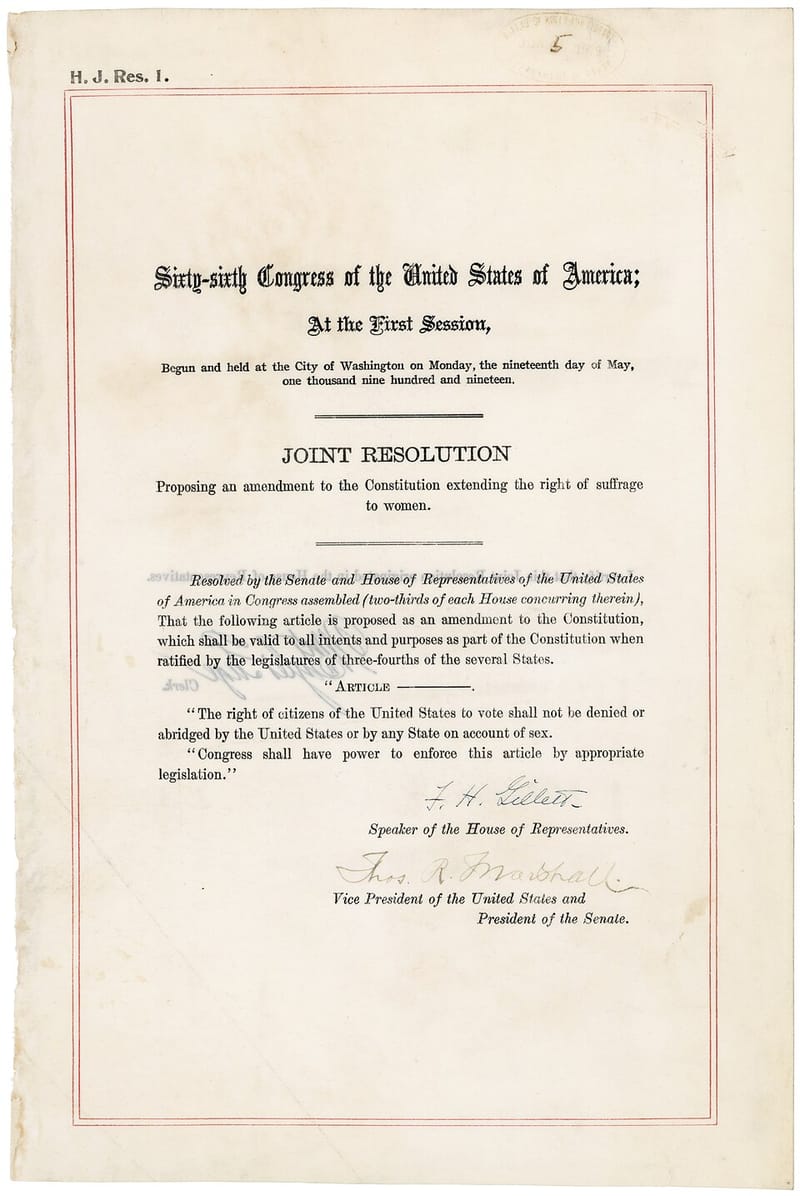
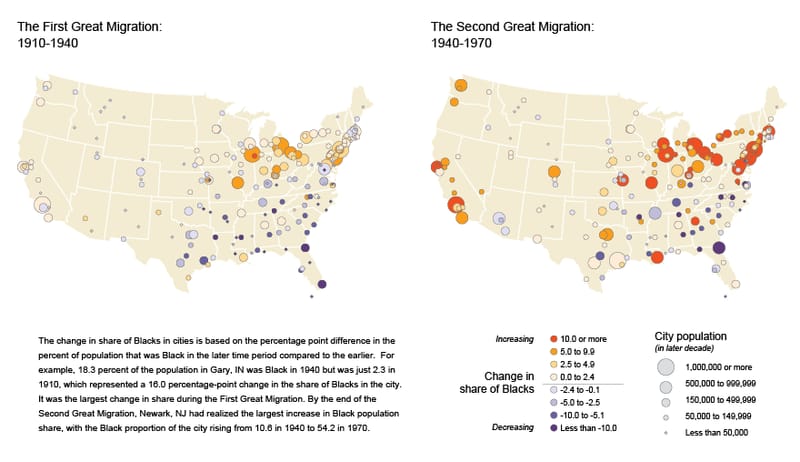
More than 115,000 American soldiers died, and between 1918 and 1920 nearly 700,000 Americans died in an influenza pandemic that killed an estimated fifty million people worldwide — more soldiers died of influenza than in combat. Wartime repression gave way to a postwar Red Scare against radicals and immigrants. Labor shortages drew hundreds of thousands of Black Southerners north in the Great Migration, and racial violence erupted in many cities. Women’s war work helped win the Nineteenth Amendment.
Study this entry
Check your understanding
Try answering in your own words, then open the answer.
1.Why did the war begin?Show answerHide
As a neutral trading nation, the United States supplied the Allies with munitions and loans. German submarines targeted shipping around Britain; the sinking of the British liner Lusitania in May 1915 killed more than a hundred Americans.From “Political background” above.
2.What were the turning points?Show answerHide
- Unrestricted submarine warfare and the Zimmermann Telegram (1917): brought the United States into the war. - The convoy system: American naval escorts helped counter the U-boat threat. - The failure of Germany’s 1918 spring offensives and the Allied counteroffensives: made German defeat inevitable.From “Turning points” above.
3.How did it end?Show answerHide
The Allies won. In January 1918 Wilson had proposed Fourteen Points for a lasting peace, including open diplomacy, freedom of the seas, reduced armaments, self-government for subject peoples, and a League of Nations.From “Outcome” above.
4.How did it change American society?Show answerHide
More than 115,000 American soldiers died, and between 1918 and 1920 nearly 700,000 Americans died in an influenza pandemic that killed an estimated fifty million people worldwide — more soldiers died of influenza than in combat. Wartime repression gave way to a postwar Red Scare against radicals and immigrants.From “Consequences for American society” above.
Turn this entry into 10 flashcards (key facts, dates, and why it matters) and review them in Learn.
Related History
How this connects to the rest of the atlas.
Events
Wars
People
Documents
.jpg)
Sources
- 1.U.S. Entry into World War I, 1917
U.S. Department of State, Office of the Historian · Institutional · cited for submarine warfare, Zimmermann, declaration of war
- 2.The American Yawp, “World War I and Its Aftermath”
The American Yawp (eds. Joseph Locke and Ben Wright; Stanford University Press) · Scholarly · cited for U.S. in WWI, deaths, influenza, Great Migration, race riots
- 3.Woodrow Wilson: Life in Brief
Miller Center, University of Virginia · Scholarly · cited for life, New Freedom, segregation, WWI, Fourteen Points, treaty fight
- 4.Zimmermann Telegram (1917) — Milestone Documents
National Archives · Primary source · cited for Zimmermann Telegram
- 5.Joint Address to Congress Leading to a Declaration of War Against Germany (1917) — Milestone Documents
National Archives · Primary source · cited for Wilson’s war message
- 6.President Woodrow Wilson’s 14 Points (1918) — Milestone Documents
National Archives · Primary source · cited for text of the Fourteen Points
- 7.Wilson’s Fourteen Points, 1918
U.S. Department of State, Office of the Historian · Institutional · cited for Fourteen Points
- 8.The League of Nations, 1920
U.S. Department of State, Office of the Historian · Institutional · cited for League and Senate rejection
Image credits
- J. M. Flagg, I Want You for U.S. Army poster (1917), James Montgomery Flagg, circa 1917. Via Wikimedia Commons · Public domain · Source
Written for American History Atlas from the sources above. See how entries are researched.
Atlas by Alexander. More on Telegram.