PersonThe Progressive Era and World War I
Woodrow Wilson
Twenty-eighth president: progressive reformer, wartime leader, and segregationist
born 1856
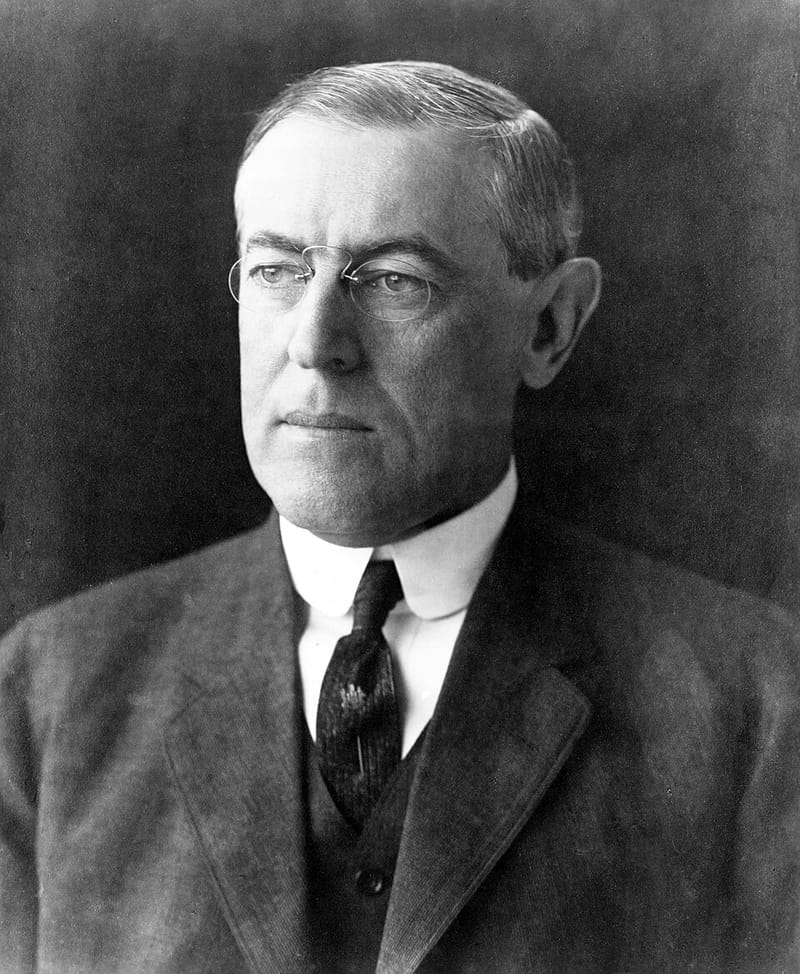
Woodrow Wilson, the twenty-eighth president of the United States (1913–1921), was a political scientist who rose within three years from president of Princeton University to the White House. His “New Freedom” reforms created the Federal Reserve and expanded federal regulation of business; he led the nation into World War I and proposed, in his Fourteen Points, a League of Nations to keep the peace. The Senate rejected his treaty, and a stroke left him incapacitated. His vision shaped American internationalism, but he also extended segregation in the federal government and suppressed wartime dissent.
Key facts
- Born
- December 28, 1856, Staunton, Virginia
- Roles
- President of Princeton University; Governor of New Jersey; Twenty-eighth president (1913–1921); Architect of the League of Nations
- Presidency
- 1913–1921; Democrat
- Domestic program
- The New Freedom: tariff reduction, the Federal Reserve Act (1913), regulation of corporations
- Foreign policy
- Neutrality, then war against Germany (1917); the Fourteen Points (1918)
- Stroke
- Incapacitated by a stroke in October 1919 for the last seventeen months of his term
Why it matters
Wilson expanded the federal government’s role in the economy and defined a vision of American internationalism — while his own policies showed the racial limits of Progressive-era democracy.
Early life and context
Thomas Woodrow Wilson was born on December 28, 1856, in Staunton, Virginia, the son of a Presbyterian minister, and grew up in Augusta, Georgia, and Columbia, South Carolina. His earliest memories were of the Civil War: Union soldiers marching into Augusta and his mother nursing wounded Confederates. His father, a leader of the Southern Presbyterian church, taught him to see secession as justified and God as the guide of human destiny. Weak eyesight and possible dyslexia delayed his reading, and with few schools in the war-torn South, his father educated him at home. “The only place in the world where nothing has to be explained to me,” he said later, “is the South.”
After a year at Davidson College he entered the College of New Jersey (later Princeton), graduating in 1879. He tried law in Atlanta, found it boring, and earned a PhD in history and political science at Johns Hopkins in 1886. His dissertation, Congressional Government, became a classic: it criticized the weak post–Civil War presidency and admired the British system, in which a prime minister leads both government and Parliament — an early sign of the strong executive he would become. In his last year of graduate school he married Ellen Louise Axson, an artist who encouraged his commitment to reform until her death in 1914.
Major actions and achievements
Wilson taught at Bryn Mawr, Wesleyan, and Princeton, publishing books including a five-volume history of the United States. In 1902 he became Princeton’s first president who was not a clergyman and began remaking it into a modern university, introducing small-group “preceptorials.” In 1910 New Jersey’s Democratic bosses, expecting a naive professor, made him their candidate for governor; he promised to be “an unconstitutional governor,” won decisively, and turned on the machine — passing direct primaries, a corrupt-practices act limiting campaign spending, a utility commission, and workers’ compensation.
In 1912 Republicans split between President Taft and Theodore Roosevelt, and Wilson won the presidency with just under 42 percent of the vote. His New Freedom lowered tariffs and brought new controls on big business and support for unions; its crowning achievement, the Federal Reserve Act of 1913, created the framework that still regulates the nation’s banks, credit, and money supply. Re-elected narrowly in 1916 on the slogan “He Kept Us Out of War,” he asked Congress for war in April 1917 after Germany resumed unrestricted submarine warfare and tried to draw Mexico into an alliance against the United States. The government took over the railroads, launched huge shipbuilding programs, and paid for the war with a new income tax and Liberty Bonds.
On January 8, 1918, Wilson laid out his Fourteen Points for a just peace — an end to secret alliances and trade barriers, reduced armaments, independence for subject peoples, and a League of Nations. He became the first president to travel to Europe while in office, and at the Paris Peace Conference he attached the League’s Covenant to the Treaty of Versailles.
Beliefs and ideas
A Presbyterian who believed God was guiding his course, Wilson brought a preacher’s moral certainty to politics. He wanted a strong president who would lead Congress and the public, as a prime minister does; he wanted government to restore economic competition against abusive corporations; and he believed the United States had a duty to help build a new world order of democracy, self-determination, and collective security.
Controversies, limits, and criticism
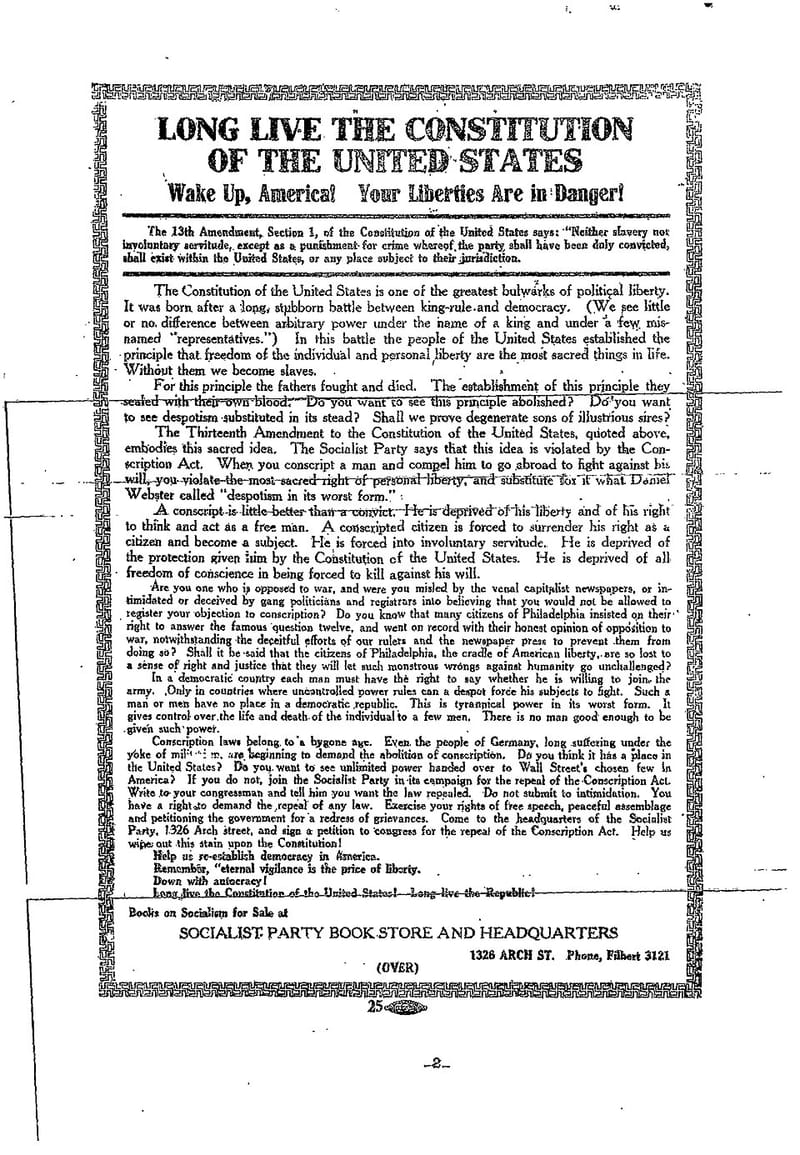
Wilson’s democratic ideals had sharp limits. His administration expanded racial segregation in federal offices and the civil service and ignored protests from Black and white opponents, even as violence against African Americans seeking equality reached new heights. His “moral diplomacy” was often high-handed: he intervened militarily in Latin America more often than any predecessor. During the war his administration sponsored the Espionage and Sedition Acts, which outlawed criticism of the government and the war; violators were imprisoned or fined, and even mainstream publications were censored or banned.
Legacy
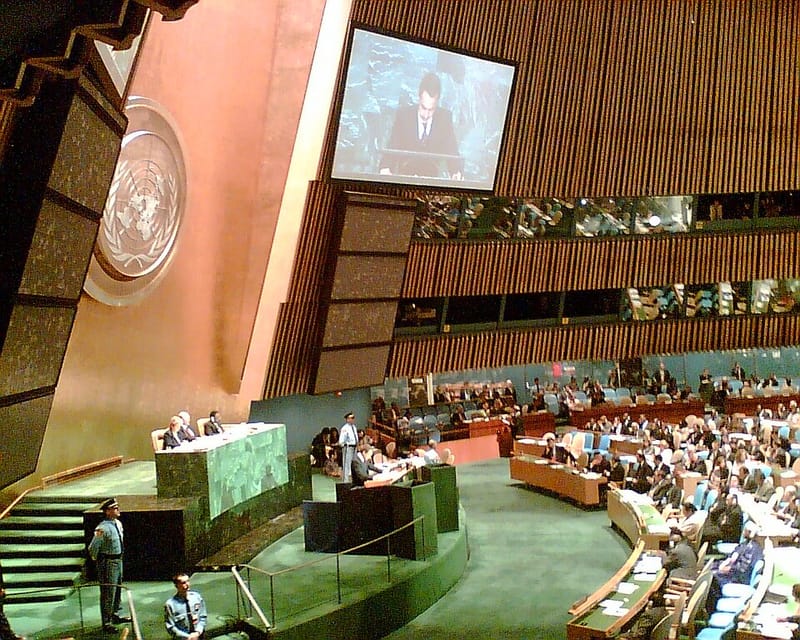
The Treaty of Versailles departed far from the Fourteen Points. Campaigning for it across the country in September 1919, Wilson collapsed from exhaustion and days later suffered a massive stroke; for the last seventeen months of his term he was largely incapacitated, seeing almost no one but his doctors and his second wife, Edith Bolling Galt Wilson, who became a kind of surrogate president. Refusing to compromise with the Senate, he told his supporters to vote against the amended treaty, and it was defeated twice. The United States never joined the League — but twenty-five years later the United Nations made its home in New York. Most historians rank Wilson among the five most important presidents, while his record on race and civil liberties draws growing criticism.
Study this entry
Check your understanding
Try answering in your own words, then open the answer.
1.What shaped Woodrow Wilson early in life?Show answerHide
Thomas Woodrow Wilson was born on December 28, 1856, in Staunton, Virginia, the son of a Presbyterian minister, and grew up in Augusta, Georgia, and Columbia, South Carolina. His earliest memories were of the Civil War: Union soldiers marching into Augusta and his mother nursing wounded Confederates.From “Early life and context” above.
2.What were Woodrow Wilson’s major achievements?Show answerHide
Wilson taught at Bryn Mawr, Wesleyan, and Princeton, publishing books including a five-volume history of the United States. In 1902 he became Princeton’s first president who was not a clergyman and began remaking it into a modern university, introducing small-group “preceptorials.”From “Major actions and achievements” above.
3.What criticism or controversy surrounds Woodrow Wilson?Show answerHide
Wilson’s democratic ideals had sharp limits. His administration expanded racial segregation in federal offices and the civil service and ignored protests from Black and white opponents, even as violence against African Americans seeking equality reached new heights.From “Controversies, limits, and criticism” above.
4.How is Woodrow Wilson remembered?Show answerHide
The Treaty of Versailles departed far from the Fourteen Points.From “Legacy” above.
Turn this entry into 10 flashcards (key facts, dates, and why it matters) and review them in Learn.
Related History
How this connects to the rest of the atlas.
Documents
Movements

Sources
- 1.Woodrow Wilson: Life in Brief
Miller Center, University of Virginia · Scholarly · cited for life, New Freedom, segregation, WWI, Fourteen Points, treaty fight
- 2.U.S. Entry into World War I, 1917
U.S. Department of State, Office of the Historian · Institutional · cited for submarine warfare, Zimmermann, declaration of war
- 3.President Woodrow Wilson’s 14 Points (1918) — Milestone Documents
National Archives · Primary source · cited for text of the Fourteen Points
- 4.The League of Nations, 1920
U.S. Department of State, Office of the Historian · Institutional · cited for League and Senate rejection
- 5.Woodrow Wilson: Life Before the Presidency
Miller Center, University of Virginia · Scholarly · cited for childhood, education, scholarship, Princeton presidency, governorship
Image credits
- President Woodrow Wilson portrait December 2 1912, Pach Brothers, New York, Taken on 2 December 1912. Via Wikimedia Commons · Public domain · Source
Written for American History Atlas from the sources above. See how entries are researched.
Atlas by Alexander. More on Telegram.