WarIndustrialization and the Gilded Age
The Spanish-American War
A short war that made the United States an overseas empire, 1898
April 25 – December 10, 1898Cuba, Puerto Rico, the Philippines, and Guam
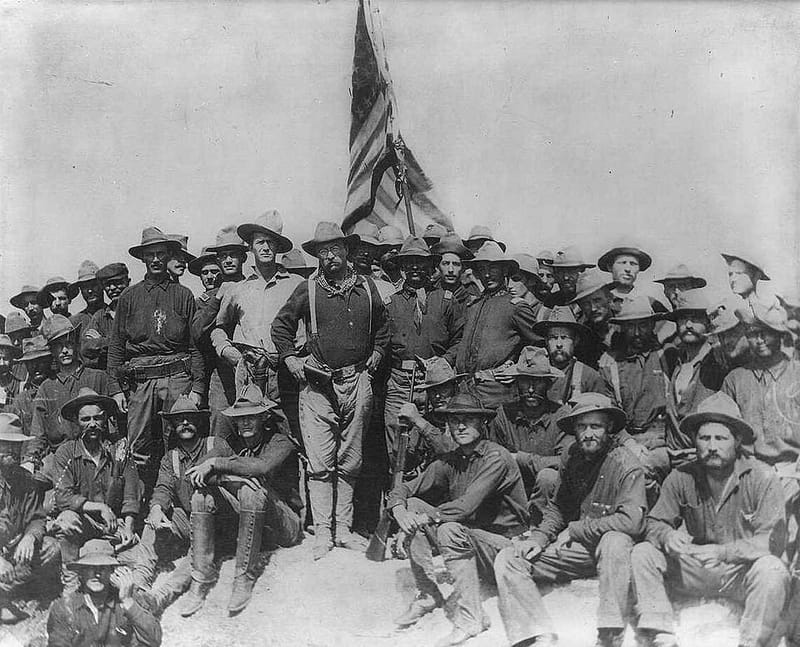
In 1898 the United States went to war with Spain over Cuba, where revolutionaries had been fighting for independence since 1895. In less than four months, U.S. forces destroyed Spanish fleets at Manila Bay and Santiago and defeated Spanish garrisons in Cuba. In the peace treaty, Spain gave up Cuba and ceded Puerto Rico, Guam, and the Philippines to the United States, which also annexed Hawaii during the war. Victory made the United States a colonial power — and led directly to a bloody war against Filipino independence fighters.
Key facts
- Date
- April 25 – December 10, 1898
- Location
- Cuba, Puerto Rico, the Philippines, and Guam
- Dating note
- Congress declared war on April 25, 1898 (retroactive to April 21); a cease-fire came August 12; the Treaty of Paris was signed December 10, 1898.
- War declared
- April 25, 1898
- Spark
- The explosion of the USS Maine in Havana harbor, February 15, 1898
- Key battles
- Manila Bay (May 1), San Juan Heights (July 1), Santiago naval battle (July 3)
- Treaty of Paris
- December 10, 1898: Cuba independent; Puerto Rico, Guam, and the Philippines ceded to the U.S.
- Aftermath
- Philippine-American War, 1899–1902
Why it matters
The Spanish-American War marked the moment the United States became an overseas empire, raising questions about democracy, race, and power abroad that would shape the twentieth century.
Who fought
The United States against Spain. Cuban revolutionaries had already been fighting Spain for three years, and Filipino revolutionaries under Emilio Aguinaldo fought Spain in the Philippines; both expected independence.
Political background
Since the mid-nineteenth century Cubans had tried to win independence from Spain, and a new revolution began in 1895. Americans followed the conflict closely: the instability hurt U.S. economic interests, and public outrage over brutal Spanish tactics, combined with a long-held interest in ridding the hemisphere of European colonial powers, created widespread sympathy for the Cuban revolutionaries.
Major phases
Toward war (February–April 1898). The battleship USS Maine exploded and sank in Havana harbor on February 15 under mysterious circumstances. On April 11, President William McKinley asked Congress for authority to end the fighting in Cuba. Congress’s joint resolution of April 20 recognized Cuban independence, demanded Spain’s withdrawal, and renounced any intention to annex Cuba. Spain declared war, and Congress followed on April 25.
The Pacific (May 1898). On May 1, Commodore George Dewey’s squadron destroyed the Spanish fleet in Manila Bay.
Cuba (June–July 1898). U.S. troops landed at Guantánamo Bay and near Santiago. On July 1 they took the San Juan Heights, the war’s most famous battle, in which Theodore Roosevelt’s volunteer “Rough Riders” and Black regular soldiers of the 24th and 25th Infantry fought. On July 3 the U.S. Navy destroyed Spain’s Caribbean squadron as it tried to escape Santiago.
Peace (August–December 1898). A cease-fire was signed August 12 and the Treaty of Paris on December 10. Secretary of State John Hay called it “a splendid little war.”
Turning points
- Manila Bay (May 1): gave the United States control of the gateway to the Philippines.
- San Juan Heights and Santiago (July 1–3): destroyed Spain’s ability to hold Cuba.
Outcome
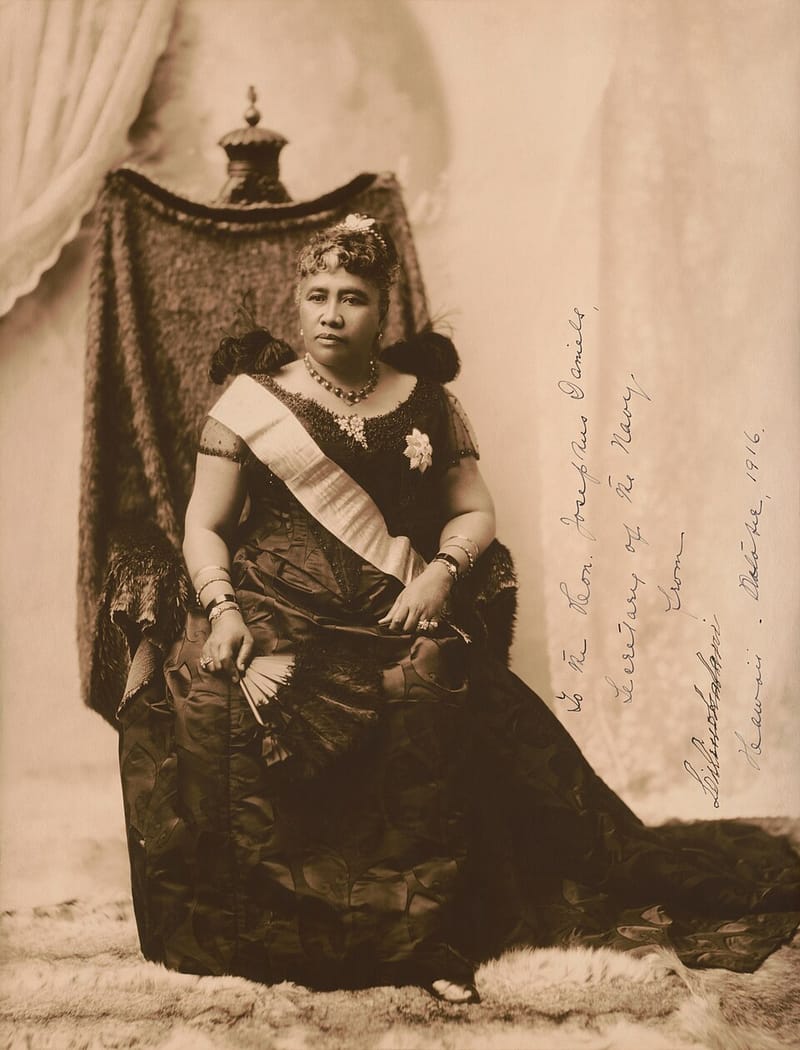
Spain relinquished Cuba and ceded Puerto Rico, Guam, and the Philippines to the United States. During the war the United States also annexed Hawaii, where a “Committee of Safety,” supported by the U.S. minister and Marines from the USS Boston, had overthrown Queen Liliʻuokalani in January 1893. The United States became a Pacific power and dominant in the Caribbean.
Consequences for American society
Annexing the Philippines provoked intense debate at home, where anti-imperialists argued that ruling colonies betrayed American principles — or, for some, that it would bring non-white peoples into the nation. In the Philippines, fighting broke out on February 4, 1899, between U.S. forces and nationalists led by Emilio Aguinaldo who sought independence. The Philippine-American War killed over 4,200 American and over 20,000 Filipino combatants, and as many as 200,000 Filipino civilians died from violence, famine, and disease. Cuba became nominally independent but subject to U.S. intervention under the Platt Amendment (1903).
Study this entry
Check your understanding
Try answering in your own words, then open the answer.
1.Why did the war begin?Show answerHide
Since the mid-nineteenth century Cubans had tried to win independence from Spain, and a new revolution began in 1895.From “Political background” above.
2.What were the turning points?Show answerHide
- Manila Bay (May 1): gave the United States control of the gateway to the Philippines. - San Juan Heights and Santiago (July 1–3): destroyed Spain’s ability to hold Cuba.From “Turning points” above.
3.How did it end?Show answerHide
Spain relinquished Cuba and ceded Puerto Rico, Guam, and the Philippines to the United States. During the war the United States also annexed Hawaii, where a “Committee of Safety,” supported by the U.S. minister and Marines from the USS Boston, had overthrown Queen Liliʻuokalani in January 1893.From “Outcome” above.
4.How did it change American society?Show answerHide
Annexing the Philippines provoked intense debate at home, where anti-imperialists argued that ruling colonies betrayed American principles — or, for some, that it would bring non-white peoples into the nation.From “Consequences for American society” above.
Turn this entry into 11 flashcards (key facts, dates, and why it matters) and review them in Learn.
Related History
How this connects to the rest of the atlas.
Events
People
Documents

Sources
- 1.The Spanish-American War, 1898
U.S. Department of State, Office of the Historian · Institutional · cited for causes, course, treaty, consequences
- 2.The Philippine-American War, 1899–1902
U.S. Department of State, Office of the Historian · Institutional · cited for the war in the Philippines
- 3.The American Yawp, “American Empire”
The American Yawp (eds. Joseph Locke and Ben Wright; Stanford University Press) · Scholarly · cited for Spanish-American War and empire
- 4.Platt Amendment (1903) — Milestone Documents
National Archives · Primary source · cited for Platt Amendment
- 5.Joint Resolution to Provide for Annexing the Hawaiian Islands (1898) — Milestone Documents
National Archives · Primary source · cited for the 1893 coup and annexation of Hawaii
Image credits
- TR San Juan Hill 1898, Unknown source Unknown source, 1898. Via Wikimedia Commons · Public domain · Source
Written for American History Atlas from the sources above. See how entries are researched.
Atlas by Alexander. More on Telegram.