PersonCivil War and Reconstruction
Ulysses S. Grant
Union general who won the Civil War and eighteenth president
1822–1885
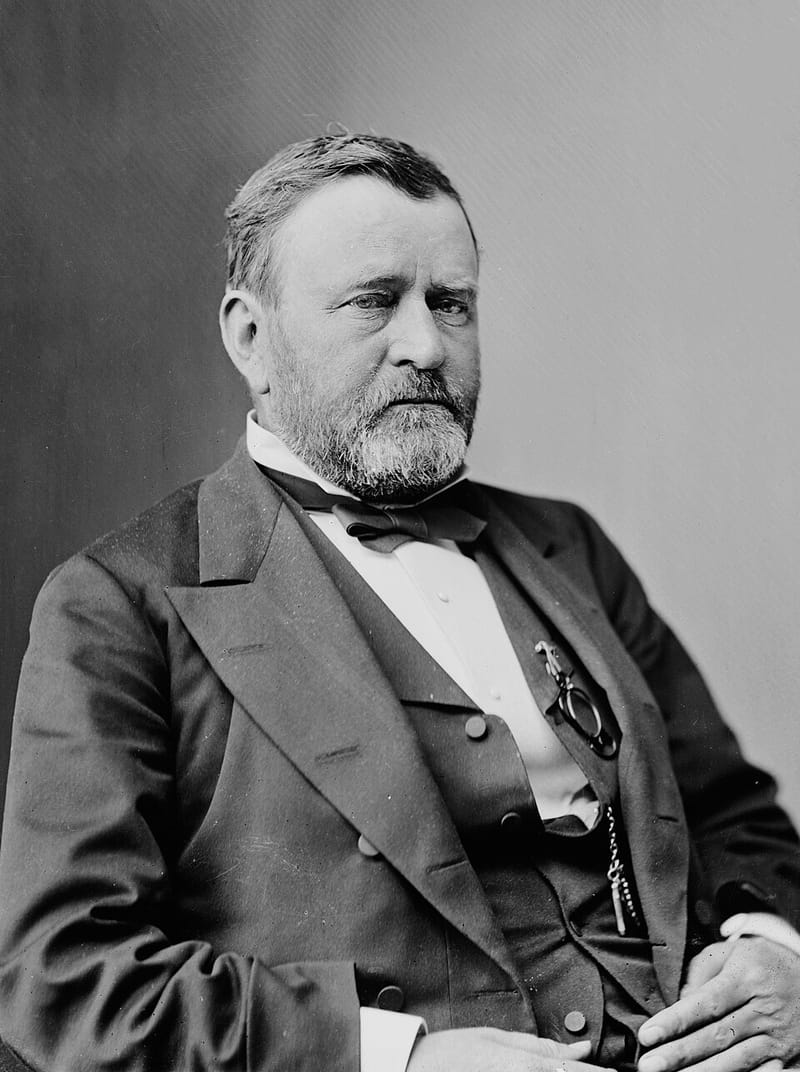
Ulysses S. Grant was the Union general who won the Civil War and the eighteenth president of the United States (1869–1877). A quiet tanner’s son who failed at farming and business before the war, he rose in four years to command all Union armies, took Vicksburg, wore down Robert E. Lee’s army, and accepted its surrender at Appomattox. As president he fought for the Fifteenth Amendment and sent troops against the Ku Klux Klan, but scandals among his appointees long dominated his reputation — which historians are now reassessing.
Key facts
- Born
- April 27, 1822, Point Pleasant, Ohio
- Died
- 1885
- Roles
- Mexican-American War officer; Commanding general of the Union armies; Eighteenth president (1869–1877); Author of Personal Memoirs
- Education
- U.S. Military Academy at West Point
- Civil War victories
- Forts Henry and Donelson, Vicksburg, Chattanooga, and the final campaign against Lee
- Presidency
- 1869–1877
- Memoirs
- Written while dying of throat cancer, completed just before his death in 1885
Why it matters
Grant won the war that ended slavery and, as president, tried — more than most Northern leaders of his time — to secure the rights of the people it had freed.
Early life and context
Hiram Ulysses Grant was born on April 27, 1822, in Point Pleasant, Ohio, the eldest of six children of a tanner. He hated the stinking tannery and swore he would never work in one as an adult. Quiet and small, he was mocked by other children as “Useless,” but he was famous locally for handling unruly horses. His father secured him an appointment to West Point, where a clerical error made him “Ulysses S. Grant” for life. He graduated twenty-first in a class of thirty-nine; though the finest horseman at the academy, he was assigned to the infantry.
In the Mexican-American War he served as his regiment’s quartermaster, learning the logistics of war, and was twice cited for bravery — yet he mourned the waste of war. After the war he married Julia Dent, his West Point roommate’s sister; three of his wedding attendants, including James Longstreet, would later fight against him. Posted to the Pacific Coast far from his family, he grew depressed — by some accounts drinking heavily — and resigned from the army in 1854. Over the next several years he failed at farming a plot he called “Hardscrabble” and at a string of other jobs; one Christmas he pawned his watch for $22 to buy his family presents. He freed the one man he was given as a slave rather than sell him. By 1860 he was clerking in his family’s leather shop in Galena, Illinois.
Major actions and achievements
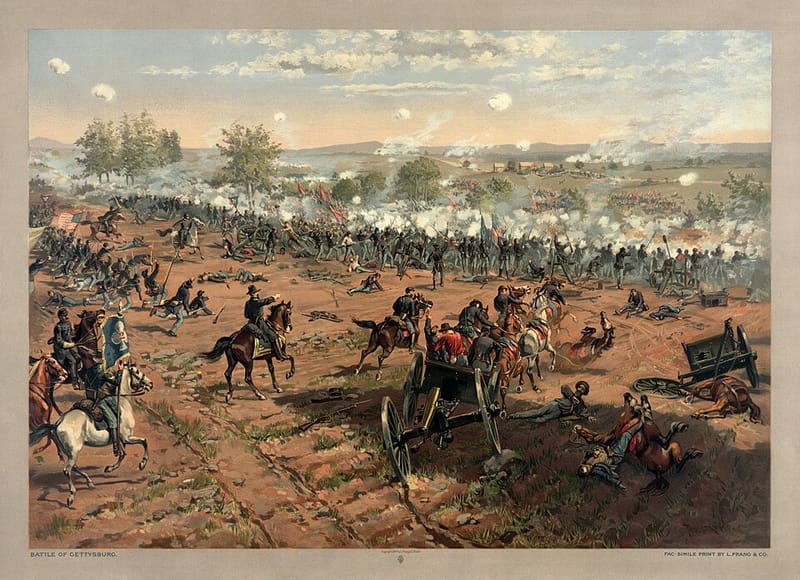
When the Civil War began, the Union needed trained officers. Grant turned an unruly Illinois regiment into a disciplined unit and was soon a brigadier general. In February 1862 he captured Forts Henry and Donelson in Tennessee. Donelson, where he took the surrender of an entire Confederate force, was the Union’s first real victory and made him famous overnight as “Unconditional Surrender” Grant. He survived blame for the costly surprise at Shiloh, then in 1863 marched his army down the west bank of the Mississippi, crossed below Vicksburg, cut loose from his supply lines, and won five battles before besieging the city. On July 4, 1863, Vicksburg surrendered with more than 27,000 men, giving the Union control of the Mississippi. “Grant is my man,” Lincoln declared, “and I am his.”
In 1864 Lincoln made him lieutenant general and commander of all Union armies. Grant coordinated simultaneous campaigns — Sherman’s march through Georgia, Sheridan’s in the Shenandoah — while he himself fought Lee across Virginia at the Wilderness, Spotsylvania, and Cold Harbor and then besieged Petersburg. On April 9, 1865, at Appomattox Court House, he accepted Lee’s surrender on generous terms: the Confederates could go home if they laid down their arms.
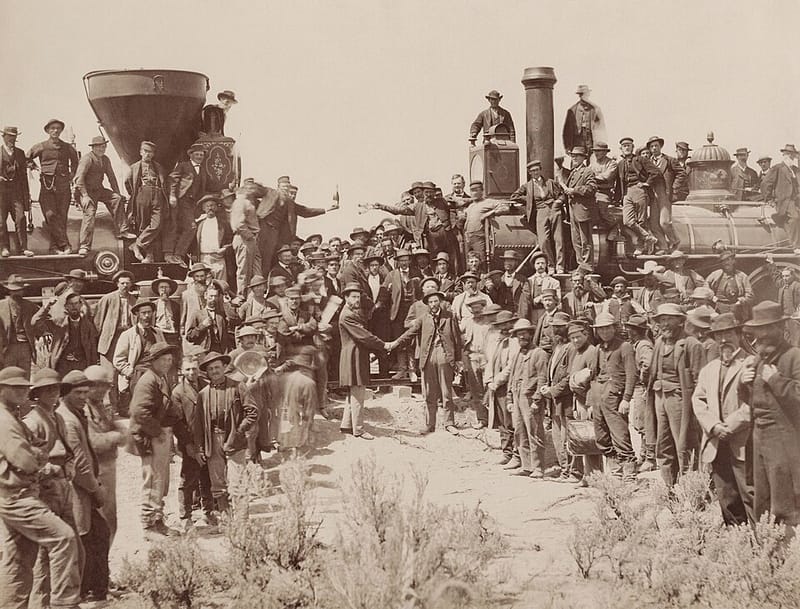
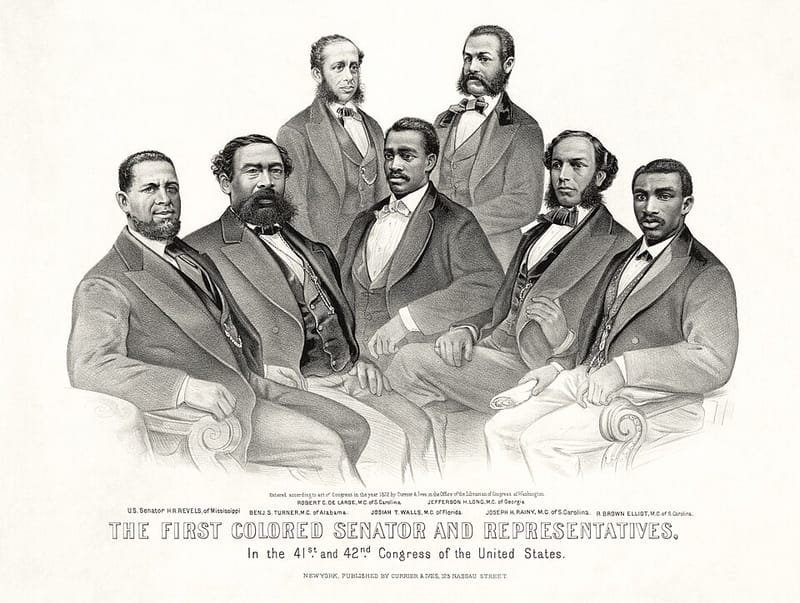
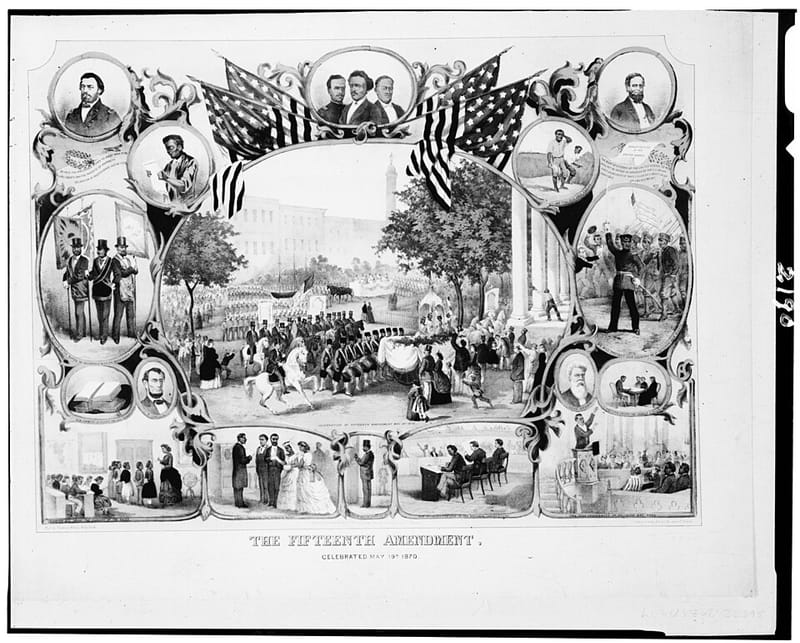
Elected president in 1868 under the slogan “Let us have peace,” Grant lobbied hard for the Fifteenth Amendment, guaranteeing the vote regardless of race, and sent the army to protect Black Southerners from the Ku Klux Klan. He presided over the completion of the first transcontinental railroad in 1869, attempted reforms in Native American policy and the civil service, and improved relations with Britain. He was re-elected in a landslide in 1872.
Beliefs and ideas
Grant disliked politics but shared the Republican creed that had won the war: the Union was perpetual, slavery was dead, and the freedpeople were entitled to the rights of citizens. He sought reconciliation with the white South without abandoning Black Americans. His sense of war was unromantic; he mourned the dead, and from his first fight he took the lesson that the enemy “had as much reason to fear my forces as I had his.”
Controversies, limits, and criticism
Grant’s relentless fighting in 1864 produced such enormous casualties that Democratic newspapers called him “the Butcher.” As president he chose his cabinet without consulting party leaders and was loyal out of all proportion to friends and associates; some appointees proved incompetent or corrupt. He was never personally implicated in the scandals, but he failed to cut loose those who were, and his reputation suffered. During his second term a depression that spread from Europe brought high unemployment, and many Americans blamed him for the country’s economic troubles.
Legacy
After leaving office Grant lost his fortune in a financial swindle and learned he was dying of throat cancer. To provide for his family, he wrote his Personal Memoirs, working on his porch wrapped in blankets and in terrible pain, and finished them days before his death in 1885. The book was a great success and secured his family’s finances. Long ranked near the bottom of presidential lists because of the scandals, Grant has risen sharply in recent rankings as historians give weight to his defense of African American rights.
Study this entry
Check your understanding
Try answering in your own words, then open the answer.
1.What shaped Ulysses S. Grant early in life?Show answerHide
Hiram Ulysses Grant was born on April 27, 1822, in Point Pleasant, Ohio, the eldest of six children of a tanner. He hated the stinking tannery and swore he would never work in one as an adult.From “Early life and context” above.
2.What were Ulysses S. Grant’s major achievements?Show answerHide
When the Civil War began, the Union needed trained officers. Grant turned an unruly Illinois regiment into a disciplined unit and was soon a brigadier general.From “Major actions and achievements” above.
3.What criticism or controversy surrounds Ulysses S. Grant?Show answerHide
Grant’s relentless fighting in 1864 produced such enormous casualties that Democratic newspapers called him “the Butcher.” As president he chose his cabinet without consulting party leaders and was loyal out of all proportion to friends and associates; some appointees proved incompetent or corrupt.From “Controversies, limits, and criticism” above.
4.How is Ulysses S. Grant remembered?Show answerHide
After leaving office Grant lost his fortune in a financial swindle and learned he was dying of throat cancer. To provide for his family, he wrote his Personal Memoirs, working on his porch wrapped in blankets and in terrible pain, and finished them days before his death in 1885.From “Legacy” above.
Turn this entry into 9 flashcards (key facts, dates, and why it matters) and review them in Learn.
Related History
How this connects to the rest of the atlas.

Sources
- 1.Ulysses S. Grant: Life in Brief
Miller Center, University of Virginia · Scholarly · cited for life, war, presidency, reputation
- 2.Articles of Agreement Relating to the Surrender of the Army of Northern Virginia (1865) — Milestone Documents
National Archives · Primary source · cited for Appomattox
- 3.Ulysses S. Grant: Life Before the Presidency
Miller Center, University of Virginia · Scholarly · cited for childhood, West Point, prewar struggles, Civil War campaigns
Image credits
- Ulysses S. Grant 1870-1880, Brady-Handy Photograph Collection, Library of Congress, between 1870 and 1880. Via Wikimedia Commons · Public domain · Source
Written for American History Atlas from the sources above. See how entries are researched.
Atlas by Alexander. More on Telegram.