DocumentCivil War and Reconstruction
The Fifteenth Amendment
Voting rights regardless of race, 1870
February 3, 1870
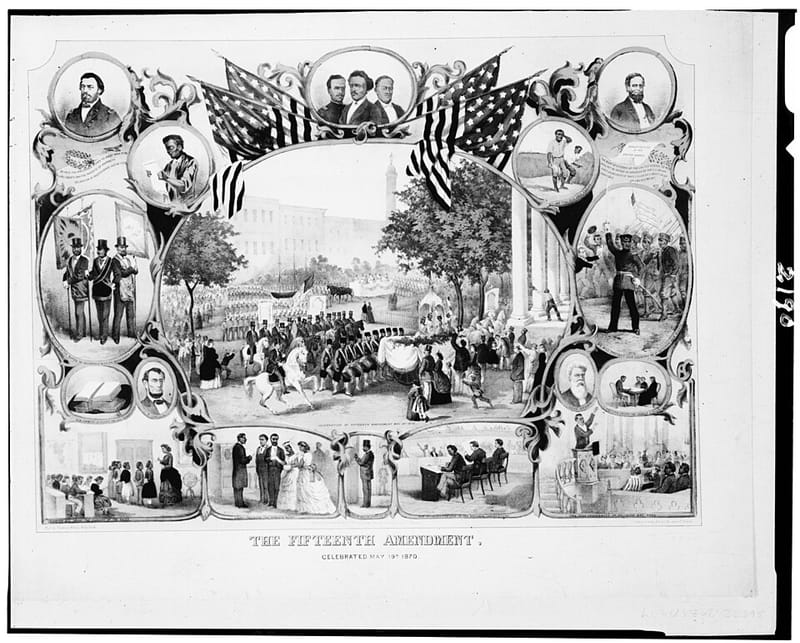
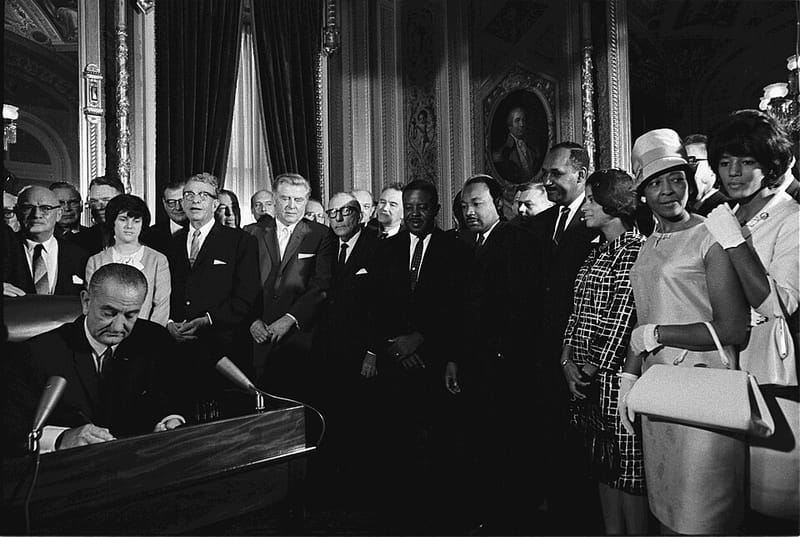
The Fifteenth Amendment declared that the right of citizens to vote “shall not be denied or abridged by the United States or by any State on account of race, color, or previous condition of servitude.” Ratified in 1870, it seemed to complete the promises of emancipation, and Black men voted and held office across the South. Within a generation, Southern states found ways around it with poll taxes, literacy tests, and violence; its promise was not enforced until the Voting Rights Act of 1965.
Key facts
- Date
- February 3, 1870
- Author
- Fortieth Congress
- Dating note
- Passed by Congress February 26, 1869; ratified February 3, 1870.
- Passed Congress
- February 26, 1869
- Ratified
- February 3, 1870
- Protected
- Voting rights regardless of race, color, or previous servitude — but not sex
- Enforcement
- Largely abandoned after the 1890s until the Voting Rights Act of 1965
Read the amendment at the National Archives
Why it matters
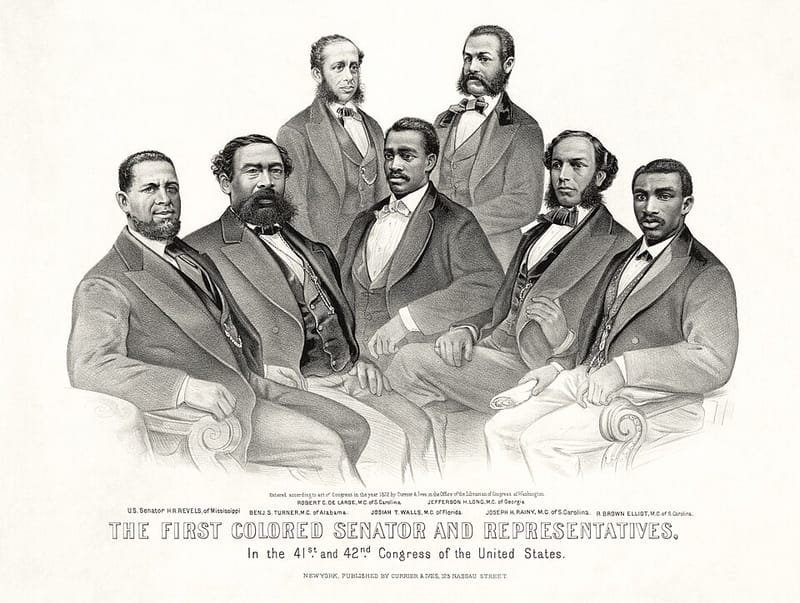
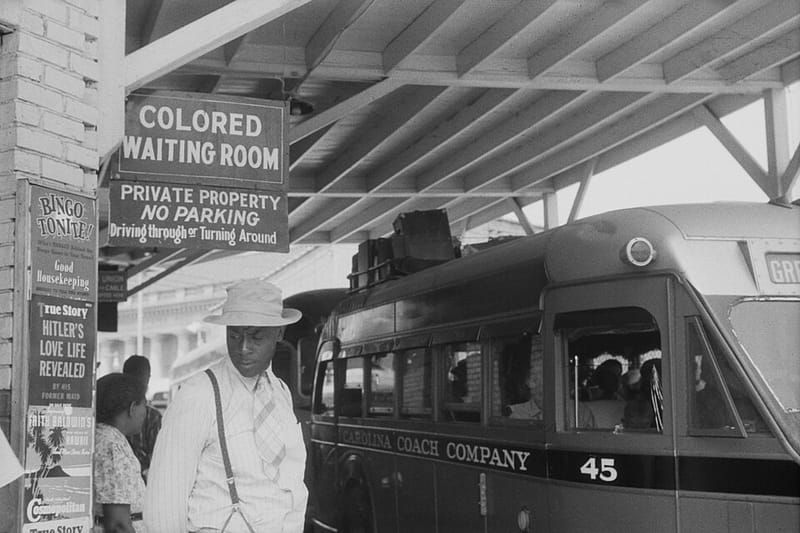
To abolitionists and Radical Republicans, the amendment seemed the fulfillment of all promises to African Americans. Black men voted and held office in many Southern states through the 1880s, but in the 1890s literacy tests, “grandfather clauses,” and other devices were written into Southern laws to ensure white supremacy, and Jim Crow segregation followed. For more than a century, the amendment was only one step in the struggle for equality. Its promise was revived by the Voting Rights Act of 1965, a key provision of which the Supreme Court struck down in 2013.
Historical circumstances
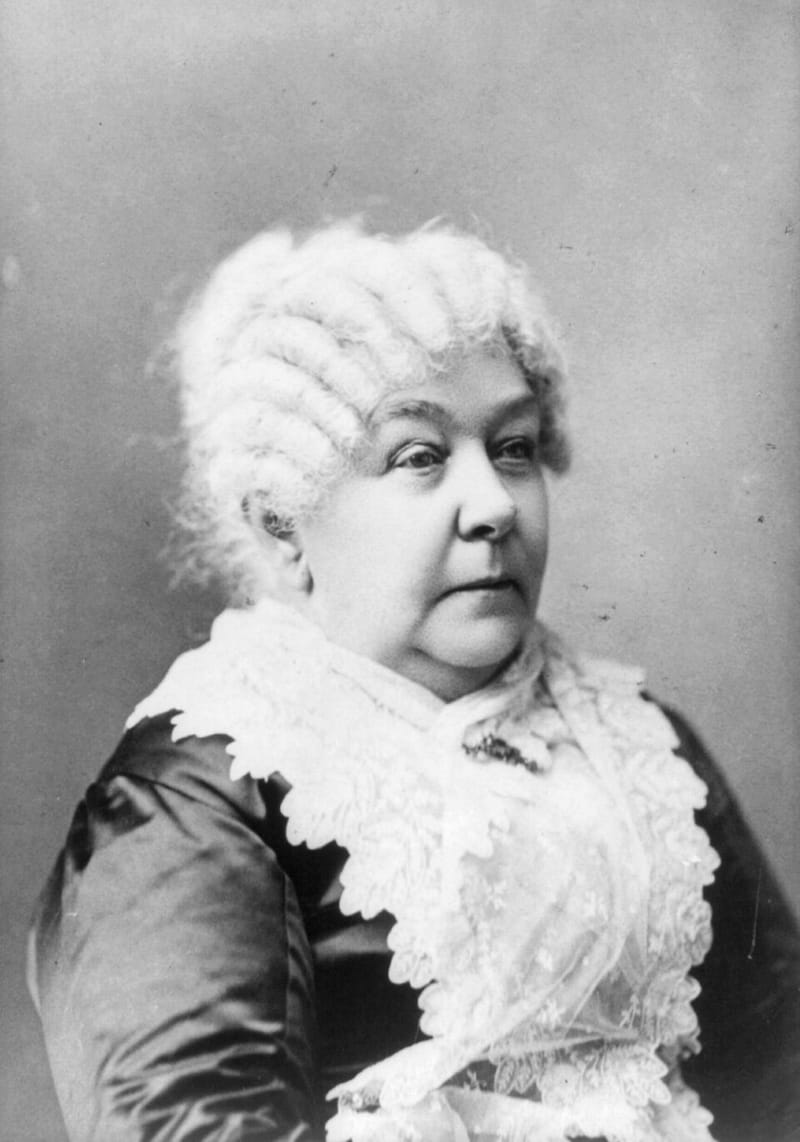
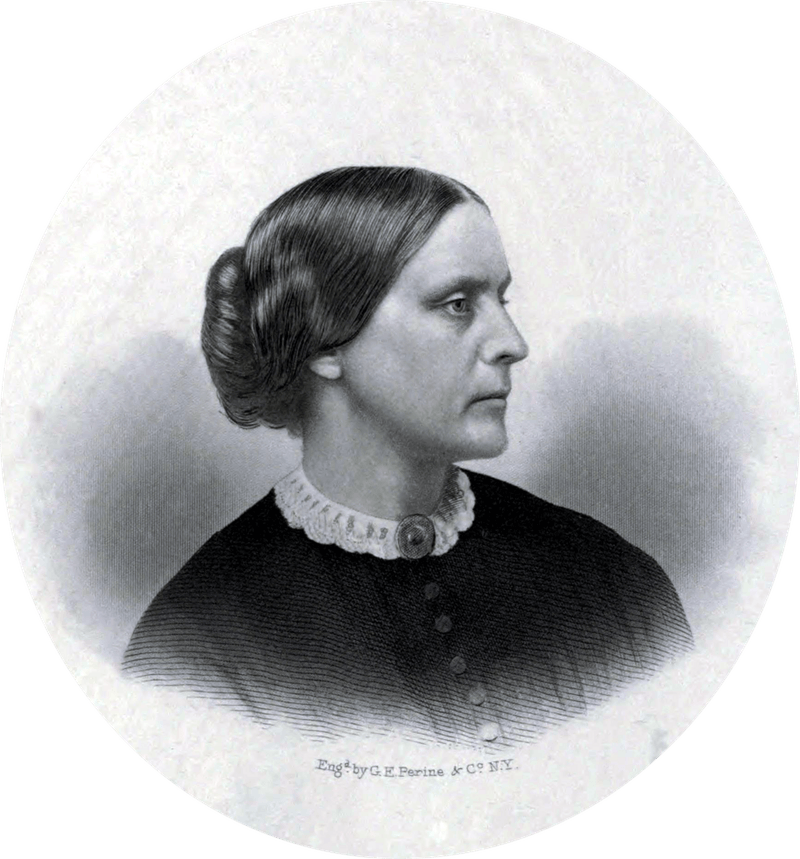
During Reconstruction, Radical Republicans saw Black voting as essential to protecting freedpeople and the Republican Party in the South. The Reconstruction Acts of 1867 had already required Southern states to enfranchise Black men. The amendment extended that protection nationwide and placed it beyond the reach of future legislatures. Women’s rights advocates, including Elizabeth Cady Stanton and Susan B. Anthony, opposed it because it did not include women, splitting the suffrage movement.
Principal ideas
- Section 1 forbids the federal and state governments to deny the vote on account of race, color, or previous condition of servitude.
- Section 2 gives Congress power to enforce it by appropriate legislation.
The amendment did not guarantee a right to vote outright; it only forbade certain grounds of exclusion — a gap Southern states later exploited.
Study this entry
Check your understanding
Try answering in your own words, then open the answer.
1.Why was this document written?Show answerHide
During Reconstruction, Radical Republicans saw Black voting as essential to protecting freedpeople and the Republican Party in the South. The Reconstruction Acts of 1867 had already required Southern states to enfranchise Black men.From “Historical circumstances” above.
2.What are its principal ideas?Show answerHide
- Section 1 forbids the federal and state governments to deny the vote on account of race, color, or previous condition of servitude. - Section 2 gives Congress power to enforce it by appropriate legislation.From “Principal ideas” above.
Turn this entry into 10 flashcards (key facts, dates, and why it matters) and review them in Learn.
Related History
How this connects to the rest of the atlas.
Events
People
Documents
Institutions

Sources
- 1.15th Amendment — Milestone Documents
National Archives · Primary source · cited for passage, ratification, later disenfranchisement, Voting Rights Act
- 2.Andrew Johnson: Life in Brief
Miller Center, University of Virginia · Scholarly · cited for presidential Reconstruction, black codes, impeachment, Black officeholders
- 3.Elizabeth Cady Stanton
National Women’s History Museum · Institutional · cited for suffragists’ opposition
Image credits
- The Fifteenth Amendment. Celebrated May 19th, 1870 LCCN2003690776, Popular Graphic Arts, 1871. Via Wikimedia Commons · Public domain · Source
Written for American History Atlas from the sources above. See how entries are researched.
Atlas by Alexander. More on Telegram.