WarExpansion and Sectional Conflict
The Mexican-American War
The United States conquers half of Mexico, 1846–1848
May 13, 1846 – February 2, 1848Texas, northern Mexico, New Mexico, California, and central Mexico
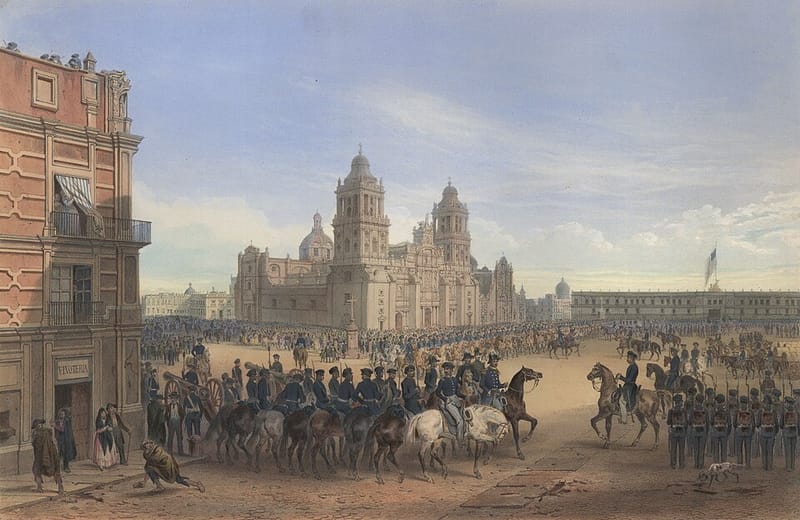
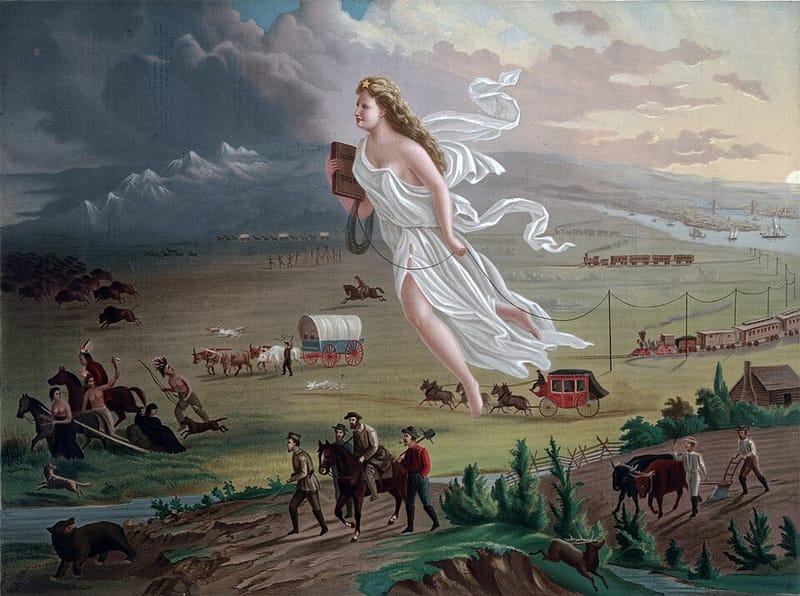
Within a year of annexing Texas, the United States went to war with Mexico over a disputed border and President James K. Polk’s ambition to acquire California and the Southwest. American armies occupied northern Mexico and California and captured Mexico City in September 1847. In the Treaty of Guadalupe Hidalgo, Mexico ceded about 55 percent of its territory. The conquest fulfilled dreams of continental expansion — and immediately reopened the question of whether slavery would spread into the new lands.
Key facts
- Date
- May 13, 1846 – February 2, 1848
- Location
- Texas, northern Mexico, New Mexico, California, and central Mexico
- Dating note
- Congress declared war May 13, 1846; the Treaty of Guadalupe Hidalgo was signed February 2, 1848, and ratified by the Senate March 10, 1848.
- Declared
- May 13, 1846
- Ended
- Treaty of Guadalupe Hidalgo, signed February 2, 1848; Senate vote 34–14
- Territory ceded
- About 55% of Mexico: present-day California, Nevada, Utah, New Mexico, most of Arizona and Colorado, and parts of Oklahoma, Kansas, and Wyoming
Why it matters
The Mexican-American War made the United States a continental nation, but it also turned the expansion of slavery into the question that would tear the Union apart.
Who fought
The United States, under President James K. Polk, against Mexico. Mexican civilians and the Native peoples of the borderlands were caught in the fighting.
Political background
Texas won independence from Mexico in 1836 but was not annexed for nearly a decade, partly because Mexico threatened war and partly because of Northern opposition to adding a slave state. In 1844 President John Tyler negotiated an annexation treaty, which the Senate rejected; with President-elect Polk’s support, a joint resolution of Congress passed in March 1845, and Texas entered the Union in December. Mexico broke diplomatic relations. The two countries also disagreed about Texas’s border: Texans claimed the Rio Grande, Mexico the Nueces River farther north.
Major phases
Provocation and declaration (1845–1846). Polk, elected on an expansionist platform, ordered General Zachary Taylor into the disputed land between the Nueces and the Rio Grande, and sent John Slidell to Mexico to buy that strip along with New Mexico and California. When Mexico refused and skirmishes broke out in the disputed territory in the spring of 1846, Polk asked Congress for war; it declared war on May 13.
Northern Mexico and the West (1846–1847). U.S. forces campaigned in northern Mexico and took control of New Mexico and California.
The road to Mexico City (1847). U.S. forces under General Winfield Scott landed at Veracruz and fought their way inland, capturing Mexico City in September 1847.
Peace (1847–1848). State Department clerk Nicholas Trist, recalled by Polk, ignored the order and negotiated a treaty with Mexico’s commissioners, signed at Guadalupe Hidalgo on February 2, 1848.
Turning points
- The occupation of the disputed border zone (1846): made armed clashes almost certain.
- Scott’s Veracruz landing and march inland (1847): brought the war to the Mexican capital.
- The fall of Mexico City (September 1847): led the Mexican government to negotiate.
Outcome
Mexico ceded about 55 percent of its territory and recognized the Rio Grande as the border of Texas. The United States paid a $15 million lump sum and assumed debts the Mexican government owed to American citizens. The Senate ratified the treaty on March 10, 1848, after striking Article X, which had guaranteed the protection of Mexican land grants.
Consequences for American society
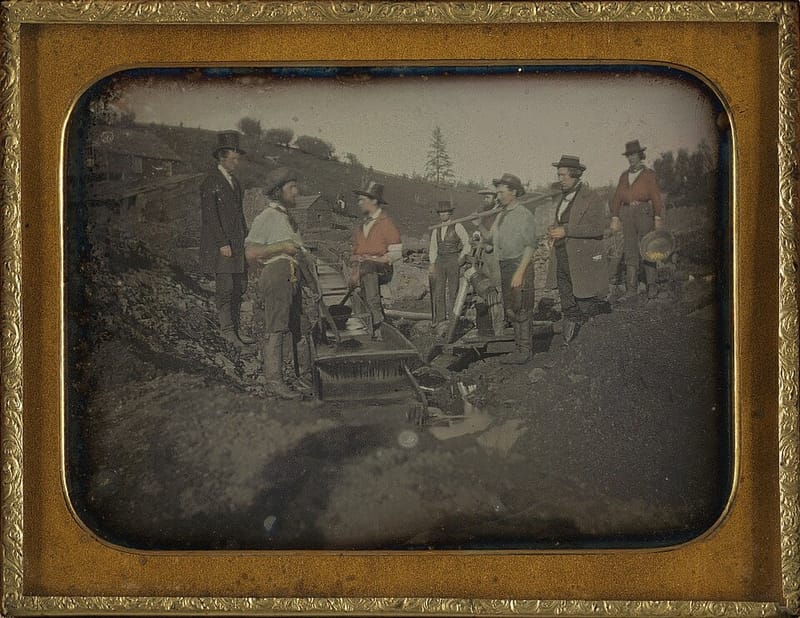
Together with Texas and the Oregon Treaty of 1846, the war brought under U.S. control the future states of the Southwest and the Pacific coast. Mexican citizens living in the ceded lands became residents of the United States, and the Senate’s removal of Article X, which would have guaranteed their land grants, left their property vulnerable. In January 1848, just before the treaty was signed, gold was discovered at Coloma, California, setting off the gold rush.
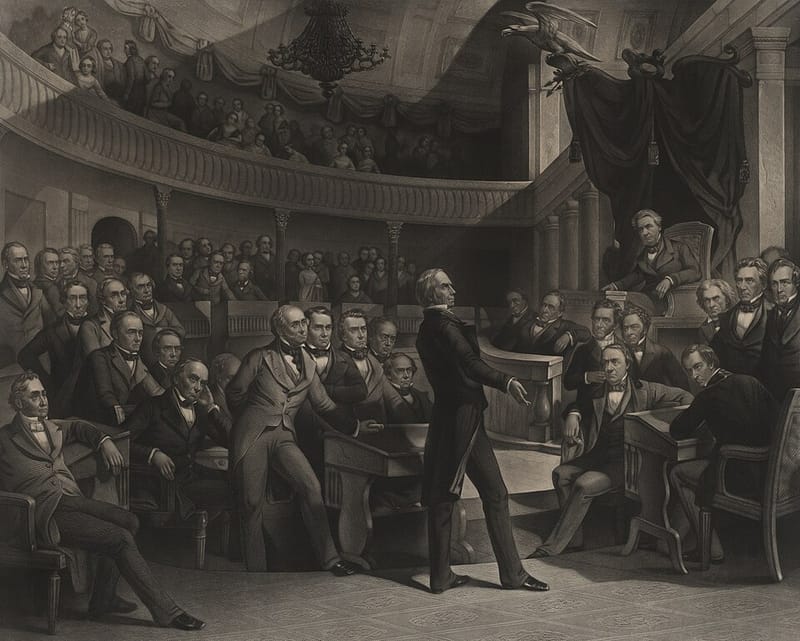
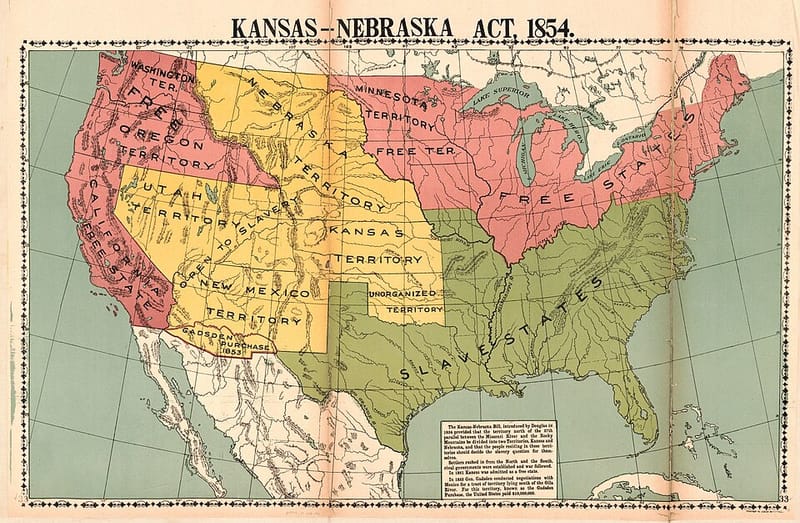
At home, the war was bitterly controversial. On August 8, 1846, Congressman David Wilmot proposed that “neither slavery nor involuntary servitude shall ever exist” in any territory taken from Mexico. Southern senators blocked the Wilmot Proviso, but it provoked a political firestorm that divided Congress along sectional lines and led to the Compromise of 1850 — and, a decade later, toward civil war.
Study this entry
Check your understanding
Try answering in your own words, then open the answer.
1.Why did the war begin?Show answerHide
Texas won independence from Mexico in 1836 but was not annexed for nearly a decade, partly because Mexico threatened war and partly because of Northern opposition to adding a slave state.From “Political background” above.
2.What were the turning points?Show answerHide
- The occupation of the disputed border zone (1846): made armed clashes almost certain. - Scott’s Veracruz landing and march inland (1847): brought the war to the Mexican capital. - The fall of Mexico City (September 1847): led the Mexican government to negotiate.From “Turning points” above.
3.How did it end?Show answerHide
Mexico ceded about 55 percent of its territory and recognized the Rio Grande as the border of Texas. The United States paid a $15 million lump sum and assumed debts the Mexican government owed to American citizens.From “Outcome” above.
4.How did it change American society?Show answerHide
Together with Texas and the Oregon Treaty of 1846, the war brought under U.S. control the future states of the Southwest and the Pacific coast.From “Consequences for American society” above.
Turn this entry into 8 flashcards (key facts, dates, and why it matters) and review them in Learn.
Related History
How this connects to the rest of the atlas.
Events
People
Documents
.jpg)
Sources
- 1.The Annexation of Texas, the Mexican-American War, and the Treaty of Guadalupe-Hidalgo, 1845–1848
U.S. Department of State, Office of the Historian · Institutional · cited for annexation, border dispute, Slidell mission, declaration of war, territory gained
- 2.Treaty of Guadalupe Hidalgo (1848) — Milestone Documents
National Archives · Primary source · cited for treaty terms, Trist, ratification, Article X
- 3.Marshall Gold Discovery State Historic Park
California State Parks · Institutional · cited for 1848 gold discovery at Coloma
Image credits
- Nebel Mexican War 12 Scott in Mexico City (cropped), Adolphe Jean-Baptiste Bayot / Carl Nebel, 1851. Via Wikimedia Commons · Public domain · Source
Written for American History Atlas from the sources above. See how entries are researched.
Atlas by Alexander. More on Telegram.