EventCivil War and Reconstruction
The Battle of Gettysburg
The bloodiest battle of the Civil War, July 1–3, 1863
July 1–3, 1863Gettysburg, Pennsylvania
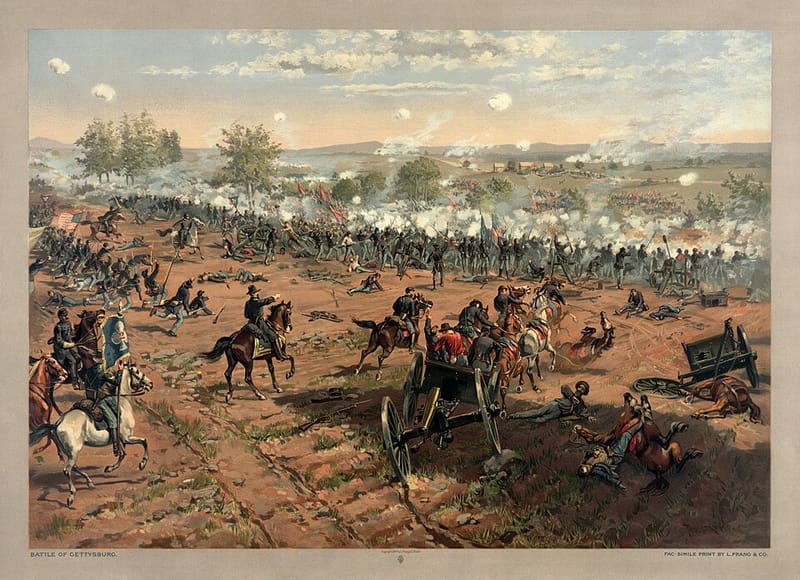
For three days in July 1863, the Union Army of the Potomac under George G. Meade and Robert E. Lee’s Confederate Army of Northern Virginia fought around the Pennsylvania town of Gettysburg. With as many as 51,000 soldiers killed, wounded, captured, or missing, it was the bloodiest battle of the war. Lee’s defeat — capped by the failed assault known as Pickett’s Charge — ended his second invasion of the North and is often called the turning point of the Civil War.
Key facts
- Date
- July 1–3, 1863
- Location
- Gettysburg, Pennsylvania
- Dates
- July 1–3, 1863
- Armies
- Union Army of the Potomac (about 90,000) under Meade; Confederate Army of Northern Virginia (about 75,000) under Lee
- Casualties
- As many as 51,000 killed, wounded, captured, or missing
- Result
- Union victory; Lee retreated to Virginia
Why it matters
Gettysburg was the war’s largest battle and the high-water mark of the Confederacy; after it, Lee never again invaded the North.
Historical background
After defeating the Union army at Chancellorsville in May 1863, Lee led his army north in June on his second invasion of Union territory. He hoped to win a battle north of the Mason-Dixon line that would force a negotiated end to the war, and to feed his army from Pennsylvania’s farms. President Lincoln, frustrated with General Joseph Hooker, replaced him with George G. Meade in late June.
Causes and contributing factors
Lee, lacking intelligence because his cavalry under J.E.B. Stuart was absent, learned that Meade’s army was close and ordered his scattered forces to concentrate at Gettysburg, where many roads converged. The battle began almost by accident when Confederate troops seeking supplies met Union cavalry west of town.
What happened
July 1. Union cavalry under John Buford held off Confederate infantry until Union infantry arrived; their commander, John Reynolds, was killed. By afternoon about 30,000 Confederates had overwhelmed some 20,000 Union troops, who fell back through the town to Cemetery Hill.
July 2. The Union army held a fishhook-shaped line of hills and ridges south of town. Lee launched heavy attacks under James Longstreet against the Union left, with ferocious fighting at Devil’s Den, Little Round Top, the Wheatfield, the Peach Orchard, and Cemetery Ridge; Union commanders shifted reinforcements quickly along their shorter interior lines to hold.
July 3. After fighting at Culp’s Hill, Lee sent about 12,500 men under Longstreet — including George Pickett’s division — across open ground against the Union center on Cemetery Ridge. The assault, remembered as Pickett’s Charge, was shattered.
Immediate consequences
Lee retreated toward Virginia. Meade did not pursue aggressively, and when Lincoln learned that Lee had escaped across the flooded Potomac, he lamented, “We had only to stretch forth our hands & they were ours.” Coming the same week as Grant’s capture of Vicksburg, Gettysburg nevertheless lifted Northern spirits and ended the Confederacy’s hope of winning independence through a decisive victory on Northern soil.
Long-term significance
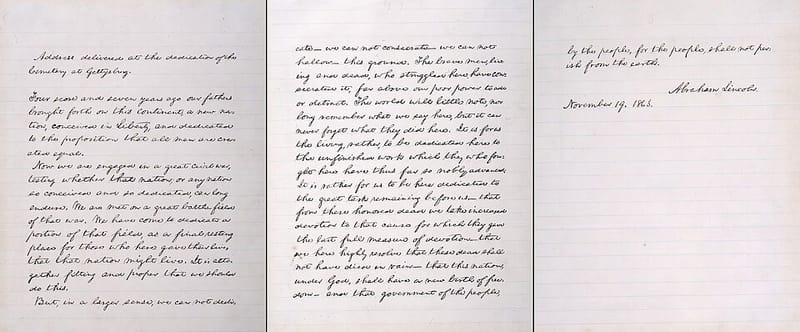
Residents and community leaders established the Soldiers’ National Cemetery on the battlefield, and at its dedication in November 1863 Lincoln delivered the Gettysburg Address. The battlefield is preserved as Gettysburg National Military Park.
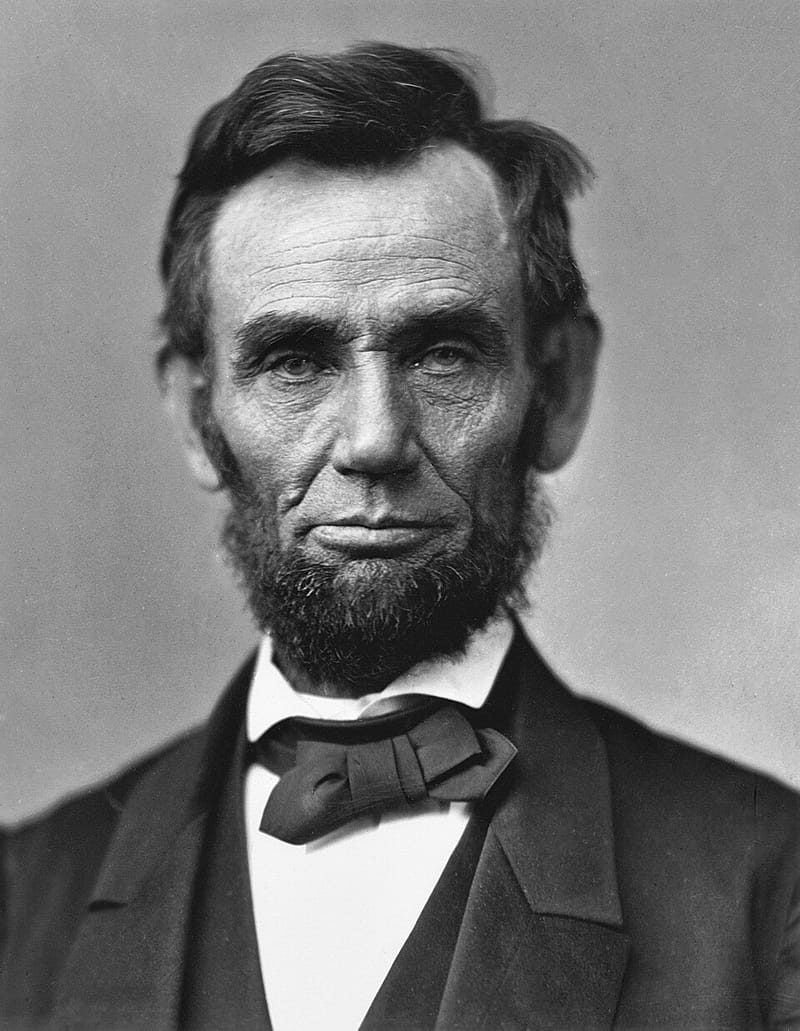
Key peopleAbraham Lincoln
Study this entry
Check your understanding
Try answering in your own words, then open the answer.
1.What led to the Battle of Gettysburg?Show answerHide
Lee, lacking intelligence because his cavalry under J.E.B. Stuart was absent, learned that Meade’s army was close and ordered his scattered forces to concentrate at Gettysburg, where many roads converged. The battle began almost by accident when Confederate troops seeking supplies met Union cavalry west of town.From “Causes and contributing factors” above.
2.What happened?Show answerHide
July 1. Union cavalry under John Buford held off Confederate infantry until Union infantry arrived; their commander, John Reynolds, was killed. By afternoon about 30,000 Confederates had overwhelmed some 20,000 Union troops, who fell back through the town to Cemetery Hill.From “What happened” above.
3.What were the immediate consequences?Show answerHide
Lee retreated toward Virginia. Meade did not pursue aggressively, and when Lincoln learned that Lee had escaped across the flooded Potomac, he lamented, “We had only to stretch forth our hands & they were ours.”From “Immediate consequences” above.
4.Why does it still matter?Show answerHide
Residents and community leaders established the Soldiers’ National Cemetery on the battlefield, and at its dedication in November 1863 Lincoln delivered the Gettysburg Address. The battlefield is preserved as Gettysburg National Military Park.From “Long-term significance” above.
Turn this entry into 8 flashcards (key facts, dates, and why it matters) and review them in Learn.
Related History
How this connects to the rest of the atlas.
People

Sources
- 1.Gettysburg
American Battlefield Trust · Scholarly · cited for course and significance of the battle
- 2.Gettysburg — History & Culture
National Park Service, Gettysburg National Military Park · Institutional · cited for the battlefield park
- 3.Civil War Casualties
American Battlefield Trust · Scholarly · cited for death toll estimates
Image credits
- Battle of Gettysburg, Thure de Thulstrup / Adam Cuerden, 1887. Via Wikimedia Commons · Public domain · Source
Written for American History Atlas from the sources above. See how entries are researched.
Atlas by Alexander. More on Telegram.