The Founding of Jamestown
The first permanent English settlement in North America, 1607
May 13, 1607Jamestown Island, Virginia
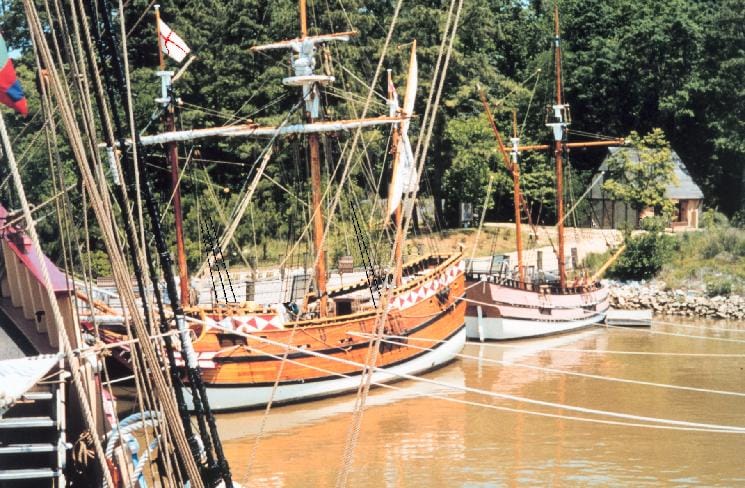
In May 1607, 104 English men and boys sent by the Virginia Company chose a marshy island on the James River for a settlement they named for King James I. Jamestown nearly failed — from disease, hunger, and conflict with the Powhatan peoples whose land it occupied — but survived to become the first permanent English settlement in North America. By 1619 it had brought together three continents: the first representative assembly, the first documented Africans, and tobacco grown for profit on Native land.
Key facts
- Date
- May 13, 1607
- Location
- Jamestown Island, Virginia
- Founded
- May 13, 1607, by 104 English men and boys
- Sponsor
- The Virginia Company of London, a private joint-stock company
- Starving Time
- Winter 1609–10
- Cash crop
- Tobacco, after John Rolfe introduced a new strain in 1612
- 1619
- First representative assembly (July 30); first documented Africans arrive
Why it matters
Jamestown was where English America began, and where the contradictions of American history — self-government alongside slavery and conquest — first took shape together.
Historical background
The Chesapeake region was home to the Powhatan Indians, an Algonquian-speaking people led by a paramount chief the English called Powhatan. Archeological evidence shows that Native people used the Jamestown site more than 10,000 years ago. England, after the failure at Roanoke, tried again with a commercial venture: the Virginia Company, whose investors wanted a return on their money.
Causes and contributing factors
The colonists left England in December 1606 on three ships — the Susan Constant, the Godspeed, and the Discovery. They chose Jamestown for its defensibility: surrounded by water on three sides, far upriver from Spanish raiders, with deep water for ships. The site was also not inhabited by Native people, though it lay within Powhatan hunting lands.
What happened
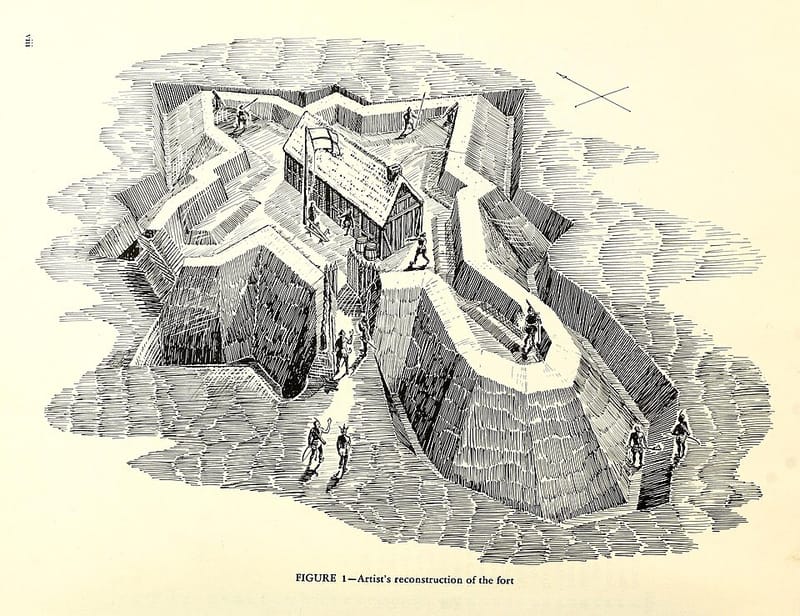
The colonists finished a triangular fort by June 15, 1607. Disease — partly from drinking salty river water — killed many in the first months. Without food sent by Powhatan, the settlement would most likely have failed. By late 1609, as the English demanded too much food during a drought, relations collapsed. In the winter of 1609–10, the “Starving Time,” colonists afraid to leave the fort ate animals, leather, and in some cases the bodies of the dead. In May 1610, survivors were about to abandon Jamestown when a new governor and supplies arrived.
The colony’s fortunes changed in 1612, when John Rolfe introduced a new strain of tobacco that became the cash crop the Virginia Company had hoped for. Rolfe’s marriage in 1614 to Pocahontas, Powhatan’s daughter — who had been kidnapped by the English in 1613 and converted to Christianity — brought a period of peace.
Immediate consequences
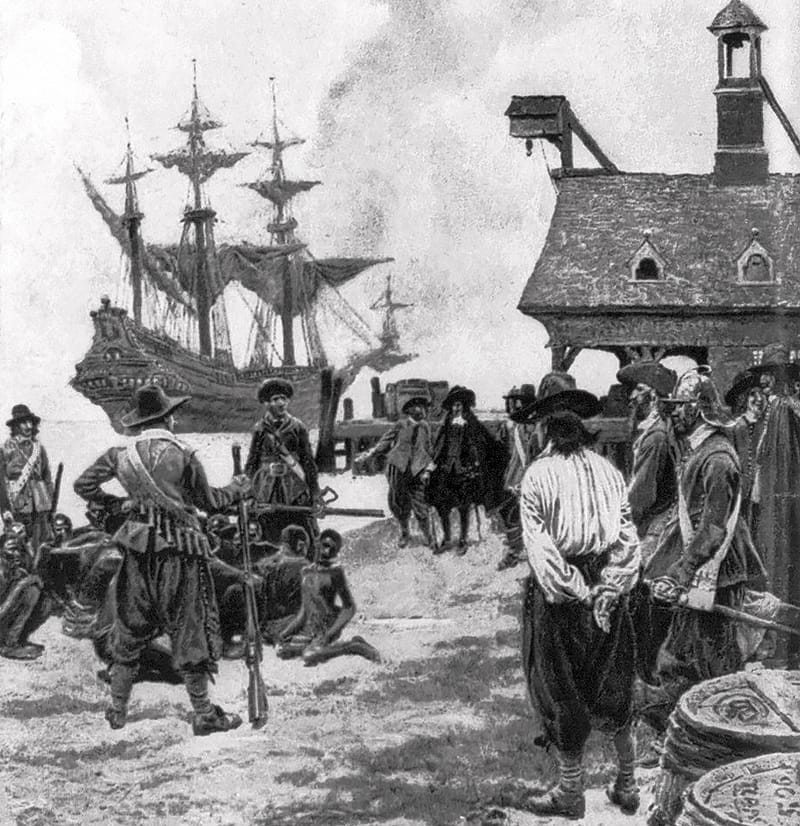
In 1619 Governor George Yeardley called the first representative legislative assembly, the beginning of representative government in what became the United States. That same year the first documented Africans were brought to Virginia and sold, and the Virginia Company shipped about 90 women to the colony to start families. Tobacco’s demand for land and labor drove expansion onto Powhatan territory. In March 1622 the paramount chief Opechancanough launched a coordinated attack that killed 350–400 colonists; another in 1644 killed a similar number. After Opechancanough’s capture and death in 1646, the Powhatan were reduced to tributary status. In 1624 the king revoked the bankrupt Virginia Company’s charter and Virginia became a royal colony.
Long-term significance
Jamestown set patterns that shaped the South and the nation: representative government for some; a plantation economy built on tobacco; the dispossession of Native peoples; and, increasingly, slavery. Bacon’s Rebellion in 1676 — frontier colonists attacking Native peoples and defying the governor — exposed tensions among poor whites, elites, and Native nations. Jamestown remained the capital until 1699, when the government moved to Williamsburg.
Study this entry
Check your understanding
Try answering in your own words, then open the answer.
1.What led to the Founding of Jamestown?Show answerHide
The colonists left England in December 1606 on three ships — the Susan Constant, the Godspeed, and the Discovery. They chose Jamestown for its defensibility: surrounded by water on three sides, far upriver from Spanish raiders, with deep water for ships.From “Causes and contributing factors” above.
2.What happened?Show answerHide
The colonists finished a triangular fort by June 15, 1607. Disease — partly from drinking salty river water — killed many in the first months.From “What happened” above.
3.What were the immediate consequences?Show answerHide
In 1619 Governor George Yeardley called the first representative legislative assembly, the beginning of representative government in what became the United States.From “Immediate consequences” above.
4.Why does it still matter?Show answerHide
Jamestown set patterns that shaped the South and the nation: representative government for some; a plantation economy built on tobacco; the dispossession of Native peoples; and, increasingly, slavery.From “Long-term significance” above.
Turn this entry into 11 flashcards (key facts, dates, and why it matters) and review them in Learn.
Related History
How this connects to the rest of the atlas.
Events
Concepts

Sources
- 1.A Short History of Jamestown
National Park Service, Historic Jamestowne · Institutional · cited for founding, Powhatan relations, Starving Time, tobacco, 1619, 1622 and 1644 wars, Bacon’s Rebellion
Image credits
- Jamestown-Virginia-settlement-ships-NOAA, The original uploader was Wikid77 at English Wikipedia ., 5 January 2007 (original upload date). Via Wikimedia Commons · Public domain · Source
Written for American History Atlas from the sources above. See how entries are researched.
Atlas by Alexander. More on Telegram.