The First Africans in Virginia
1619: Enslaved Angolans arrive at Point Comfort
August 1619Point Comfort (present-day Hampton), Virginia
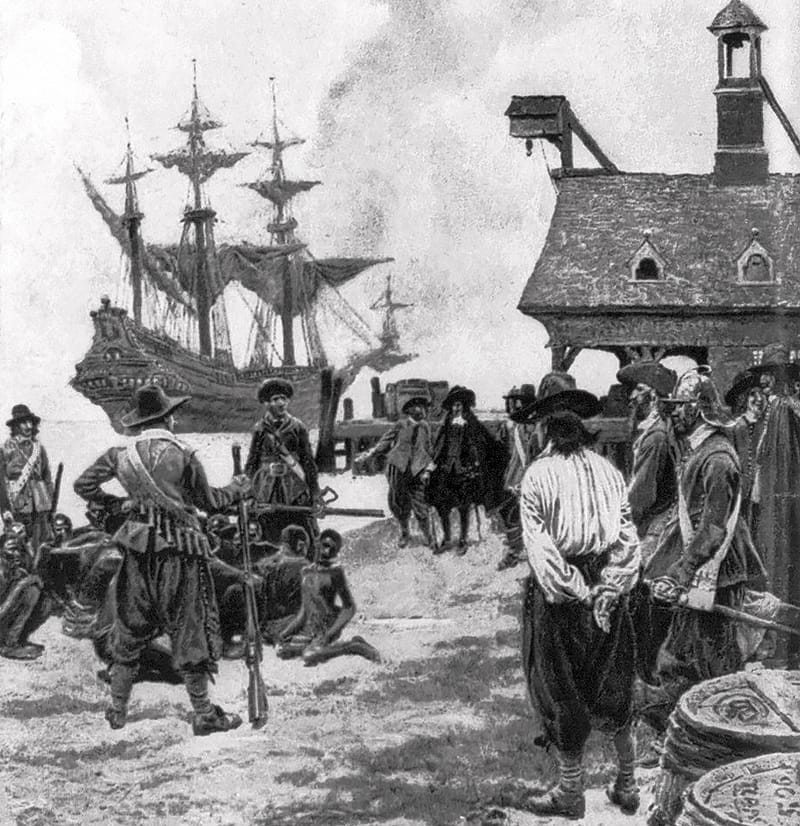
In late August 1619, the English privateer White Lion arrived at Point Comfort, Virginia, and traded about twenty Africans for food; the ship Treasurer soon brought a few more. They had been captured in west central Africa, most likely from the kingdom of Ndongo in present-day Angola, and taken from a Portuguese slave ship bound for Mexico. They were the first documented Africans in English Virginia, and their arrival is often taken as the beginning of the history of slavery in what became the United States.
Key facts
- Date
- August 1619
- Location
- Point Comfort (present-day Hampton), Virginia
- Arrived
- August 1619, at Point Comfort, Virginia
- Ships
- The privateers White Lion and Treasurer
- Origin
- Probably Kimbundu-speaking people from Ndongo, in present-day Angola
- Status
- Contested — but historical evidence suggests they were often treated in ways that resemble enslavement
Why it matters
The arrival of the first Africans at Point Comfort marks the beginning of the African American experience in English North America and of the system of racial slavery that shaped the country’s economy, politics, and conflicts for nearly 250 years.
Historical background
By 1619, the Portuguese had been capturing and enslaving people in west central Africa, including from the kingdom of Ndongo, whose people raised crops and animals and mostly followed local religions. Virginia’s tobacco economy, launched in 1612, created a hunger for labor that English indentured servants only partly filled.
Causes and contributing factors
In 1619 a Portuguese slave ship sailed from west central Africa for New Spain (Mexico) carrying captives from Ndongo. Two English privateers, the White Lion and the Treasurer, attacked it and took some of the captives. Many had probably had contact with Catholic missionaries, since Portuguese law required enslaved Africans to be baptized before reaching America.
What happened
The White Lion reached Point Comfort in late August 1619, and about twenty Africans were sold in exchange for food. A few days later the Treasurer arrived and sold two or three more. Most were distributed to the households of colonial leaders. Census records from the 1620s and 1630s list Africans living at Jamestown and on plantations such as Flowerdew Hundred, many identified only by first names, among them a woman named Angelo purchased by William Peirce.
Immediate consequences
The legal status of these first Africans is debated. Virginia had not yet written laws defining slavery, and some Africans, such as Anthony and Mary Johnson, gained their freedom and bought land. But the National Park Service notes that the evidence suggests they were often treated in a manner closely resembling enslavement. More captives followed: in 1628 a shipload of about 100 Angolans was sold in Virginia.
Long-term significance
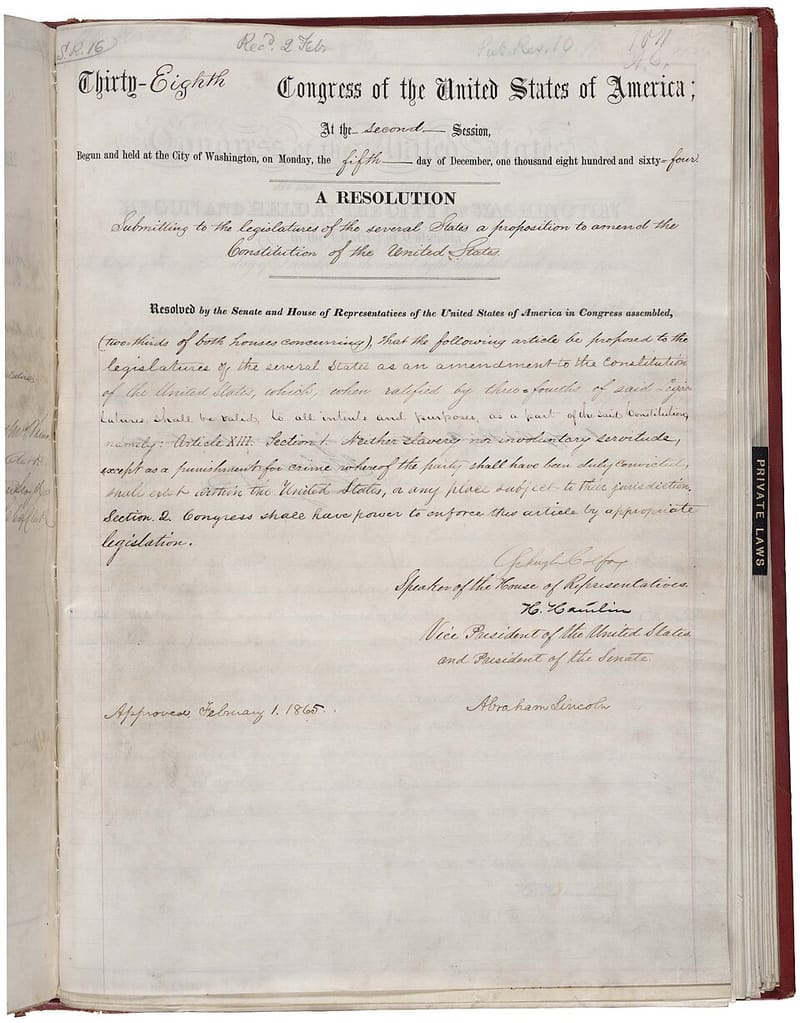
Over the following decades, Virginia’s laws hardened lifelong, inherited slavery based on race, and enslaved Africans replaced indentured servants as the colony’s main labor force. The year 1619 has become a symbol of slavery’s deep roots in English America — a system that ended only with the Thirteenth Amendment in 1865.
Study this entry
Check your understanding
Try answering in your own words, then open the answer.
1.What led to the First Africans in Virginia?Show answerHide
In 1619 a Portuguese slave ship sailed from west central Africa for New Spain (Mexico) carrying captives from Ndongo. Two English privateers, the White Lion and the Treasurer, attacked it and took some of the captives.From “Causes and contributing factors” above.
2.What happened?Show answerHide
The White Lion reached Point Comfort in late August 1619, and about twenty Africans were sold in exchange for food. A few days later the Treasurer arrived and sold two or three more.From “What happened” above.
3.What were the immediate consequences?Show answerHide
The legal status of these first Africans is debated. Virginia had not yet written laws defining slavery, and some Africans, such as Anthony and Mary Johnson, gained their freedom and bought land.From “Immediate consequences” above.
4.Why does it still matter?Show answerHide
Over the following decades, Virginia’s laws hardened lifelong, inherited slavery based on race, and enslaved Africans replaced indentured servants as the colony’s main labor force.From “Long-term significance” above.
Turn this entry into 10 flashcards (key facts, dates, and why it matters) and review them in Learn.
Related History
How this connects to the rest of the atlas.
_-_Landing_Negroes_at_Jamestown_from_Dutch_Man-of-War,_1619_-_1901.jpg)
Sources
- 1.Virginia’s First Africans
Encyclopedia Virginia, Virginia Humanities · Scholarly · cited for 1619 arrival, origins in Ndongo, early lives
- 2.A Short History of Jamestown
National Park Service, Historic Jamestowne · Institutional · cited for founding, Powhatan relations, Starving Time, tobacco, 1619, 1622 and 1644 wars, Bacon’s Rebellion
- 3.The Transatlantic Slave Trade and the Middle Passage
Encyclopedia Virginia, Virginia Humanities · Scholarly · cited for the wider slave trade
Image credits
- Landing at Jamestown from a Dutch Man-of-War, 1619 (illustration by Howard Pyle, 1901), Howard Pyle (1853-1911). Compare slaveryimages.org slaveryimages.org item1974, 1901. Via Wikimedia Commons · Public domain · Source
Written for American History Atlas from the sources above. See how entries are researched.
Atlas by Alexander. More on Telegram.