Plymouth Colony and the Wampanoag
The Pilgrims’ settlement and the alliance that kept it alive, 1620–1621
December 1620 – March 22, 1621Plymouth, Massachusetts, in the homeland of the Wampanoag
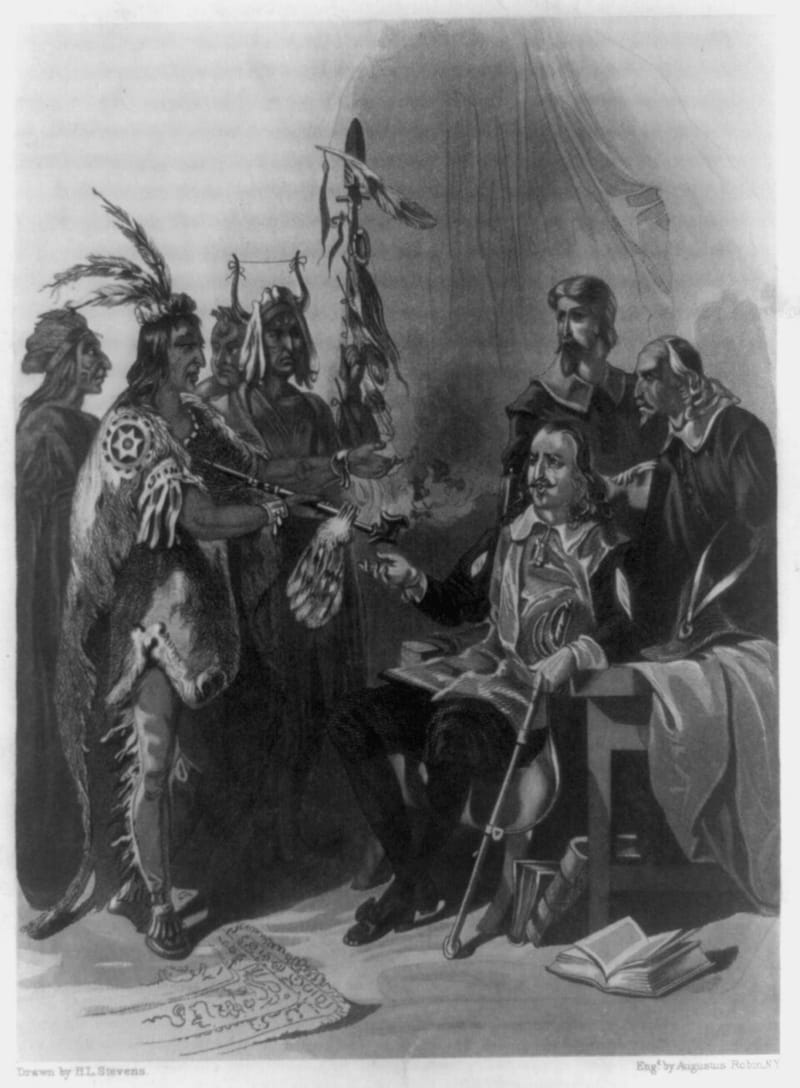
In December 1620, English colonists from the Mayflower — many of them religious Separatists later called Pilgrims — settled at Plymouth, in the homeland of the Wampanoag people. Half of them died that first winter. In March 1621, the Wampanoag leader Massasoit, whose people had been devastated by diseases brought by earlier English visitors and who faced pressure from the rival Narragansett, made an alliance with the newcomers. That treaty kept the colony alive, and Massasoit honored it for the rest of his life.
Key facts
- Date
- December 1620 – March 22, 1621
- Location
- Plymouth, Massachusetts, in the homeland of the Wampanoag
- Dating note
- The Mayflower reached Cape Cod in November 1620 and the colonists settled at Plymouth in December; the treaty with Massasoit followed on March 22, 1621.
- Arrived
- November 1620 at Cape Cod; settled at Plymouth in December
- First winter
- 50 of the 102 passengers died of disease or exposure
- Treaty
- March 22, 1621, between Massasoit (Ousamequin) and Governor John Carver
- Interpreter
- Squanto (Tisquantum), a Patuxet man who had been kidnapped and taken to England
Why it matters
Plymouth is a founding myth of the United States, but its real history is one of mutual dependence: the colony survived because of an alliance with a Native nation already reeling from European diseases.
Historical background
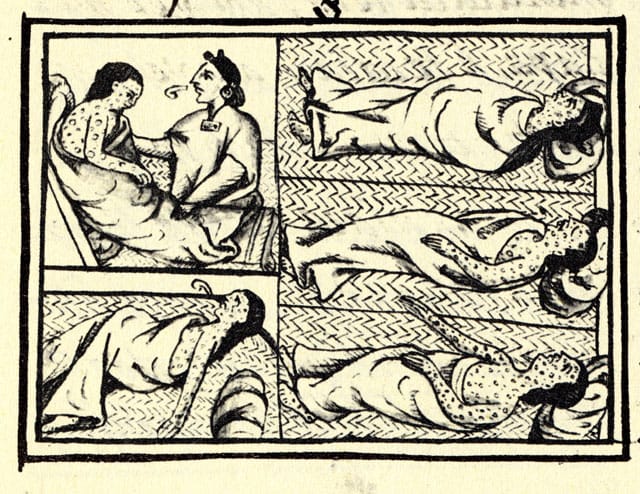
The land around Plymouth was Wampanoag territory, led by Massasoit Ousamequin — “Massasoit” means Great Sachem. Before 1620, English traders and fishermen had visited the coast. They spread epidemic disease that caused widespread death among the Wampanoag; a plague had devastated Wampanoag society in the years just before the colonists arrived. A weakened Wampanoag nation faced the Narragansett, who sought to take over its land.
Causes and contributing factors
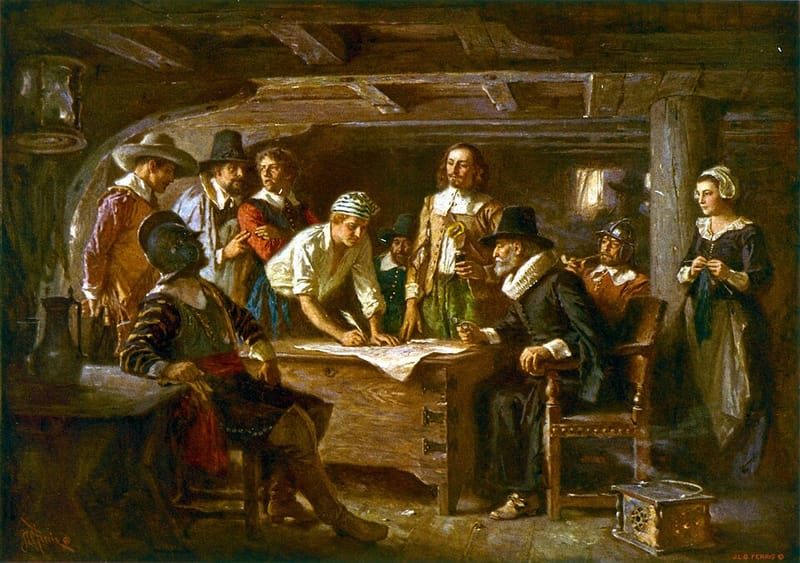
The colonists, who had signed the Mayflower Compact before landing, arrived too late in the year to plant. Living in temporary shelters and aboard ship, they died in large numbers: by the spring of 1621, 50 of the 102 people who had come on the Mayflower were dead.
What happened
After a series of encounters, Massasoit and a party of his men approached the English on March 22, 1621. With help from Squanto — a Patuxet man who had been taken as a slave by an Englishman and had lived in England — the two sides negotiated. Massasoit agreed that neither he nor his people would harm the colonists, that offenders would be handed over for punishment, and that each side would aid the other if attacked — “if any did unjustly war against him, we would aid him; if any did war against us, he should aid us.” Massasoit saw in the English a potential ally that could help him secure his people’s independence from the Narragansett.
The cooperation that followed brought the colonists a good planting season and harvest — the origin, by some accounts, of the Thanksgiving story.
Immediate consequences
The alliance gave the colony security and access to Native knowledge of planting, and it gave the Wampanoag an ally against the Narragansett. Plymouth survived and grew slowly.
Long-term significance
Massasoit lived about forty years after the treaty. As English settlement expanded and pressure on Wampanoag land grew, relations broke down. After Massasoit’s death, his son Wamsutta died mysteriously, and his younger son Metacom, known to the English as Philip, became sachem; the conflicts that followed led to King Philip’s War in 1675–76. The Thanksgiving story later Americans told about Plymouth emphasized harmony; the fuller history includes epidemic, alliance, and eventually war and dispossession.
Study this entry
Check your understanding
Try answering in your own words, then open the answer.
1.What led to Plymouth Colony and the Wampanoag?Show answerHide
The colonists, who had signed the Mayflower Compact before landing, arrived too late in the year to plant. Living in temporary shelters and aboard ship, they died in large numbers: by the spring of 1621, 50 of the 102 people who had come on the Mayflower were dead.From “Causes and contributing factors” above.
2.What happened?Show answerHide
After a series of encounters, Massasoit and a party of his men approached the English on March 22, 1621. With help from Squanto — a Patuxet man who had been taken as a slave by an Englishman and had lived in England — the two sides negotiated.From “What happened” above.
3.What were the immediate consequences?Show answerHide
The alliance gave the colony security and access to Native knowledge of planting, and it gave the Wampanoag an ally against the Narragansett. Plymouth survived and grew slowly.From “Immediate consequences” above.
4.Why does it still matter?Show answerHide
Massasoit lived about forty years after the treaty. As English settlement expanded and pressure on Wampanoag land grew, relations broke down.From “Long-term significance” above.
Turn this entry into 10 flashcards (key facts, dates, and why it matters) and review them in Learn.
Related History
How this connects to the rest of the atlas.
Events
.jpg)
Sources
- 1.The Treaty That Saved Plymouth Colony
Library of Congress, In Custodia Legis (Law Library blog) · Institutional · cited for Mayflower deaths, Massasoit, Squanto, treaty terms, March 22, 1621
- 2.Mayflower Compact: 1620
Avalon Project, Yale Law School · Primary source · cited for text and date
- 3.The Wampanoag — and King Philip’s War
National Park Service, Roger Williams National Memorial · Institutional · cited for Metacom and the outbreak of King Philip’s War
Image credits
- Meeting of Governor Carver and Massasoit - drawn by H.L. Stevens ; eng'd. by Augustus Robin, N.Y. LCCN89707285 (cropped), Robin, Augustus, engraver, 1870. Via Wikimedia Commons · Public domain · Source
Written for American History Atlas from the sources above. See how entries are researched.
Atlas by Alexander. More on Telegram.