EventExploration and Early Colonization
The Roanoke Colony
England’s “Lost Colony,” 1587
1584–1590Roanoke Island, North Carolina
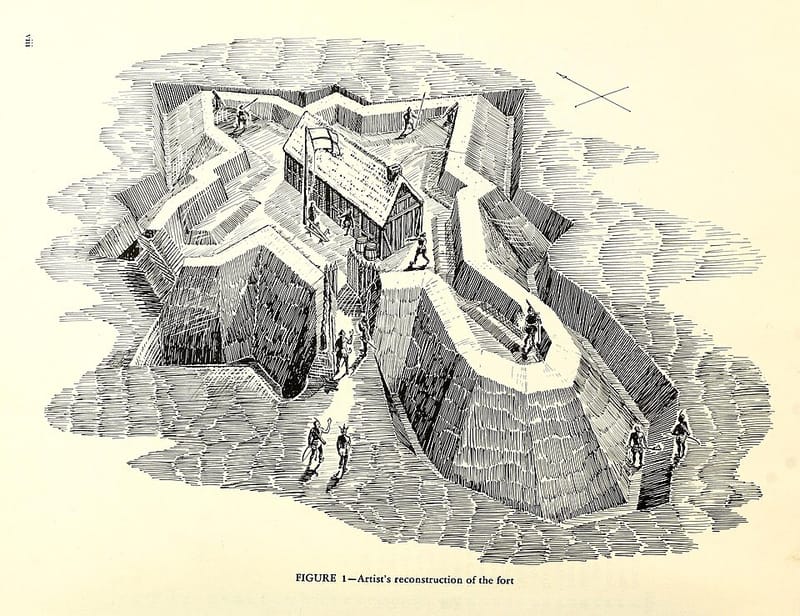
Sponsored by Sir Walter Raleigh, England’s first attempts at a colony in North America centered on Roanoke Island in present-day North Carolina between 1584 and 1590. The last group, 118 men, women, and children led by John White, arrived in 1587. When White returned with supplies three years later, the settlers were gone, leaving the word “CROATOAN” carved into a post. What became of them has never been solved.
Key facts
- Date
- 1584–1590
- Location
- Roanoke Island, North Carolina
- Dating note
- English expeditions to Roanoke spanned 1584–1590; the 1587 colonists had disappeared when John White returned in August 1590.
- Sponsor
- Sir Walter Raleigh
- 1587 colonists
- 118 men, women, and children under Governor John White
- Virginia Dare
- White’s granddaughter, born in 1587, the first English child born in the Americas
- White’s return
- August 1590, three years after he left
- Clue
- “CROATOAN” carved on a post — the name of an island and of a Native people allied with the English
Why it matters
Roanoke was England’s first serious attempt at settlement in America, and its failure showed how fragile — and how dependent on Native peoples — early colonies were.
Historical background
In the 1580s England was a latecomer to American colonization, eager to challenge Spain and to find wealth and a base for privateering. Raleigh sponsored a reconnaissance voyage in 1584 and a military colony in 1585–86, which quarreled with the local Algonquian peoples and abandoned the island.
Causes and contributing factors
The 1587 expedition was meant to be different: a settlement of families, intending to establish itself on the Chesapeake Bay. Instead the colonists were left at Roanoke.
What happened
The 118 colonists began their journey in April 1587 under John White, intending to settle on the Chesapeake Bay but left instead at Roanoke. Relations with neighboring peoples were tense: at one point the colonists mistakenly attacked friendly Croatoan people, an assault stopped only by Manteo, a Croatoan man working with the English. That August brought the birth of Virginia Dare, White’s granddaughter. Facing the threat of attack, a lack of reliable food, and the coming winter, the colonists persuaded White to sail to England for supplies.
White could not return until August 1590. He found the settlement abandoned and the word “CROATOAN” carved on a post. Assuming the colonists had moved to Croatoan, a nearby island home to Native allies, Raleigh and White made several attempts to find them but never did.
Immediate consequences
England abandoned its efforts at Roanoke. It would be seventeen years before the next English colony, at Jamestown in 1607.
Long-term significance
Theories about the colonists’ fate — that they were killed, died of hunger, or joined nearby Native communities — have circulated for four centuries, and none has been proven. The “Lost Colony” became an enduring American legend. More importantly, Roanoke’s failure taught English promoters lessons about supply, investment, and relations with Native peoples that shaped the Virginia Company’s venture at Jamestown.
Study this entry
Check your understanding
Try answering in your own words, then open the answer.
1.What led to the Roanoke Colony?Show answerHide
The 1587 expedition was meant to be different: a settlement of families, intending to establish itself on the Chesapeake Bay. Instead the colonists were left at Roanoke.From “Causes and contributing factors” above.
2.What happened?Show answerHide
The 118 colonists began their journey in April 1587 under John White, intending to settle on the Chesapeake Bay but left instead at Roanoke.From “What happened” above.
3.What were the immediate consequences?Show answerHide
England abandoned its efforts at Roanoke. It would be seventeen years before the next English colony, at Jamestown in 1607.From “Immediate consequences” above.
4.Why does it still matter?Show answerHide
Theories about the colonists’ fate — that they were killed, died of hunger, or joined nearby Native communities — have circulated for four centuries, and none has been proven. The “Lost Colony” became an enduring American legend.From “Long-term significance” above.
Turn this entry into 10 flashcards (key facts, dates, and why it matters) and review them in Learn.
Related History
How this connects to the rest of the atlas.
Events
.jpg)
Sources
- 1.1587: The Lost Colony
National Park Service, Fort Raleigh National Historic Site · Institutional · cited for 1587 voyage, colonists, White’s return
- 2.Fort Raleigh — History & Culture
National Park Service, Fort Raleigh National Historic Site · Institutional · cited for Raleigh’s sponsorship and 1584–1590 dates
- 3.North Carolina: Fort Raleigh National Historic Site
National Park Service · Institutional · cited for CROATOAN post, Virginia Dare, theories
Image credits
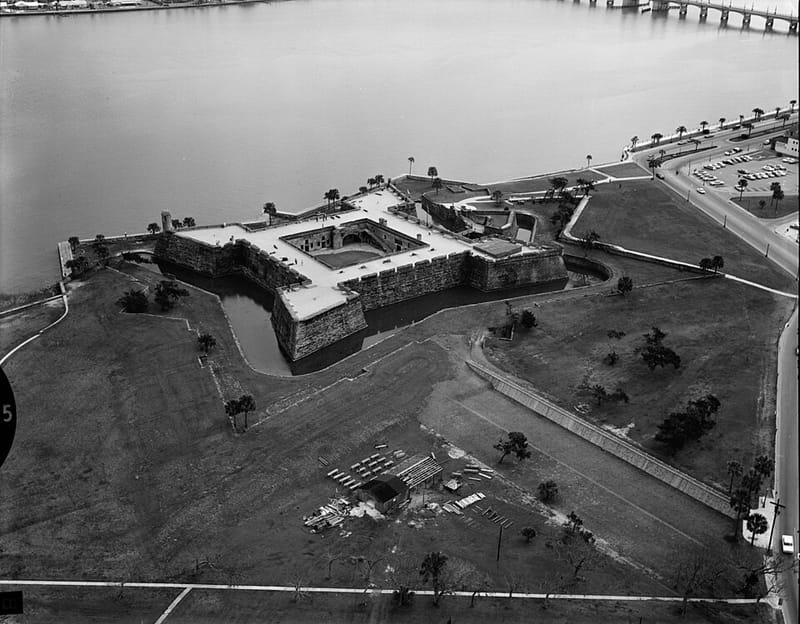
- Fort Raleigh (artist's reconstruction), Uncredited, 1962. Via Wikimedia Commons · Public domain · Source
Written for American History Atlas from the sources above. See how entries are researched.
Atlas by Alexander. More on Telegram.