ConceptExploration and Early Colonization
The Columbian Exchange
The transfer of plants, animals, people, and diseases between the hemispheres after 1492
1492 – c. 1600s
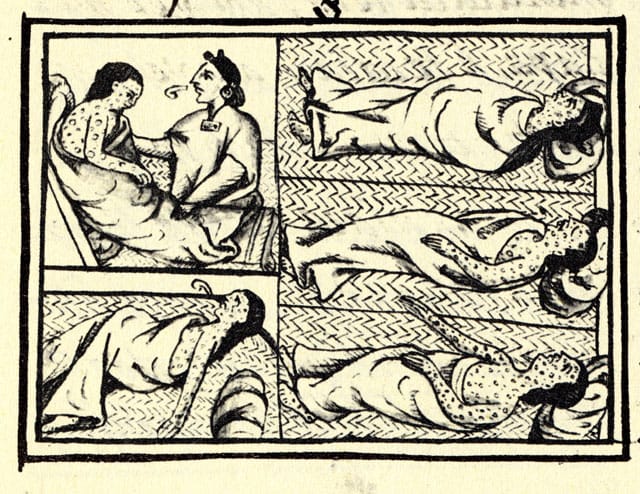
The “Columbian Exchange,” a term coined by the historian Alfred W. Crosby, describes the enormous transfer of crops, livestock, people, and microbes between the Eastern and Western Hemispheres that followed 1492. Maize and potatoes transformed diets in Europe, Africa, and Asia; horses, cattle, and wheat transformed the Americas. Most devastating of all, Old World diseases such as smallpox and measles killed a large share of the Native peoples of the Americas.
Key facts
- Date
- 1492 – c. 1600s
- Dating note
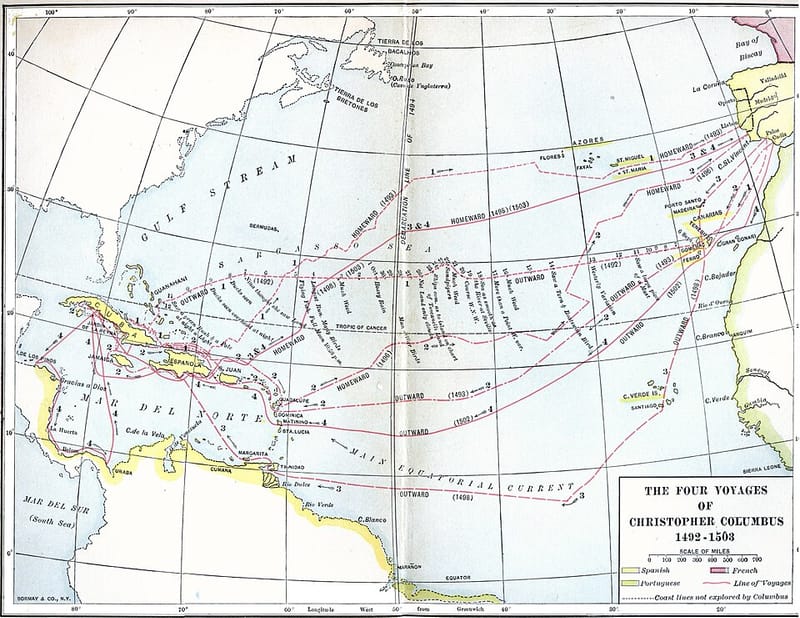
- The exchange began with Columbus’s voyages and continued for centuries.
- From the Americas
- Maize, white and sweet potatoes, manioc, peanuts, tomatoes, squash, pineapples, avocados
- From Europe, Africa, and Asia
- Wheat, rice, barley, sugar, horses, cattle, pigs, sheep, goats
- Diseases to the Americas
- Smallpox, measles, malaria, yellow fever, typhoid, and others
- Term coined by
- Alfred W. Crosby, in his 1972 book The Columbian Exchange
Why it matters
The Columbian Exchange reshaped ecosystems, diets, and populations on every inhabited continent. For the Americas it meant both the arrival of new livestock and crops and the greatest population collapse in human history — a central reason why European colonization succeeded.
Definition
The Columbian Exchange is the movement of living things — plants, animals, and pathogens — and of people between the Old World and the New after Columbus’s voyages reconnected hemispheres that had developed separately for thousands of years. It was not a fair trade: some exchanges brought abundance, others catastrophe, and their effects fell very unevenly.
Historical context
Before 1492, the Americas and the Eastern Hemisphere had very different inventories of life. The Americas had few domesticated animals — dogs, llamas, guinea pigs, and a few fowl — and no wild horses or cattle to tame. The Old World had many herd animals, which, as Crosby explains, were among humanity’s richest sources of disease microorganisms. Because people in the Old World had long lived in dense populations alongside livestock, they carried diseases — smallpox, measles, malaria, yellow fever, typhoid, cholera, plague — to which Native Americans had no acquired immunity.
The result was a demographic disaster. Epidemics often spread ahead of European settlers themselves, as in coastal New England, where diseases spread by earlier English visitors devastated the Wampanoag before the Pilgrims landed at Plymouth. Population collapse made conquest and colonization far easier and helped drive Europeans to import enslaved Africans as laborers.
Examples
- New foods for the world. American crops — maize, potatoes, manioc, peanuts — became staples in Europe, Africa, and Asia, supporting population growth across the globe.
- Sugar and slavery. Sugar cane, brought to the Caribbean and Brazil, created plantation economies built on the labor of enslaved Africans.
- Tobacco. An American plant became the cash crop of colonial Virginia after 1612 and a global commodity.
Study this entry
Check your understanding
Try answering in your own words, then open the answer.
1.What does “the Columbian Exchange” mean?Show answerHide
The Columbian Exchange is the movement of living things — plants, animals, and pathogens — and of people between the Old World and the New after Columbus’s voyages reconnected hemispheres that had developed separately for thousands of years.From “Definition” above.
2.Where did the idea come from?Show answerHide
Before 1492, the Americas and the Eastern Hemisphere had very different inventories of life. The Americas had few domesticated animals — dogs, llamas, guinea pigs, and a few fowl — and no wild horses or cattle to tame.From “Historical context” above.
3.What are some examples?Show answerHide
- New foods for the world. American crops — maize, potatoes, manioc, peanuts — became staples in Europe, Africa, and Asia, supporting population growth across the globe. - Sugar and slavery. Sugar cane, brought to the Caribbean and Brazil, created plantation economies built on the labor of enslaved Africans. - Tobacco. An American plant became the cash crop of colonial Virginia after 1612 and a global commodity.From “Examples” above.
Turn this entry into 10 flashcards (key facts, dates, and why it matters) and review them in Learn.
Related History
How this connects to the rest of the atlas.
Events



Sources
- 1.The Columbian Exchange: Plants, Animals, and Disease between the Old and New Worlds (Alfred W. Crosby)
National Humanities Center, TeacherServe · Scholarly · cited for crops, animals, and diseases exchanged
- 2.A Short History of Jamestown
National Park Service, Historic Jamestowne · Institutional · cited for tobacco as Virginia’s cash crop
- 3.The Wampanoag
National Park Service, Roger Williams National Memorial · Institutional · cited for disease among the Wampanoag before 1620
Image credits
- FlorentineCodex BK12 F54 smallpox, en:Bernardino de Sahagún (1499-1590), compiler. Original illustration by unknown 16th-century artist; this version of the drawing by unknown 16th-century copyist., circa 1585. Via Wikimedia Commons · Public domain · Source
Written for American History Atlas from the sources above. See how entries are researched.
Atlas by Alexander. More on Telegram.