The Mayflower Compact
Passengers bound for Virginia agree to govern themselves at Plymouth
November 11, 1620Aboard the *Mayflower*, off Cape Cod
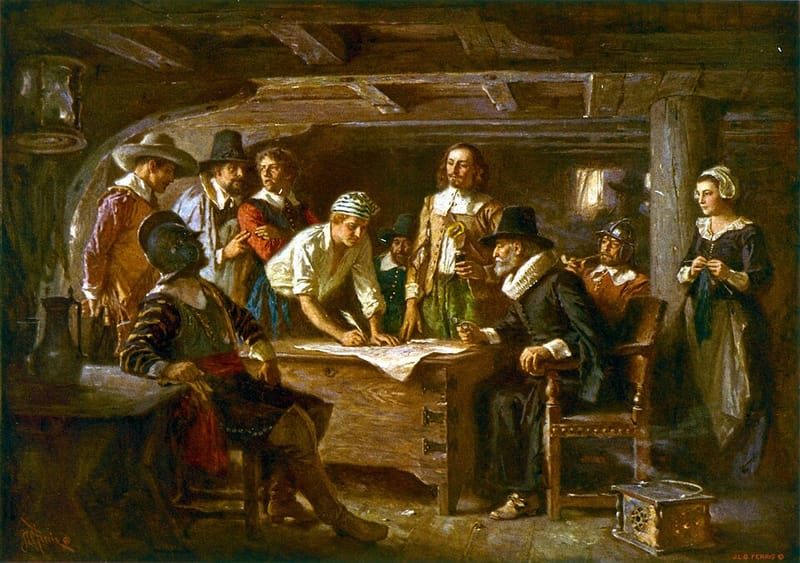
Before going ashore in November 1620, the male passengers of the Mayflower signed a short agreement to “covenant and combine ourselves together into a civil Body Politick” and to obey the laws that body would make. They had landed far north of the Virginia territory their patent covered, so they had no legal charter for where they were. The Mayflower Compact became the basis of government at Plymouth Colony and an early example of self-government by mutual consent.
Key facts
- Date
- November 11, 1620
- Author
- Male passengers of the Mayflower
- Location
- Aboard the Mayflower, off Cape Cod
- Signed
- November 11, 1620 (Old Style calendar), at Cape Cod
- Purpose
- To create legal authority for a colony outside the bounds of the Virginia Company’s patent
- Signers
- Adult male passengers, both Separatists (“Pilgrims”) and others
Read the text at the Avalon Project
Why it matters
Later generations, especially in the nineteenth century, celebrated the Compact as a seed of American constitutional government. That interpretation can be overstated, but the document is a real early instance of colonists creating civil authority by agreement among themselves.
Historical circumstances
The Mayflower carried a mix of religious Separatists — who had broken from the Church of England — and other passengers recruited by the colony’s investors. Their voyage was meant “to plant the first Colony in the northern Parts of Virginia,” but they made landfall at Cape Cod, outside the territory their patent covered. To establish lawful authority where none existed, the leaders drew up an agreement for the adult men to sign before landing.
Principal ideas
The Compact is brief. The signers, describing themselves as loyal subjects of King James, declare that they undertook the voyage “for the Glory of God, and Advancement of the Christian Faith, and the Honour of our King and Country.” They then “solemnly and mutually, in the Presence of God and one another, covenant and combine ourselves together into a civil Body Politick,” with power to enact “just and equal Laws” for the general good, to which they promise “all due Submission and Obedience.”
Its ideas drew on Puritan church covenants, in which congregations bound themselves together by mutual agreement. It did not create a democracy — women, servants, and Native people had no part in it — and it acknowledged the king’s sovereignty. But it rested government on the consent of the governed.
Study this entry
Check your understanding
Try answering in your own words, then open the answer.
1.Why was this document written?Show answerHide
The Mayflower carried a mix of religious Separatists — who had broken from the Church of England — and other passengers recruited by the colony’s investors. Their voyage was meant “to plant the first Colony in the northern Parts of Virginia,” but they made landfall at Cape Cod, outside the territory their patent covered.From “Historical circumstances” above.
2.What are its principal ideas?Show answerHide
The Compact is brief. The signers, describing themselves as loyal subjects of King James, declare that they undertook the voyage “for the Glory of God, and Advancement of the Christian Faith, and the Honour of our King and Country.”From “Principal ideas” above.
Turn this entry into 10 flashcards (key facts, dates, and why it matters) and review them in Learn.
Related History
How this connects to the rest of the atlas.
Events

Sources
- 1.Mayflower Compact: 1620
Avalon Project, Yale Law School · Primary source · cited for text and date
- 2.The Treaty That Saved Plymouth Colony
Library of Congress, In Custodia Legis (Law Library blog) · Institutional · cited for Mayflower deaths, Massasoit, Squanto, treaty terms, March 22, 1621
Image credits
- The Mayflower Compact, 1620, Jean Leon Gerome Ferris. Via Wikimedia Commons · Public domain · Source
Written for American History Atlas from the sources above. See how entries are researched.
Atlas by Alexander. More on Telegram.