EventExploration and Early Colonization
The Voyages of Columbus
Spanish-sponsored voyages that began sustained contact between Europe and the Americas
October 12, 1492 – 1504The Bahamas, Cuba, Hispaniola, and the Caribbean
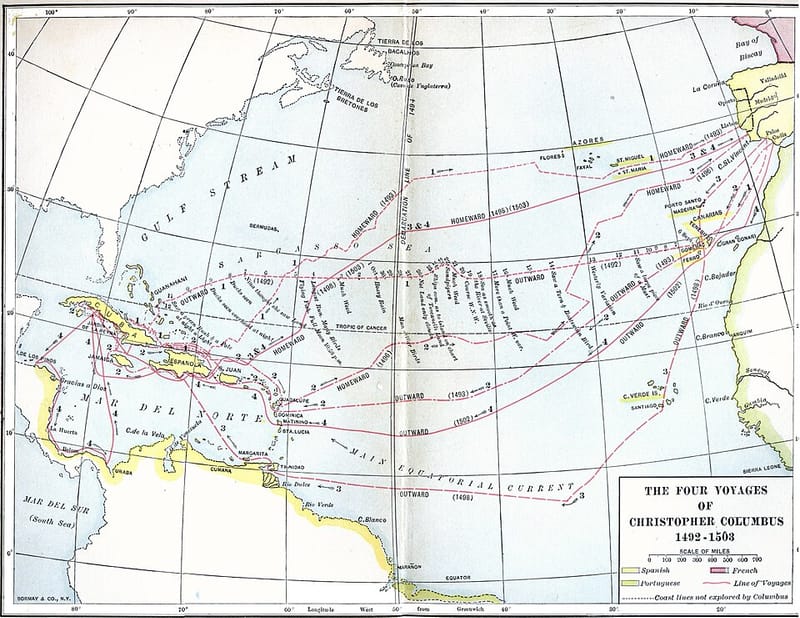
On October 12, 1492, Christopher Columbus, a Genoese sailor seeking a western sea route to Asia on behalf of Spain, landed on an island in the Bahamas that its Lucayan inhabitants called Guanahani. His four voyages did not reach Asia, but they began permanent contact between Europe and the Americas — setting off the Columbian Exchange, Spanish conquest and colonization, and a catastrophe for the Taíno and other Indigenous peoples of the Caribbean.
Key facts
- Date
- October 12, 1492 – 1504
- Location
- The Bahamas, Cuba, Hispaniola, and the Caribbean
- Dating note
- Columbus made four voyages between 1492 and 1504; he first reached land in the Bahamas on October 12, 1492.
- Sponsors
- The Spanish monarchs Ferdinand and Isabella
- First landfall
- October 12, 1492, on Guanahani in the Bahamas, which Columbus renamed San Salvador
- Voyages
- Four, between 1492 and 1504
- People met
- The Lucayan and other Taíno peoples
Why it matters
Whatever one thinks of Columbus, 1492 marks the beginning of sustained contact between the Eastern and Western Hemispheres — a turning point that transformed the peoples, plants, animals, and diseases of both.
Historical background
Long before 1492, the Caribbean was home to the Taíno, an Arawak-speaking people with a well-established society, defined social structures, and trade networks among their communities. The Lucayan people of the Bahamas were part of this broader Taíno world. In Europe, Portugal was searching for a sea route to Asia around Africa, and Spain was willing to fund a rival scheme.
Causes and contributing factors
Columbus believed that Asia could be reached by sailing west and badly underestimated the distance. After years of seeking support, he won the backing of Ferdinand and Isabella, who hoped for access to the trade in spices and gold and for the spread of Christianity.
What happened
Columbus sailed from Spain in August 1492 and made landfall on October 12 on Guanahani. Which modern island this was is still debated; the most popular identification is the island renamed San Salvador in 1925. He went on to Cuba and Hispaniola before returning to Spain. On later voyages he established Spanish settlements on Hispaniola and explored more of the Caribbean and the coast of Central and South America, always insisting he had reached Asia.
The Taíno were friendly when they first encountered the newcomers, but Spanish demands for gold, labor, and submission soon led to armed resistance against Spanish efforts to kill, enslave, or assimilate them.
Immediate consequences
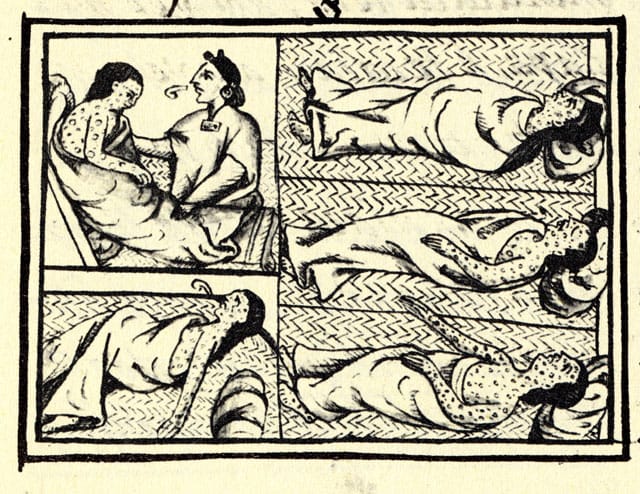
Columbus and the colonists who followed imposed forced labor and tribute on the Taíno. Violence, enslavement, and above all epidemic diseases brought from Europe — to which Native peoples had no immunity — caused a devastating collapse of the Indigenous population of the Caribbean within a few decades.
Long-term significance
Columbus’s voyages opened the way to Spanish conquest of the Aztec and Inca empires, to colonies of other European powers, and to the transatlantic slave trade. In the United States, Columbus was long celebrated as a discoverer and an emblem of Italian American heritage; today his legacy is fiercely debated, and many states and cities also or instead observe Indigenous Peoples’ Day. The language of “discovery” itself is now recognized as describing only the European side of an encounter between peoples who had long been there.
Study this entry
Check your understanding
Try answering in your own words, then open the answer.
1.What led to the Voyages of Columbus?Show answerHide
Columbus believed that Asia could be reached by sailing west and badly underestimated the distance. After years of seeking support, he won the backing of Ferdinand and Isabella, who hoped for access to the trade in spices and gold and for the spread of Christianity.From “Causes and contributing factors” above.
2.What happened?Show answerHide
Columbus sailed from Spain in August 1492 and made landfall on October 12 on Guanahani. Which modern island this was is still debated; the most popular identification is the island renamed San Salvador in 1925.From “What happened” above.
3.What were the immediate consequences?Show answerHide
Columbus and the colonists who followed imposed forced labor and tribute on the Taíno. Violence, enslavement, and above all epidemic diseases brought from Europe — to which Native peoples had no immunity — caused a devastating collapse of the Indigenous population of the Caribbean within a few decades.From “Immediate consequences” above.
4.Why does it still matter?Show answerHide
Columbus’s voyages opened the way to Spanish conquest of the Aztec and Inca empires, to colonies of other European powers, and to the transatlantic slave trade.From “Long-term significance” above.
Turn this entry into 9 flashcards (key facts, dates, and why it matters) and review them in Learn.
Related History
How this connects to the rest of the atlas.
Events

Sources
- 1.Columbus Makes Landfall in the Caribbean
National Geographic Education · Reference · cited for landfall date, Guanahani, Taíno society and resistance
- 2.The Columbian Exchange: Plants, Animals, and Disease between the Old and New Worlds (Alfred W. Crosby)
National Humanities Center, TeacherServe · Scholarly · cited for epidemic disease after contact
Image credits
- The Four Voyages of Columbus, 1492–1503, Albert Bushnell Hart, 1906-01-01. Via Wikimedia Commons · Public domain · Source
Written for American History Atlas from the sources above. See how entries are researched.
Atlas by Alexander. More on Telegram.