The Pueblo Revolt
Pueblo nations unite to drive Spanish colonizers out of New Mexico, 1680
August 10 – September 21, 1680Santa Fe and the Pueblos of the upper Rio Grande, New Mexico
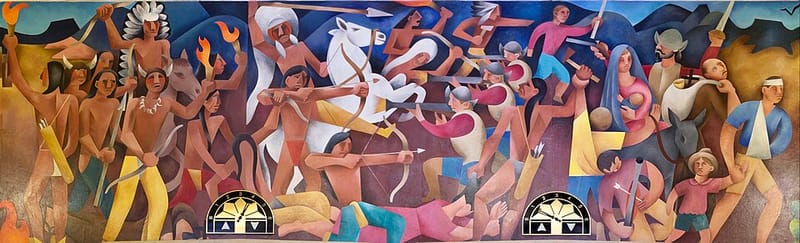
In August 1680, the Pueblo peoples of New Mexico — speaking several languages and living in dozens of separate towns — rose together against eight decades of Spanish rule. Organized by a religious leader from San Juan Pueblo named Po’Pay, the coordinated revolt killed missionaries and colonists, besieged Santa Fe, and drove the Spanish out of New Mexico for twelve years — one of the most successful Native uprisings against European colonization in North American history.
Key facts
- Date
- August 10 – September 21, 1680
- Location
- Santa Fe and the Pueblos of the upper Rio Grande, New Mexico
- Dating note
- The uprising began August 10, 1680; besieged Santa Fe was abandoned September 21. Spanish rule did not return until 1692.
- Began
- August 10, 1680, a day earlier than planned after the plot was discovered
- Leader
- Po’Pay (Popé), a religious leader from San Juan Pueblo
- Siege of Santa Fe
- Ended September 21, 1680, when the Pueblos let the colonists retreat south
- Spanish return
- 1692, under Diego de Vargas
Why it matters
The Pueblo Revolt shows that Native peoples did not simply endure colonization; they organized across linguistic and political lines to resist it — and, for a time, they won.
Historical background
Spanish conquest of the Pueblos began in 1540, and in 1598 Juan de Oñate led colonists north from Mexico to establish a permanent settlement, accompanied by Franciscan missionaries. Spanish rule was notoriously oppressive. After putting down a revolt at Acoma Pueblo in 1599, Oñate condemned all males over twelve to twenty years of servitude and ordered that men over twenty-five have a foot cut off. Santa Fe, founded in 1607, became the capital in 1610. Under the encomienda system, Pueblos had to hand over part of their crops each year; under repartimiento, they were forced to work in Spanish households without pay.
Causes and contributing factors
Spanish authorities and Catholic missionaries tried to wipe out Pueblo religion, and Spanish priests sexually abused Pueblo women. Drought and famine in the 1660s and 1670s deepened the suffering. In 1675 the authorities arrested forty-seven Pueblo medicine men for “sorcery”; four were sentenced to death and the rest whipped and imprisoned. The Pueblos forced the prisoners’ release, and one of them, Po’Pay, immediately began organizing a coordinated uprising.
What happened
According to later testimony, runners carried a knotted cord of maguey fiber from pueblo to pueblo; each town that joined untied a knot, and the remaining knots counted the days until the rising. The Spanish learned of the plot on August 9 after capturing two messengers from Tesuque, so the Pueblos struck early, on August 10, 1680, killing priests, colonists, women, and children and burning churches. Survivors fled to Santa Fe, which the Pueblos besieged until September 21, when the governor withdrew south to El Paso.
Immediate consequences
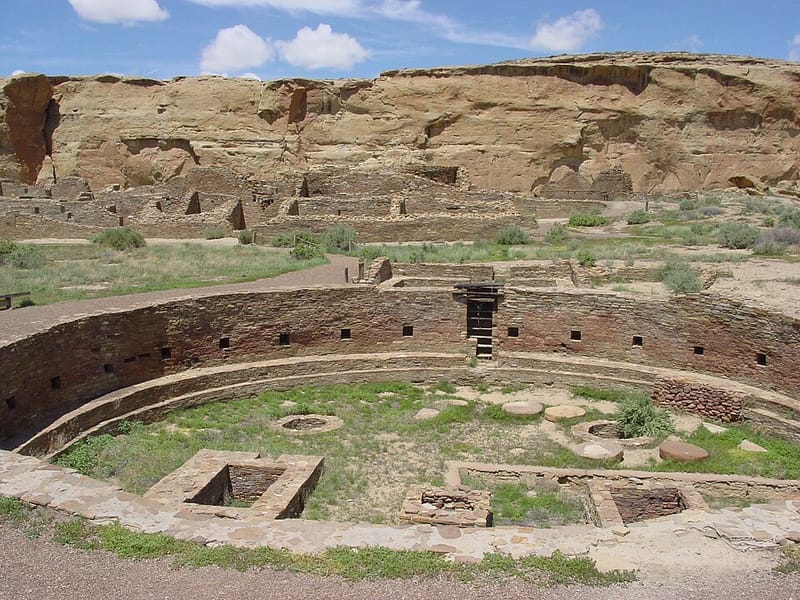
For twelve years, New Mexico was free of Spanish rule. Po’Pay ordered the Pueblos to return to the law of their ancestors: kivas were rebuilt and ceremonies restored, and those who clung to Christianity were punished. Unity proved hard to maintain once the common enemy was gone.
Long-term significance
In 1692 a new governor, Diego de Vargas, marched north from El Paso with an army and cannons and reclaimed Santa Fe without a fight after negotiations. Further revolts in 1694 and 1696 were crushed. Yet the Pueblos endured as distinct nations with their languages and ceremonies intact. In 2005, New Mexico placed a statue of Po’Pay in the U.S. Capitol’s National Statuary Hall.
Study this entry
Check your understanding
Try answering in your own words, then open the answer.
1.What led to the Pueblo Revolt?Show answerHide
Spanish authorities and Catholic missionaries tried to wipe out Pueblo religion, and Spanish priests sexually abused Pueblo women. Drought and famine in the 1660s and 1670s deepened the suffering.From “Causes and contributing factors” above.
2.What happened?Show answerHide
According to later testimony, runners carried a knotted cord of maguey fiber from pueblo to pueblo; each town that joined untied a knot, and the remaining knots counted the days until the rising.From “What happened” above.
3.What were the immediate consequences?Show answerHide
For twelve years, New Mexico was free of Spanish rule. Po’Pay ordered the Pueblos to return to the law of their ancestors: kivas were rebuilt and ceremonies restored, and those who clung to Christianity were punished.From “Immediate consequences” above.
4.Why does it still matter?Show answerHide
In 1692 a new governor, Diego de Vargas, marched north from El Paso with an army and cannons and reclaimed Santa Fe without a fight after negotiations. Further revolts in 1694 and 1696 were crushed.From “Long-term significance” above.
Turn this entry into 9 flashcards (key facts, dates, and why it matters) and review them in Learn.
Related History
How this connects to the rest of the atlas.

Sources
- 1.1680 – the Pueblo Revolt
Library of Congress, In Custodia Legis (Law Library blog) · Institutional · cited for Santa Fe’s founding, Po’Pay, dates of the revolt and siege
- 2.The Pueblo Revolt of 1680: Declaration of Pedro Naranjo (with introduction)
Teaching American History, Ashland University · Primary source · cited for Spanish rule, Oñate at Acoma, religious suppression, Popé; primary testimony
Image credits
- Loren Mozley Pueblo Revolt 1680 installed 1936 ABQ NM, Loren Mozley for TRAP (USgov), 1936, 1936-01-01. Via Wikimedia Commons · Public domain · Source
Written for American History Atlas from the sources above. See how entries are researched.
Atlas by Alexander. More on Telegram.