MovementThe Progressive Era and World War I
The Woman Suffrage Movement
Seventy-two years of struggle for women’s right to vote, 1848–1920
July 19, 1848 – August 18, 1920
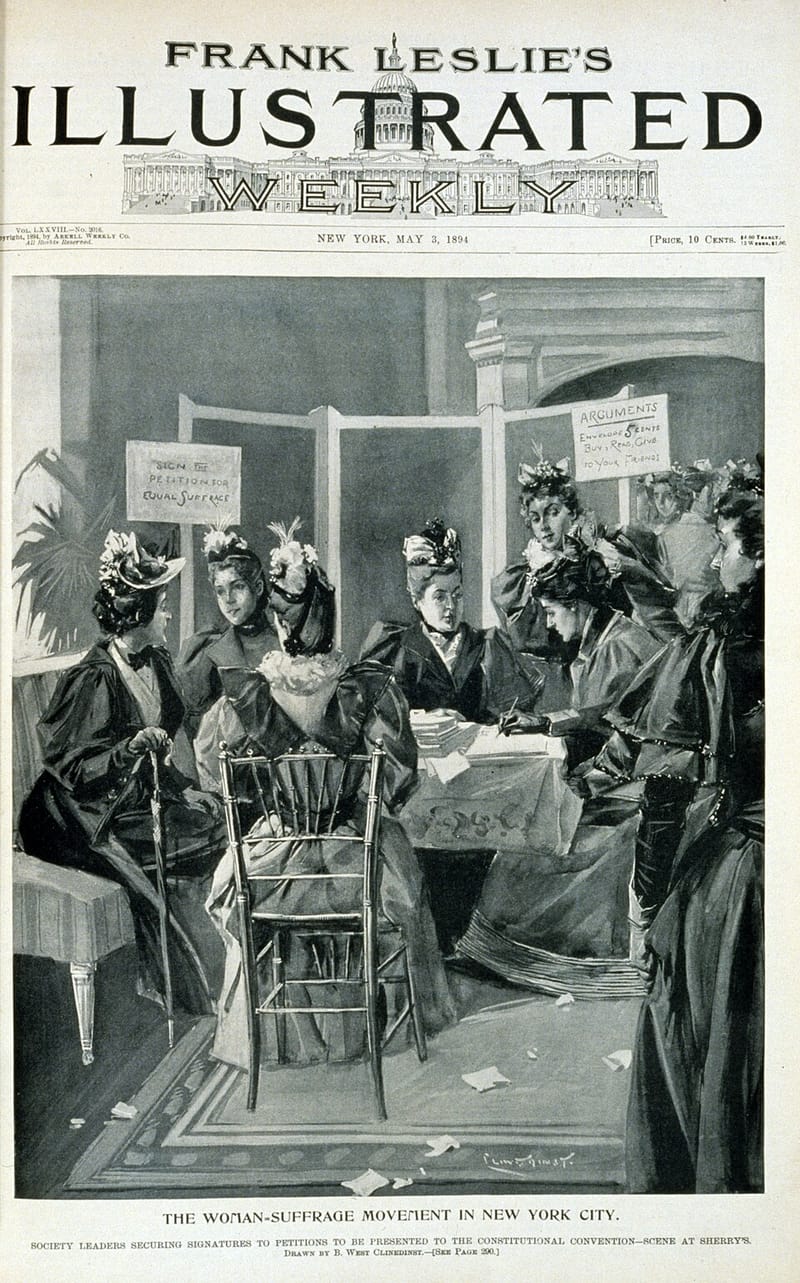
For more than seventy years, American women organized, petitioned, marched, picketed, and went to jail to win the right to vote. Launched at the Seneca Falls Convention in 1848, the movement split after the Civil War over the Fifteenth Amendment, won the vote in nine Western states by 1912, and adopted increasingly militant tactics in the 1910s. The Nineteenth Amendment, ratified in 1920, guaranteed that the right to vote could not be denied on account of sex — though many women of color remained disenfranchised for decades.
Key facts
- Date
- July 19, 1848 – August 18, 1920
- Dating note
- From the Seneca Falls Convention to ratification of the Nineteenth Amendment.
- Began
- Seneca Falls Convention, 1848
- Split
- 1869: National Woman Suffrage Association (Stanton, Anthony) and American Woman Suffrage Association (Lucy Stone and others)
- State victories
- Nine Western states had adopted woman suffrage by 1912
- Militant wing
- National Woman’s Party under Alice Paul; picketed the White House from 1917
- Victory
- 19th Amendment ratified August 18, 1920
Why it matters
The suffrage movement achieved the largest single expansion of voting rights in American history and trained generations of women in political organizing.
Goals
Suffragists sought the right to vote as the foundation of women’s equality, along with broader reforms in property rights, education, wages, and marriage law. Some linked suffrage to other causes — abolition, temperance, labor reform — while others focused narrowly on the ballot.
Strategies
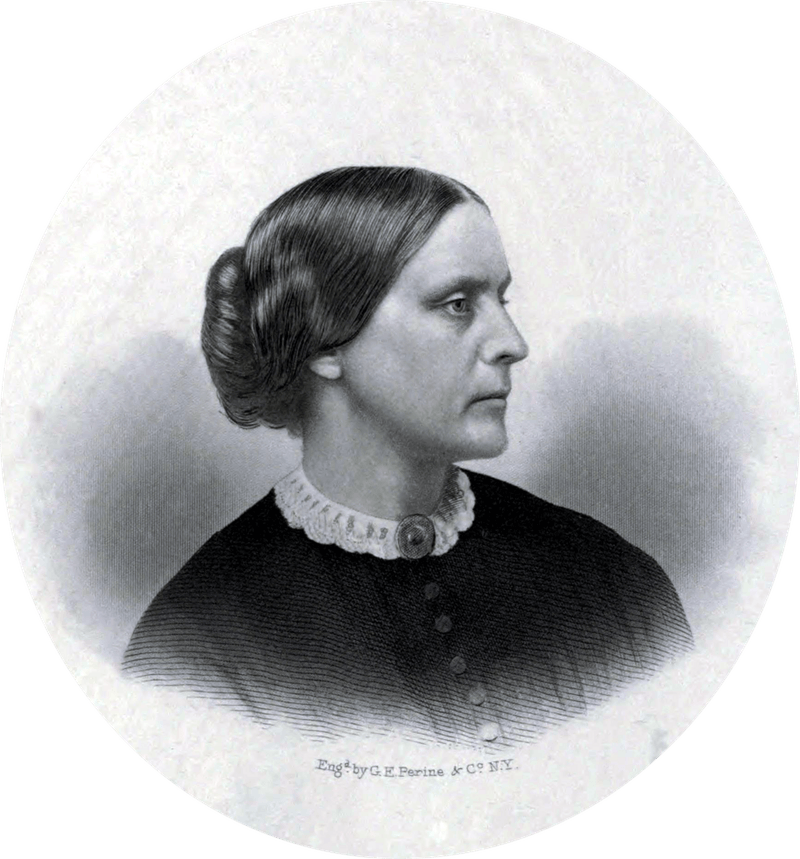
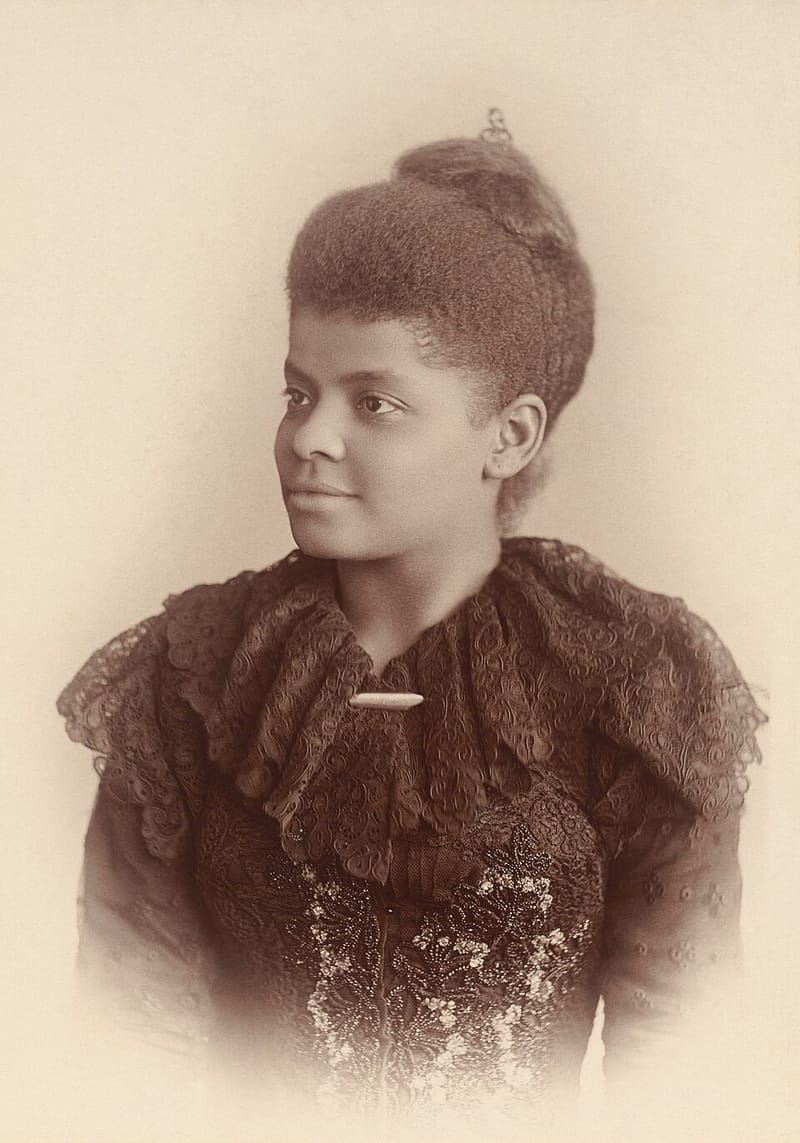
Suffragists lectured, wrote, petitioned, and lobbied Congress year after year. Some pursued state-by-state campaigns, which succeeded first in the West; others challenged male-only voting in the courts, as Susan B. Anthony did by voting in 1872. In the 1910s a new, more militant organization, Alice Paul’s National Woman’s Party, organized marches and, beginning in January 1917, picketed the White House; more than 150 women were arrested and imprisoned, and some went on hunger strikes. Meanwhile the larger National American Woman Suffrage Association pressed for a federal amendment. Black women organized their own clubs and suffrage groups, such as Ida B. Wells’s Alpha Suffrage Club in Chicago.
Opposition
Opponents heckled, jailed, and sometimes physically abused suffragists. Many men — and some women — argued that voting would degrade women or disrupt the family, and politicians long treated woman suffrage as a radical change to the Constitution.
Achievements
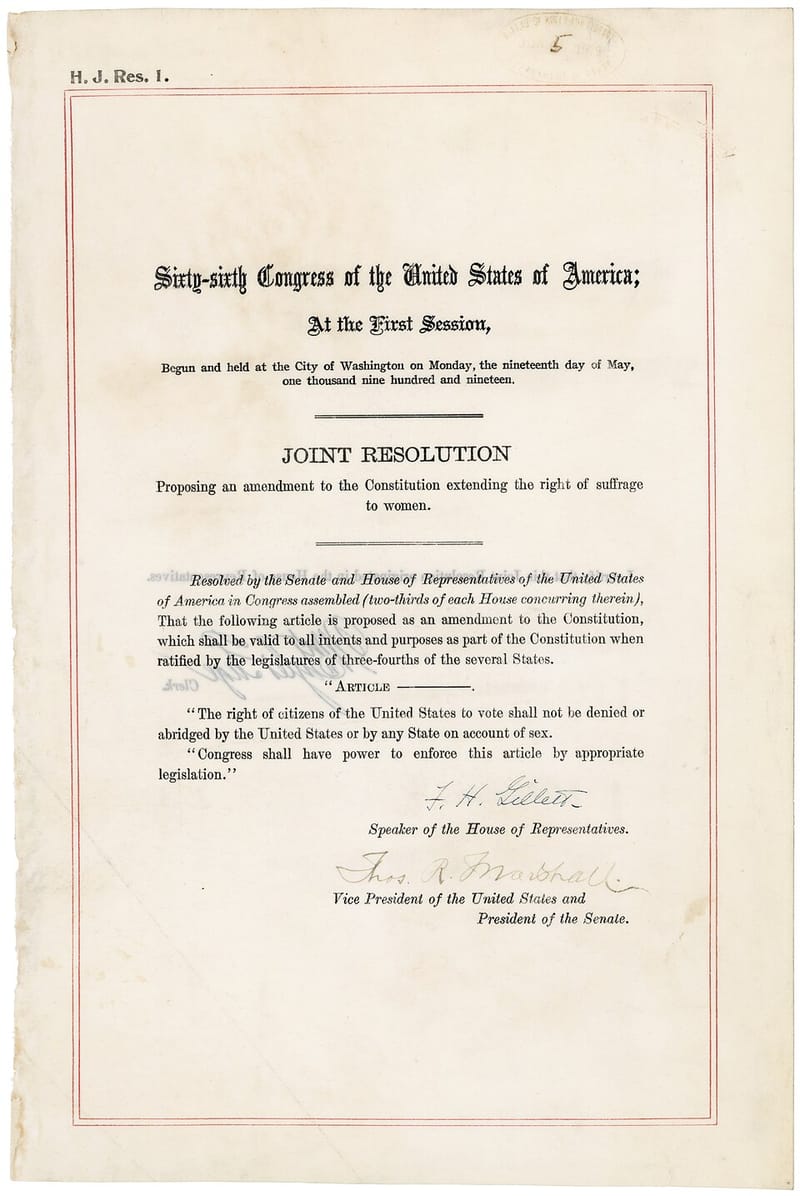
By 1916 nearly all major suffrage organizations had united behind a constitutional amendment. New York adopted woman suffrage in 1917, and in 1918 President Woodrow Wilson — after years of resistance — endorsed the amendment. Congress passed it in 1919, and Tennessee’s ratification on August 18, 1920, made it part of the Constitution.
Unresolved questions
The movement was divided by race and class. After the Civil War, Elizabeth Cady Stanton and Susan B. Anthony opposed the Fifteenth Amendment for enfranchising Black men but not women, and white suffragists later accommodated Southern racism — at the 1913 suffrage parade, Black women were told to march at the back. Even after 1920, discriminatory state laws kept many Black, Native American, Asian American, and Latina women from voting for decades.
Study this entry
Check your understanding
Try answering in your own words, then open the answer.
1.What did the movement want?Show answerHide
Suffragists sought the right to vote as the foundation of women’s equality, along with broader reforms in property rights, education, wages, and marriage law. Some linked suffrage to other causes — abolition, temperance, labor reform — while others focused narrowly on the ballot.From “Goals” above.
2.How did it pursue its goals?Show answerHide
Suffragists lectured, wrote, petitioned, and lobbied Congress year after year. Some pursued state-by-state campaigns, which succeeded first in the West; others challenged male-only voting in the courts, as Susan B. Anthony did by voting in 1872.From “Strategies” above.
3.Who opposed it, and how?Show answerHide
Opponents heckled, jailed, and sometimes physically abused suffragists. Many men — and some women — argued that voting would degrade women or disrupt the family, and politicians long treated woman suffrage as a radical change to the Constitution.From “Opposition” above.
4.What did it achieve?Show answerHide
By 1916 nearly all major suffrage organizations had united behind a constitutional amendment. New York adopted woman suffrage in 1917, and in 1918 President Woodrow Wilson — after years of resistance — endorsed the amendment.From “Achievements” above.
Turn this entry into 11 flashcards (key facts, dates, and why it matters) and review them in Learn.
Related History
How this connects to the rest of the atlas.
Events
People

Sources
- 1.19th Amendment — Milestone Documents
National Archives · Primary source · cited for passage, ratification, strategies, limits
- 2.19th Amendment — Women’s History
National Park Service · Institutional · cited for suffrage movement overview
- 3.The American Yawp, “The Progressive Era”
The American Yawp (eds. Joseph Locke and Ben Wright; Stanford University Press) · Scholarly · cited for Progressivism, muckrakers, Addams, Triangle fire, suffrage
- 4.Susan B. Anthony
National Women’s History Museum · Institutional · cited for NWSA and AWSA split
- 5.Ida B. Wells-Barnett
National Women’s History Museum · Institutional · cited for life, journalism, anti-lynching work, suffrage, NAACP, death
Image credits
- The woman-suffrage movement in New York City cph.3g12521, Benjamin West Clinedinst, 1894-05-03. Via Wikimedia Commons · Public domain · Source
Written for American History Atlas from the sources above. See how entries are researched.
Atlas by Alexander. More on Telegram.