PersonIndustrialization and the Gilded Age
Ida B. Wells
Journalist who exposed lynching and fought for civil rights and suffrage
1862–1931
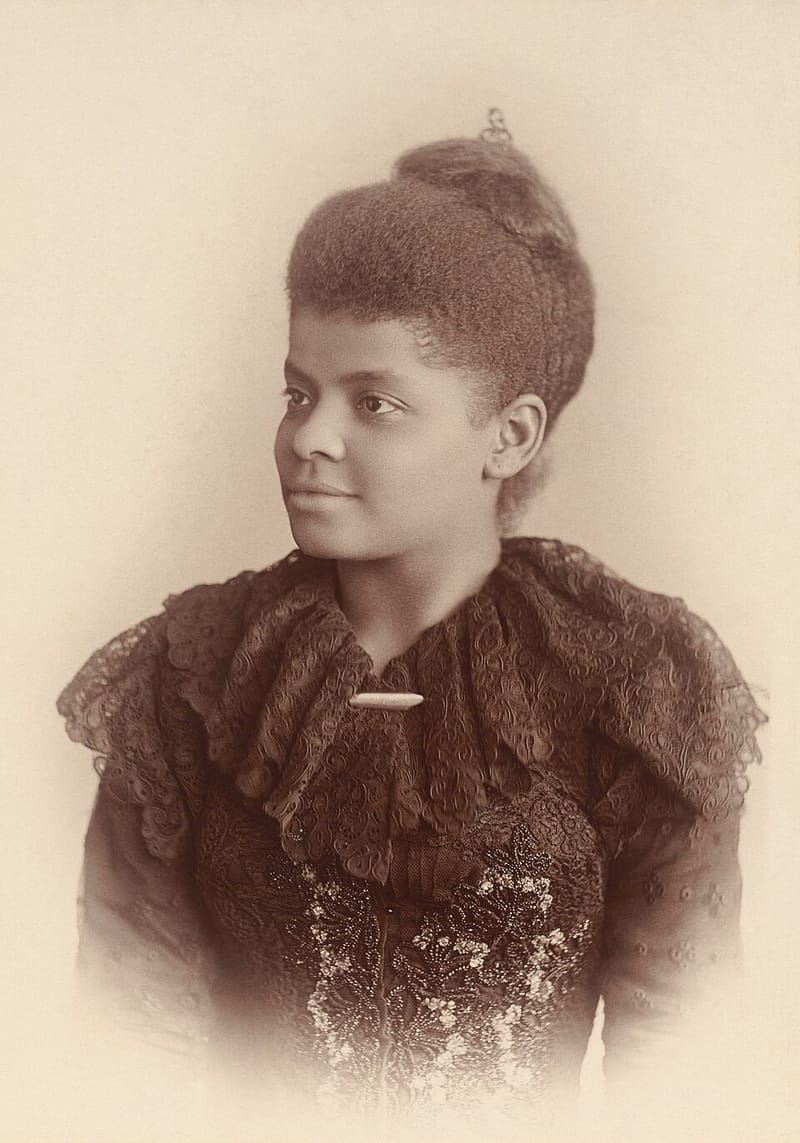
Ida B. Wells-Barnett was the journalist who exposed the truth about lynching in the United States. Born into slavery in Mississippi, orphaned at sixteen, and thrown off a train for refusing to leave the ladies’ car, she became a fearless newspaper editor in Memphis. When three of her friends were lynched in 1892, she investigated, published the facts, and was driven from the South by a mob that destroyed her press. Her pamphlets Southern Horrors and A Red Record armed an international anti-lynching campaign. She also fought for women’s suffrage and helped launch the NAACP.
Key facts
- Born
- July 16, 1862, Holly Springs, Mississippi
- Died
- March 15, 1931, Chicago, Illinois
- Roles
- Journalist and newspaper owner; Anti-lynching crusader; Suffragist; Co-founder of Black women’s organizations
- Born
- July 16, 1862, Holly Springs, Mississippi
- Railroad lawsuit
- Sued after being dragged from a first-class car in 1884
- Key works
- Southern Horrors: Lynch Law in All Its Phases (1892); A Red Record (1895)
- Died
- 1931, Chicago
Why it matters
Ida B. Wells turned journalism into a weapon against racial terror and made lynching a national and international issue.
Early life and context
Ida B. Wells was born into slavery on July 16, 1862, in Holly Springs, Mississippi, and freed with her parents at the end of the Civil War. Her parents, hopeful about Reconstruction, prized education; her father was a trustee of Rust College, where she studied. In 1878 both parents died in a yellow fever epidemic, and at sixteen she became the caretaker of her six surviving siblings, supporting them as a schoolteacher and eventually moving to Memphis.
On May 4, 1884, she bought a first-class ticket for the ladies’ car of a train. When the conductor ordered her to the smoking car she refused and was dragged off the train, while white passengers stood on their seats to watch and applauded the conductor. She sued the railroad and won damages, but the Tennessee Supreme Court reversed the decision.
Major actions and achievements
Writing under the pen name “Iola,” Wells became known as the “Princess of the Press.” In 1889 she became co-owner and editor of the Memphis Free Speech and Headlight; when she exposed the poor conditions of the Memphis public schools, she lost her teaching job and turned to journalism full time. In 1892 her friend Thomas Moss and two partners in the People’s Grocery were lynched for competing with a white grocer. Wells investigated and exposed the inconsistencies in the official story; while she was out of town, a white mob set fire to the Free Speech office, and she could not return.
She turned her investigation into a crusade. Southern Horrors: Lynch Law in All Its Phases (1892) showed how lynch mobs formed and dismantled the excuses offered for them; A Red Record (1895) tabulated three years of lynchings and their alleged causes. She lectured in Britain in 1893 and 1894, inspiring the London Anti-Lynching Committee, and in Chicago in 1893 she organized a pamphlet protesting the exclusion of Black Americans from the World’s Columbian Exposition, distributed at the Haitian pavilion where Frederick Douglass served. In 1895 she married the Chicago lawyer and editor Ferdinand Barnett, and she kept lecturing — taking her nursing baby with her. In 1909 she was among the signers of the call that created the NAACP, and that year she founded the Negro Fellowship League in Chicago, which offered housing, job help, education, and legal advice.
Beliefs and ideas
Wells believed that facts were the strongest weapon against injustice: “When I present our cause to a minister, editor, lecturer, or representative of any moral agency,” she wrote, “the first demand is for facts and figures.” Her investigations showed how lynchings were justified with false excuses — her friends had been killed for threatening a white merchant’s business — and she believed that Black women must speak for themselves in both the civil rights and the suffrage movements.
Controversies, limits, and criticism
Wells’s bluntness caused friction even among allies. She clashed with white suffragists — including Susan B. Anthony, whom she respected but criticized for sacrificing Black women’s concerns to keep white Southern support. At the 1913 suffrage parade in Washington, when Black women were told to march at the back, she refused and marched alongside white suffragists. And although she presented a major report on lynching at the 1909 conference that created the NAACP, she was left off the list of its “Founding Forty.”
Legacy
Wells-Barnett remained active into her last years — confronting President Woodrow Wilson in 1915 over federal segregation, protesting the mistreatment of Black soldiers in World War I, and running for the Illinois State Senate in 1930. She died of kidney disease on March 15, 1931. Her legacy was not fully recognized until her autobiography was published in 1970; her anti-lynching journalism and activism laid the foundation for the radical spirit of the later civil rights movement.
Study this entry
Check your understanding
Try answering in your own words, then open the answer.
1.What shaped Ida B. Wells early in life?Show answerHide
Ida B. Wells was born into slavery on July 16, 1862, in Holly Springs, Mississippi, and freed with her parents at the end of the Civil War. Her parents, hopeful about Reconstruction, prized education; her father was a trustee of Rust College, where she studied.From “Early life and context” above.
2.What were Ida B. Wells’s major achievements?Show answerHide
Writing under the pen name “Iola,” Wells became known as the “Princess of the Press.” In 1889 she became co-owner and editor of the Memphis Free Speech and Headlight; when she exposed the poor conditions of the Memphis public schools, she lost her teaching job and turned to journalism full time.From “Major actions and achievements” above.
3.What criticism or controversy surrounds Ida B. Wells?Show answerHide
Wells’s bluntness caused friction even among allies. She clashed with white suffragists — including Susan B. Anthony, whom she respected but criticized for sacrificing Black women’s concerns to keep white Southern support.From “Controversies, limits, and criticism” above.
4.How is Ida B. Wells remembered?Show answerHide
Wells-Barnett remained active into her last years — confronting President Woodrow Wilson in 1915 over federal segregation, protesting the mistreatment of Black soldiers in World War I, and running for the Illinois State Senate in 1930. She died of kidney disease on March 15, 1931.From “Legacy” above.
Turn this entry into 8 flashcards (key facts, dates, and why it matters) and review them in Learn.
Related History
How this connects to the rest of the atlas.
Events
People
Movements

Sources
- 1.Ida B. Wells-Barnett
National Women’s History Museum · Institutional · cited for life, journalism, anti-lynching work, suffrage, NAACP, death
- 2.Our History
NAACP · Institutional · cited for the 1909 call that founded the NAACP
Image credits
- Mary Garrity - Ida B. Wells-Barnett - Google Art Project - restoration crop, Adam Cuerden, circa 1893. Via Wikimedia Commons · Public domain · Source
Written for American History Atlas from the sources above. See how entries are researched.
Atlas by Alexander. More on Telegram.