The Louisiana Purchase
The United States doubles in size, 1803
April 30, 1803The Mississippi River valley to the Rocky Mountains
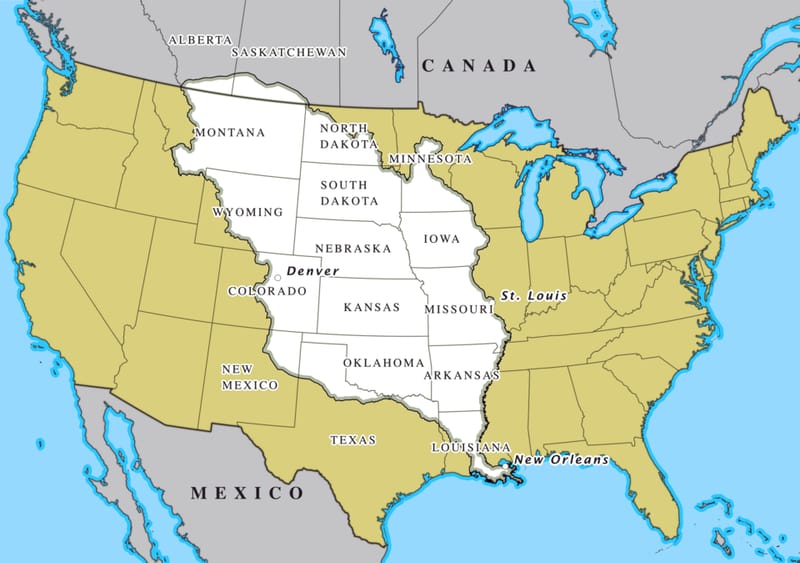
In 1803 the United States bought the vast Louisiana territory from France for $15 million — about 828,000 square miles between the Mississippi River and the Rocky Mountains, for roughly four cents an acre. The purchase doubled the size of the country, gave it control of New Orleans and the Mississippi, and opened the way to westward expansion. It also raised hard questions: whether the Constitution allowed it, whether slavery would spread into the new lands, and what would become of the many Native nations who lived there.
Key facts
- Date
- April 30, 1803
- Location
- The Mississippi River valley to the Rocky Mountains
- Dating note
- The treaty was signed in Paris on April 30, 1803; the United States took formal possession that December.
- Signed
- April 30, 1803, in Paris
- Price
- $15 million: 60 million francs plus up to 20 million francs to cover American claims against France
- Size
- 828,000 square miles — all or part of fifteen present-day states
- U.S. negotiators
- Robert Livingston and James Monroe
- Original goal
- To buy New Orleans and West Florida for up to $10 million
Why it matters
For about four cents an acre, the Louisiana Purchase transformed the United States into a continental power — and planted the conflicts over slavery and Native land that would define the next half-century.
Historical background
As Americans moved west of the Appalachians, the Mississippi River and the port of New Orleans became essential outlets for western farm produce. Spain had owned Louisiana since 1762, and the Pinckney Treaty of 1795 secured Americans’ right to navigate the river and ship goods through New Orleans. Then, in 1800, Spain secretly returned Louisiana to France. Napoleon Bonaparte planned to reconquer Saint-Domingue (Haiti) from the enslaved people who had overthrown slavery there, and to use Louisiana as the granary for a revived French empire in the Americas.
Causes and contributing factors
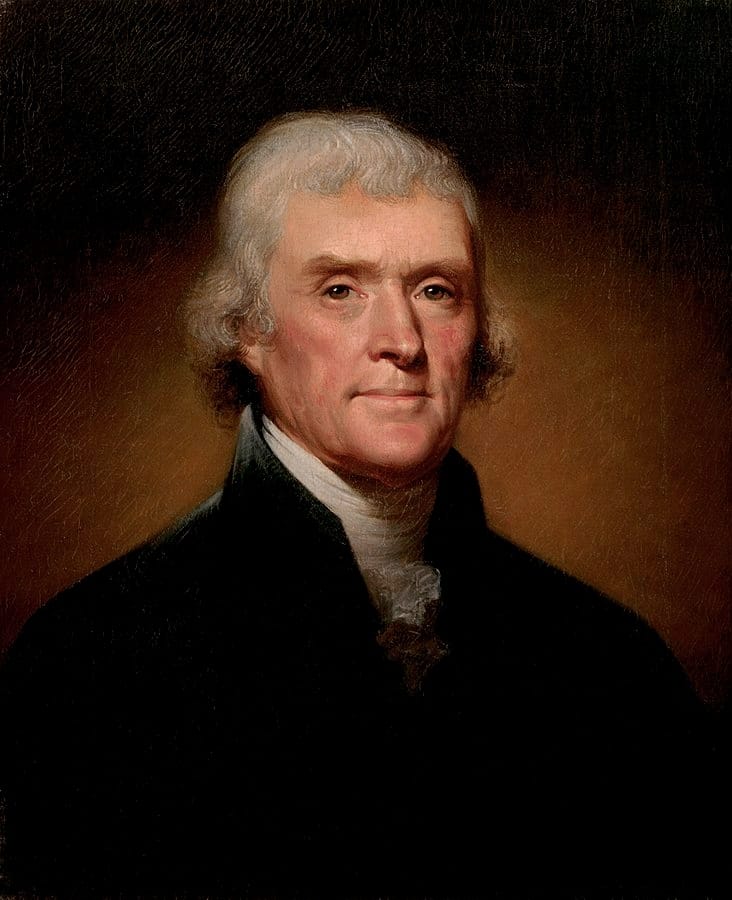
A powerful France at New Orleans alarmed Americans. Jefferson wrote that there was one spot on the globe whose possessor was “our natural and habitual enemy. It is New Orleans.” He sent James Monroe to join Robert Livingston in France to buy New Orleans and West Florida. Meanwhile the French army in Saint-Domingue was destroyed by yellow fever and fierce Haitian resistance, and war with Britain loomed again. Napoleon abandoned his American plans.
What happened
To the Americans’ surprise, France offered not just New Orleans but all of Louisiana. Far exceeding their instructions, Livingston and Monroe agreed to buy it for $15 million and signed the treaty on April 30, 1803. Jefferson, who had always insisted on a strict reading of the Constitution, found nothing in it authorizing the purchase of territory. He considered an amendment but, given public enthusiasm and the land’s value, set his scruples aside. The Senate ratified the treaty, and the United States took possession that December.
Immediate consequences
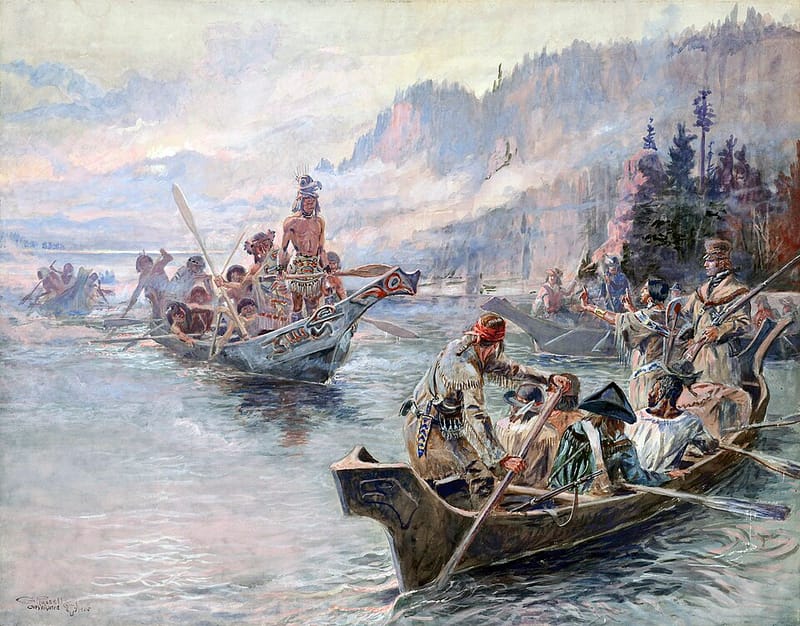
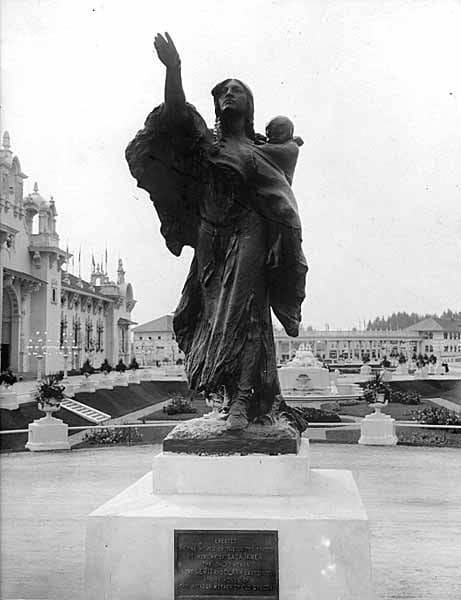
The treaty promised that the territory’s inhabitants would be incorporated into the Union and admitted to the rights of citizens. Jefferson sent the Lewis and Clark Expedition to explore the new lands. The purchase strengthened Jefferson’s popularity and weakened the Federalists, many of whom feared that new western states would reduce New England’s influence.
Long-term significance
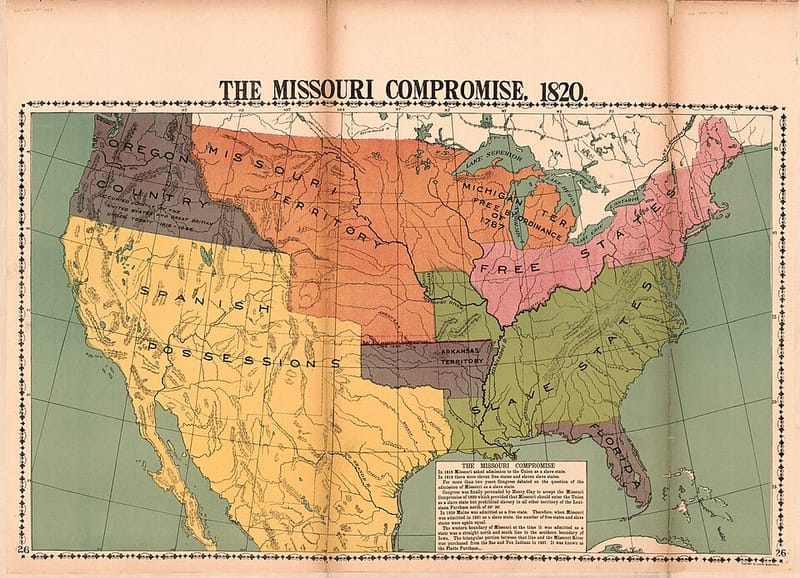
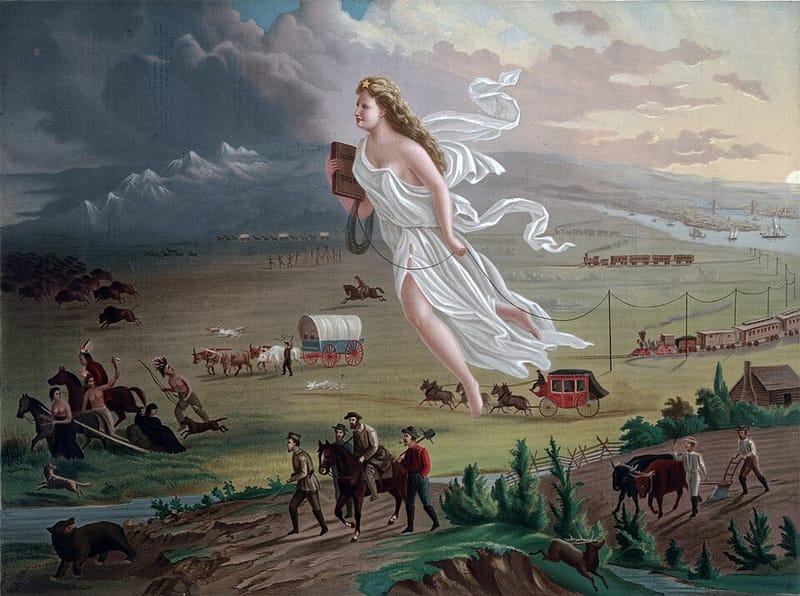
Louisiana was the first in a long series of territorial expansions that, within fifty years, carried the United States to the Pacific. Each expansion reopened the question of whether slavery would spread west, leading to the Missouri Compromise and the crises that ended in civil war. The purchase also ignored the people who actually lived on the land: thousands of Native Americans in dozens of nations, whose rights France could not sell and who would be pushed off much of it in the decades that followed. Jefferson’s decision helped establish the principle of the federal government’s implied powers.
Key peopleThomas Jefferson
Study this entry
Check your understanding
Try answering in your own words, then open the answer.
1.What led to the Louisiana Purchase?Show answerHide
A powerful France at New Orleans alarmed Americans. Jefferson wrote that there was one spot on the globe whose possessor was “our natural and habitual enemy. It is New Orleans.”From “Causes and contributing factors” above.
2.What happened?Show answerHide
To the Americans’ surprise, France offered not just New Orleans but all of Louisiana. Far exceeding their instructions, Livingston and Monroe agreed to buy it for $15 million and signed the treaty on April 30, 1803.From “What happened” above.
3.What were the immediate consequences?Show answerHide
The treaty promised that the territory’s inhabitants would be incorporated into the Union and admitted to the rights of citizens. Jefferson sent the Lewis and Clark Expedition to explore the new lands.From “Immediate consequences” above.
4.Why does it still matter?Show answerHide
Louisiana was the first in a long series of territorial expansions that, within fifty years, carried the United States to the Pacific. Each expansion reopened the question of whether slavery would spread west, leading to the Missouri Compromise and the crises that ended in civil war.From “Long-term significance” above.
Turn this entry into 11 flashcards (key facts, dates, and why it matters) and review them in Learn.
Related History
How this connects to the rest of the atlas.
Events
Wars
People
Documents

Sources
- 1.Louisiana Purchase Treaty (1803) — Milestone Documents
National Archives · Primary source · cited for date, size, price, negotiators, effects on Native Americans and slavery
- 2.Louisiana Purchase, 1803
U.S. Department of State, Office of the Historian · Institutional · cited for background, Napoleon, Saint-Domingue, Jefferson’s constitutional dilemma
Image credits
- Louisiana Purchase, William Morris, 2015-09-01. Via Wikimedia Commons · CC BY-SA 4.0 · Source
Written for American History Atlas from the sources above. See how entries are researched.
Atlas by Alexander. More on Telegram.