EventExpansion and Sectional Conflict
The Alamo and the Texas Revolution
The thirteen-day siege of 1836 and the war that made Texas an independent republic
February 23 – March 6, 1836San Antonio de Béxar, Mexican Texas
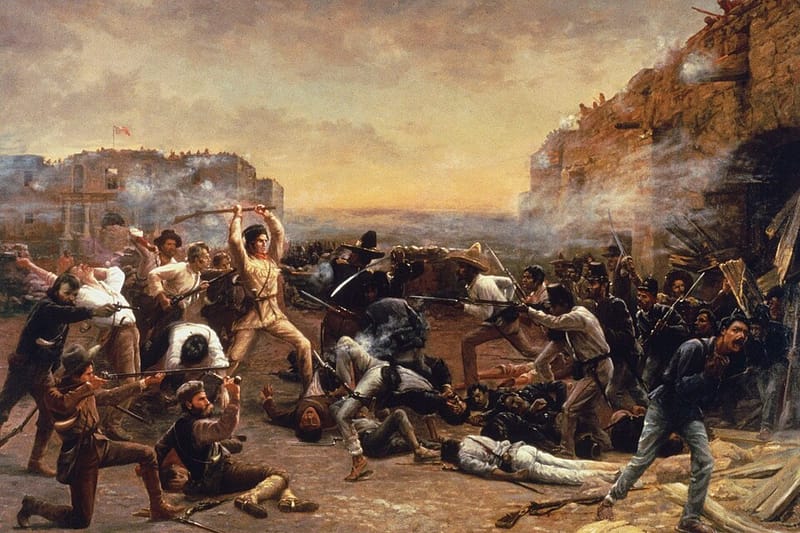
In February 1836, during the Texas Revolution against Mexico, a small garrison of Texan and American volunteers held the old Alamo mission at San Antonio against the army of Mexican president Antonio López de Santa Anna. After a thirteen-day siege, some 1,800 Mexican troops stormed the walls before dawn on March 6; within ninety minutes every defender — including William Barret Travis, Jim Bowie, and Davy Crockett — was dead. Six weeks later Sam Houston’s army routed Santa Anna at San Jacinto, and Texas won its independence as a republic that protected slavery.
Key facts
- Date
- February 23 – March 6, 1836
- Location
- San Antonio de Béxar, Mexican Texas
- Siege
- February 23 – March 6, 1836
- Defenders
- 189 on the official list; research may raise the total to as many as 257
- Mexican losses
- About 600 killed and wounded
- Travis’s letter
- “To the people of Texas & all Americans in the world… Victory or Death”
- San Jacinto
- April 21, 1836: the battle lasted eighteen minutes; Santa Anna was captured the next day
- Texas independence
- Declared March 2, 1836, at Washington-on-the-Brazos
Why it matters
The Alamo became one of the most powerful symbols of patriotic sacrifice in American memory, though legend often obscures the real battle. The revolution it belonged to created the Republic of Texas, whose annexation by the United States in 1845 led toward the Mexican-American War and deepened the national crisis over slavery’s expansion.
Historical background
After Mexico won independence from Spain, its government invited settlers into Texas. Under the Colonization Act of 1825 immigrants poured in, most from the southern United States and many bringing enslaved people. Mexico’s federal constitution of 1824 appealed to them, but Mexican officials grew alarmed: Anglo settlers far outnumbered Mexicans east of San Antonio and seemed only nominally loyal. Mexico outlawed slavery in 1829, and the Law of April 6, 1830, tried to stop American immigration and the further introduction of slaves; the colonists largely ignored both. In 1834 Santa Anna took power, repudiated the federal Constitution of 1824, and ruled as a dictator. Fighting broke out at Gonzales in October 1835. In December Texan volunteers, American volunteers, and their Tejano allies captured San Antonio.
Causes and contributing factors
Disputes over immigration, customs duties, land titles, military authority, and slavery divided the colonists from the Mexican government; The American Yawp calls the debate over slavery “one of the prime forces behind the Texas Revolution.” The rebels at first presented themselves as defenders of the Constitution of 1824 against Santa Anna’s centralism, then declared independence. The Alamo itself was held because, as its commander James Neill argued, it guarded one of the two main roads into Texas from the Mexican interior; Governor Henry Smith refused Sam Houston’s request for permission to abandon and blow it up.
What happened
Santa Anna’s army reached San Antonio on February 23, 1836, sooner than the defenders expected. Travis answered a demand for surrender with a cannonball. When Bowie fell gravely ill, Travis took full command and wrote his famous appeal “to the people of Texas & all Americans in the world,” vowing “Victory or Death” but above all pleading for help. Only thirty-two men from Gonzales broke through to join them. “If my countrymen do not rally to my relief,” Travis wrote, “I am determined to perish in the defense of this place, and my bones shall reproach my country for her neglect.”
Around 5:00 a.m. on Sunday, March 6, about 1,800 Mexican troops attacked from four directions. Cannon fire tore through their ranks, but they reformed and broke over the walls. Travis was among the first to die; defenders fell back to the Long Barracks, where the bloodiest hand-to-hand fighting took place, and Bowie was killed in his sickbed. The chapel fell last. As many as seven defenders survived the fighting, but Santa Anna ordered them executed; whether Crockett was among them is still debated. Women, children, and enslaved people were spared, among them Susanna Dickinson and her infant daughter, and Travis’s slave, Joe.
Immediate consequences
Dickinson carried the news to Sam Houston at Gonzales, setting off a panicked flight of settlers known as the Runaway Scrape. Meanwhile, on March 2 a convention at Washington-on-the-Brazos — including the Tejanos José Antonio Navarro, Lorenzo de Zavala, and José Francisco Ruiz — had declared Texas independent; its constitution guaranteed the protection of slavery. On March 27 about 350 Texan prisoners who had surrendered at Goliad were executed on Santa Anna’s orders. Then, on April 21, Houston’s army of about 900 surprised Santa Anna’s force at San Jacinto. The battle lasted eighteen minutes, though the killing went on for hours; about 630 Mexican soldiers died and 730 were captured, against 9 Texans killed. Santa Anna was captured the next day and ordered his army out of Texas.
Long-term significance
Mexico never recognized the Republic of Texas, but the United States did, and in 1845 Texas joined the Union as the twenty-eighth state — an annexation Mexico denounced as an act of aggression. The Alamo’s defenders, the Handbook of Texas stresses, were not suicidal — they held their post on orders, begging for reinforcements a divided government never sent — and the battle’s real military value was in giving the independence convention time to meet. Novels, plays, and films have wrapped it in legend, but even stripped of exaggeration it remains, in the Handbook’s words, “an inspiring moment in Texas history,” and “Remember the Alamo!” has echoed through American history ever since.
Study this entry
Check your understanding
Try answering in your own words, then open the answer.
1.What led to the Alamo and the Texas Revolution?Show answerHide
Disputes over immigration, customs duties, land titles, military authority, and slavery divided the colonists from the Mexican government; The American Yawp calls the debate over slavery “one of the prime forces behind the Texas Revolution.”From “Causes and contributing factors” above.
2.What happened?Show answerHide
Santa Anna’s army reached San Antonio on February 23, 1836, sooner than the defenders expected. Travis answered a demand for surrender with a cannonball.From “What happened” above.
3.What were the immediate consequences?Show answerHide
Dickinson carried the news to Sam Houston at Gonzales, setting off a panicked flight of settlers known as the Runaway Scrape.From “Immediate consequences” above.
4.Why does it still matter?Show answerHide
Mexico never recognized the Republic of Texas, but the United States did, and in 1845 Texas joined the Union as the twenty-eighth state — an annexation Mexico denounced as an act of aggression.From “Long-term significance” above.
Turn this entry into 10 flashcards (key facts, dates, and why it matters) and review them in Learn.
Related History
How this connects to the rest of the atlas.
Events
Concepts

Sources
- 1.Alamo, Battle of the
Texas State Historical Association, Handbook of Texas Online (Stephen L. Hardin) · Scholarly · cited for strategy, garrison, siege, assault, casualties, survivors, legend
- 2.Texas Revolution
Texas State Historical Association, Handbook of Texas Online · Scholarly · cited for colonization, causes, independence convention, Goliad, San Jacinto, treaties
- 3.12. Manifest Destiny
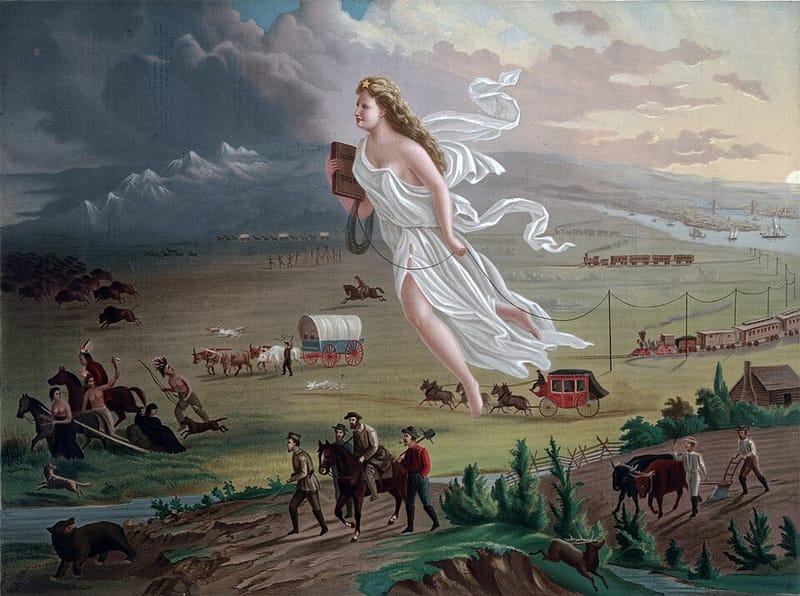
The American Yawp (Stanford University Press) · Scholarly · cited for slavery as a cause, Santa Anna, annexation of Texas
Image credits
- The Fall of the Alamo, Robert Jenkins Onderdonk, circa 1903. Via Wikimedia Commons · Public domain · Source
Written for American History Atlas from the sources above. See how entries are researched.
Atlas by Alexander. More on Telegram.