PersonRevolution and Independence
Alexander Hamilton
First secretary of the Treasury and architect of the federal financial system
1757 (disputed)–1804
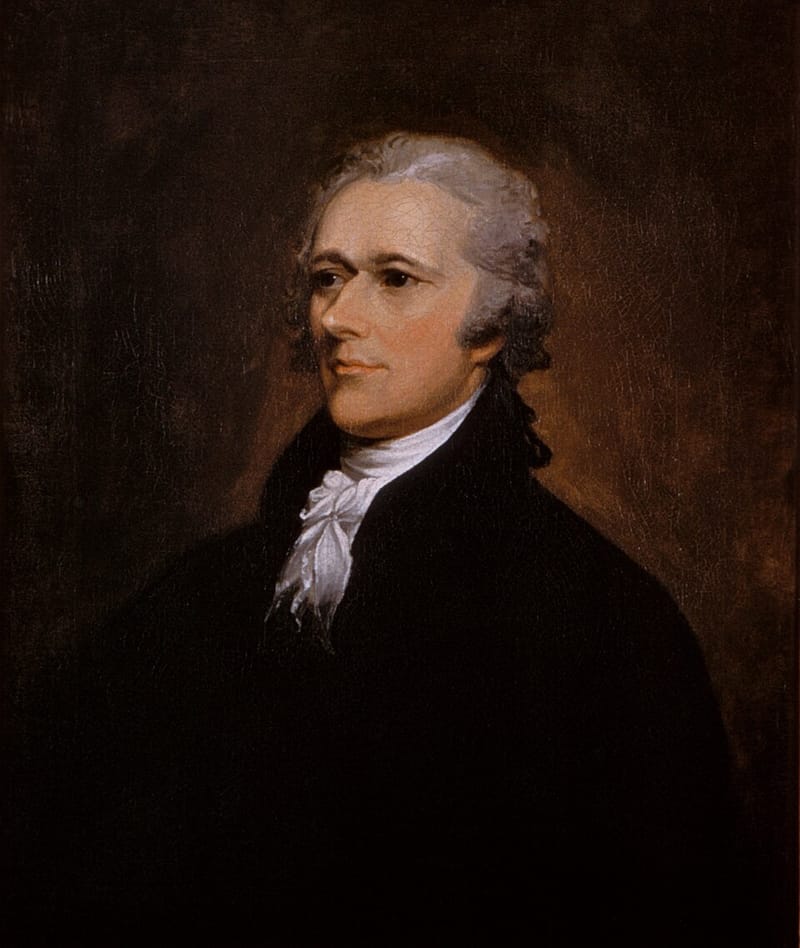
Born in the Caribbean and orphaned young, Alexander Hamilton arrived in New York as a teenager and rose to become George Washington’s closest aide, a leading author of the Federalist Papers, and the first secretary of the Treasury. His program — paying the Revolutionary War debt in full, creating a national bank, and building federal revenue — gave the new government financial credibility and a lasting blueprint for national economic power. He died after a duel with Aaron Burr in 1804.
Key facts
- Born
- January 11, 1757 (disputed), Charlestown, Nevis, British West Indies
- Died
- July 12, 1804, New York City
- Roles
- Aide-de-camp to George Washington (1777–1781); Delegate to the Constitutional Convention; Principal author of the Federalist Papers; First secretary of the Treasury (1789–1795); Lawyer in New York City
- Birth year
- January 11, 1757, or possibly 1755 — the records conflict
- Federalist Papers
- Wrote more than half of the 85 essays
- Treasury program
- Full repayment of war debt; customs and excise revenue (1790–91); First Bank of the United States (1791)
- Death
- Mortally wounded by Vice President Aaron Burr in a duel at Weehawken, New Jersey, July 11, 1804; died the next day
Why it matters
Hamilton gave the young republic sound credit and a functioning treasury, and his broad view of federal power became one pole of a debate — national authority versus states’ rights and limited government — that runs through all of American history.
Early life and context
Hamilton was born in Charlestown on the Caribbean island of Nevis, probably in 1757 (some evidence points to 1755). His parents were not married, his father left the family, and his mother died when he was a boy. As a clerk for a trading firm in the islands — work that brought him into contact with the brutal economy of sugar and slavery — he impressed local patrons, who raised money to send him to North America. He attended an academy in Elizabethtown, New Jersey, in 1772 and then King’s College (now Columbia University) in New York.
Major actions and achievements
When the Revolution began, Hamilton became captain of an artillery company. In March 1777 Washington made him an aide-de-camp, and for four years he handled much of the commander’s correspondence. He married Elizabeth Schuyler, daughter of a powerful New York family, in 1780, and led an infantry assault at Yorktown in 1781.
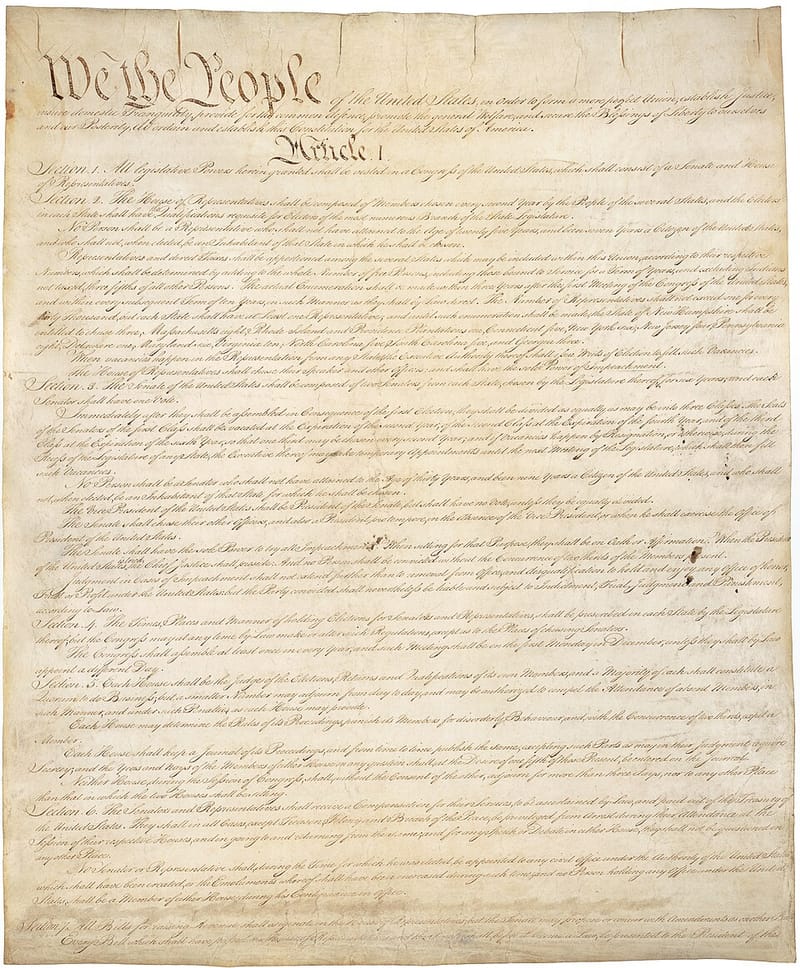
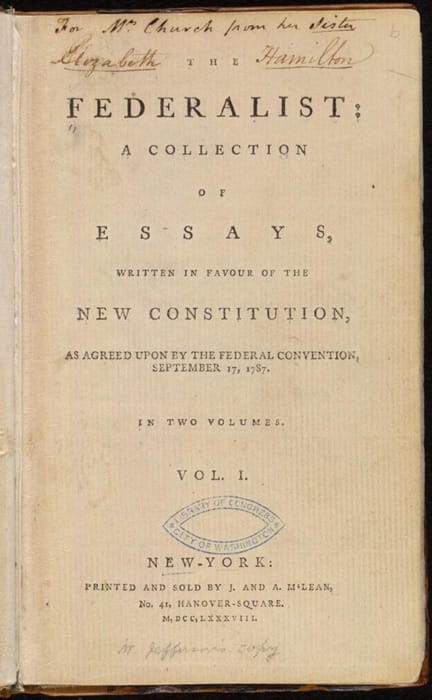
After the war, admitted to the bar in July 1782 under a special allowance for veterans, he opened a law office on Wall Street, argued cases before New York’s highest court and later the U.S. Supreme Court, and became one of the strongest voices for a more powerful national government. He drafted the report of the 1786 Annapolis meeting that called for the Constitutional Convention, served as a New York delegate, and then threw himself into ratification — recruiting James Madison and John Jay and writing more than half of the Federalist Papers.
Appointed the first secretary of the Treasury in 1789, Hamilton faced a government burdened by the debt of the Revolutionary War. He insisted on repaying it in full — calling it “the price of liberty” — and persuaded Congress to have the federal government assume the states’ war debts as well. He built a revenue system of customs duties and excise taxes and proposed the First Bank of the United States, chartered in 1791. His reports on public credit and manufactures envisioned a diversified commercial economy backed by an active federal government. He lost one battle to Jefferson — over whether the new Mint belonged in the Treasury — and in 1795, his office paying only $3,500 a year, he resigned to return to his law practice, while continuing to advise Washington.
Beliefs and ideas
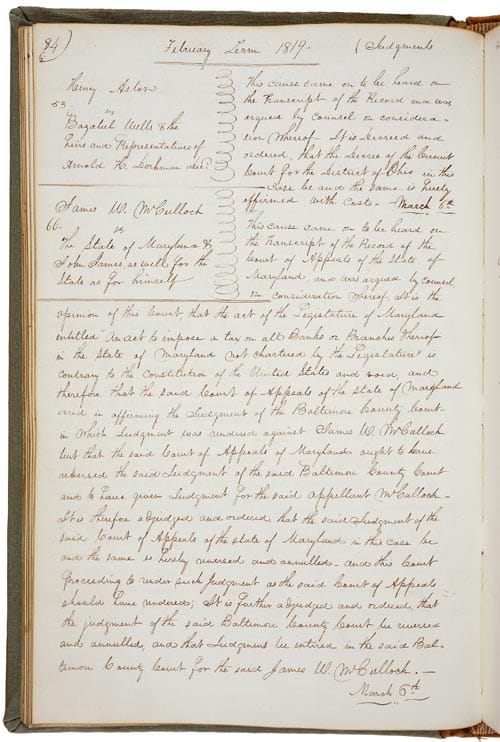
Hamilton believed that liberty required a government strong enough to defend the nation, enforce its laws, and command the confidence of creditors and investors. He read the Constitution’s grant of power broadly, arguing that the “necessary and proper” clause allowed Congress to create a bank — an argument the Supreme Court later adopted in McCulloch v. Maryland. He distrusted popular passions, favored close ties with Britain, and saw manufacturing and finance, not only farming, as the future of the American economy.
Controversies, limits, and criticism
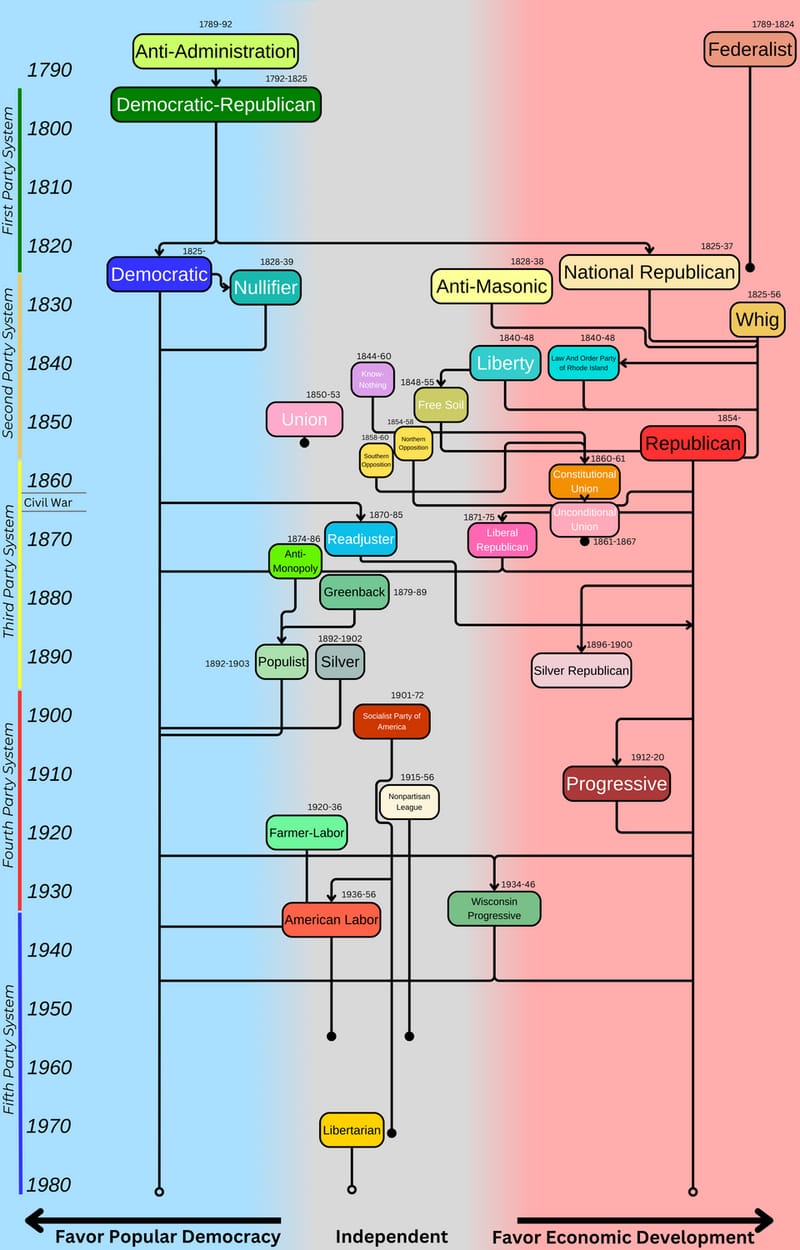
Hamilton’s financial program enriched speculators who had bought up war bonds cheaply, and his opponents, led by Jefferson and Madison, accused him of favoring Northern merchants and creating a corrupt alliance between government and money. Their conflict helped give birth to the first political parties. A federal excise on whiskey that he championed provoked the Whiskey Rebellion in western Pennsylvania.
On slavery, Hamilton was a founder of the New York Manumission Society in the 1780s, which advocated gradual abolition in the state. He also married into one of New York’s largest slaveholding families, and historians continue to examine how closely his own household and business dealings were tied to slavery.
His temper and pen made enemies. A 1797 scandal over an affair forced him to publish a confession, and his attacks on fellow Federalist John Adams split their party in 1800. His long feud with Aaron Burr ended in the duel that killed him.
Legacy
In 1802 Hamilton finished The Grange, a country house on a 32-acre estate in upper Manhattan, but he enjoyed it only two years. At a dinner in Albany in 1804 he called Aaron Burr a dangerous man who ought not to be trusted with the reins of government; the remark was repeated in the press, and the two men’s long feud ended in a duel at Weehawken, New Jersey, on July 11. Burr mortally wounded him, and Hamilton died in New York City the next day; his widow, Elizabeth, lived at The Grange for thirty more years. Long overshadowed by Jefferson in popular memory, he is now widely seen as the founder who did most to design the machinery of the federal government — the Treasury, national credit, and a broad reading of federal power — and his life story as an immigrant and self-made man has made him newly famous in the twenty-first century.
Study this entry
Check your understanding
Try answering in your own words, then open the answer.
1.What shaped Alexander Hamilton early in life?Show answerHide
Hamilton was born in Charlestown on the Caribbean island of Nevis, probably in 1757 (some evidence points to 1755). His parents were not married, his father left the family, and his mother died when he was a boy.From “Early life and context” above.
2.What were Alexander Hamilton’s major achievements?Show answerHide
When the Revolution began, Hamilton became captain of an artillery company. In March 1777 Washington made him an aide-de-camp, and for four years he handled much of the commander’s correspondence.From “Major actions and achievements” above.
3.What criticism or controversy surrounds Alexander Hamilton?Show answerHide
4.How is Alexander Hamilton remembered?Show answerHide
In 1802 Hamilton finished The Grange, a country house on a 32-acre estate in upper Manhattan, but he enjoyed it only two years.From “Legacy” above.
Turn this entry into 10 flashcards (key facts, dates, and why it matters) and review them in Learn.
Related History
How this connects to the rest of the atlas.
Events
People
Documents
Institutions

Sources
- 1.Alexander Hamilton (1789–1795)
U.S. Department of the Treasury · Institutional · cited for Treasury program, debt, bank, resignation
- 2.Alexander Hamilton
Historical Society of the New York Courts · Institutional · cited for birth, education, military and legal career, Federalist, duel
- 3.Hamilton Grange — History & Culture
National Park Service, Hamilton Grange National Memorial · Institutional · cited for the Grange and Hamilton’s family
- 4.Trading Cards: Alexander Hamilton and Elizabeth Schuyler Hamilton
National Park Service, Hamilton Grange National Memorial · Institutional · cited for Caribbean clerkship and New York Manumission Society
Image credits
- Portrait of Alexander Hamilton, John Trumbull, 1805. Via Wikimedia Commons · Public domain · Source
Written for American History Atlas from the sources above. See how entries are researched.
Atlas by Alexander. More on Telegram.