The Bill of Rights
The first ten amendments to the Constitution
December 15, 1791
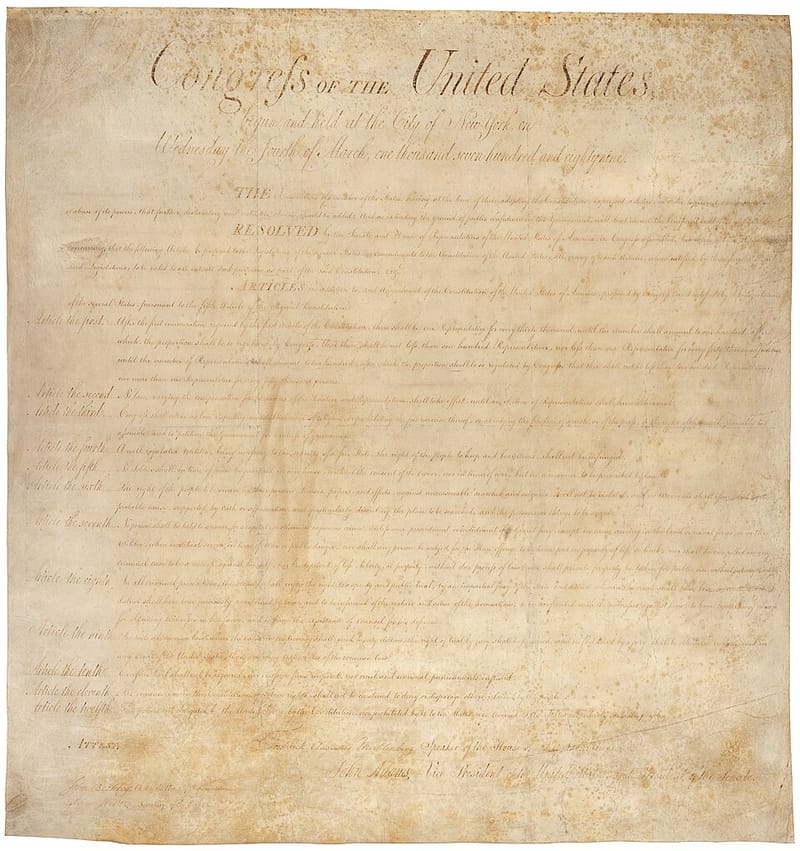
The Bill of Rights is the first ten amendments to the Constitution, ratified in 1791. They protect freedom of religion, speech, the press, and assembly; the right to bear arms; protections against unreasonable searches; and the rights of people accused of crimes. They were added to answer critics who feared a powerful national government — and, as later reinterpreted through the Fourteenth Amendment, they became the foundation of modern American civil liberties.
Key facts
- Date
- December 15, 1791
- Authors
- James Madison (drafter); First Federal Congress
- Dating note
- Proposed by Congress September 25, 1789; ratified December 15, 1791.
- Proposed
- September 25, 1789: twelve amendments sent to the states
- Ratified
- December 15, 1791: amendments 3–12 of the twelve became the Bill of Rights
- The other two
- One, on congressional pay, was ratified in 1992 as the 27th Amendment; the other was never ratified
- Drafter
- James Madison, who proposed nineteen amendments in June 1789
Read the full text at the National Archives
Why it matters
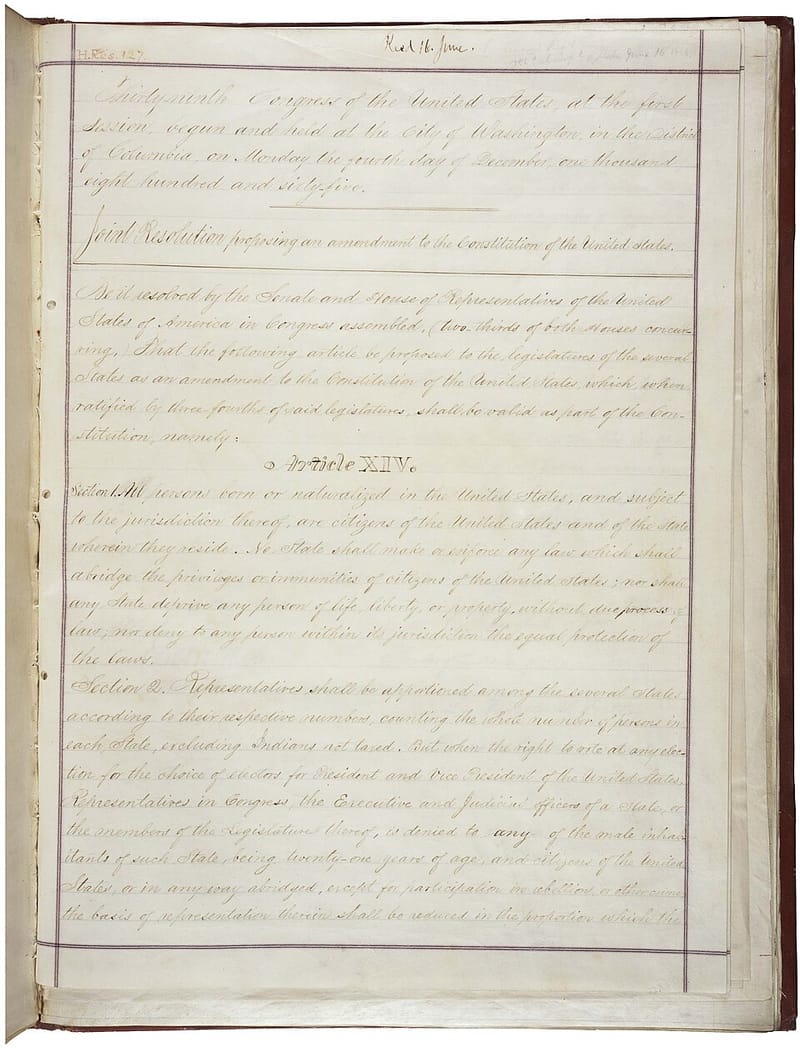
At first the Bill of Rights was understood to limit only the federal government, not the states. After the Civil War, the Fourteenth Amendment’s guarantees of due process and equal protection gave courts a way to apply most of its protections against state governments as well — a process, known as incorporation, that unfolded mainly in the twentieth century and made these amendments central to struggles over civil rights, criminal justice, and free speech.
Historical circumstances
During the ratification debates of 1787–88, Anti-Federalists charged that the Constitution would open the way to tyranny because it contained no bill of rights. The memory of British violations of colonial liberties was fresh, and most state constitutions already had declarations of rights. Several state conventions ratified the Constitution while formally asking for amendments; others did so with the understanding that amendments would follow.
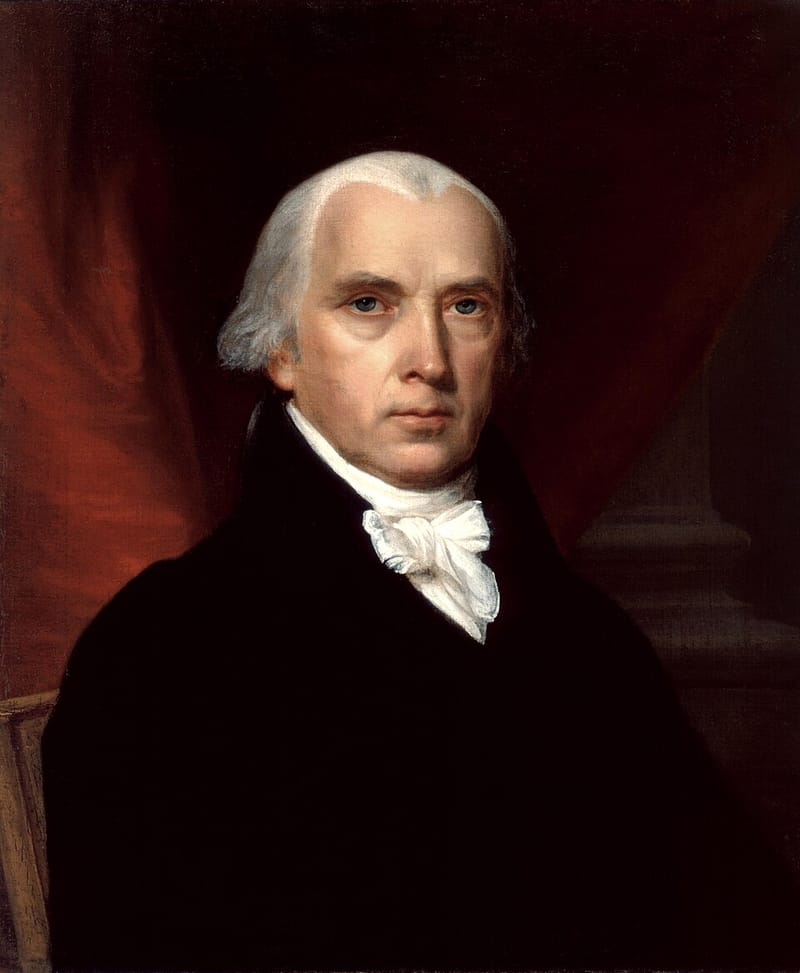
Madison, who had once thought a bill of rights unnecessary, promised to pursue amendments. In June 1789 he proposed nineteen to the House. Congress reduced them to twelve and sent them to the states on September 25, 1789. Ten were ratified by three-quarters of the states by December 15, 1791.
Principal ideas
- First Amendment: no establishment of religion; free exercise of religion; freedom of speech, press, assembly, and petition.
- Second and Third: the right to keep and bear arms; no quartering of soldiers in homes in peacetime.
- Fourth: protection against unreasonable searches and seizures; warrants require probable cause.
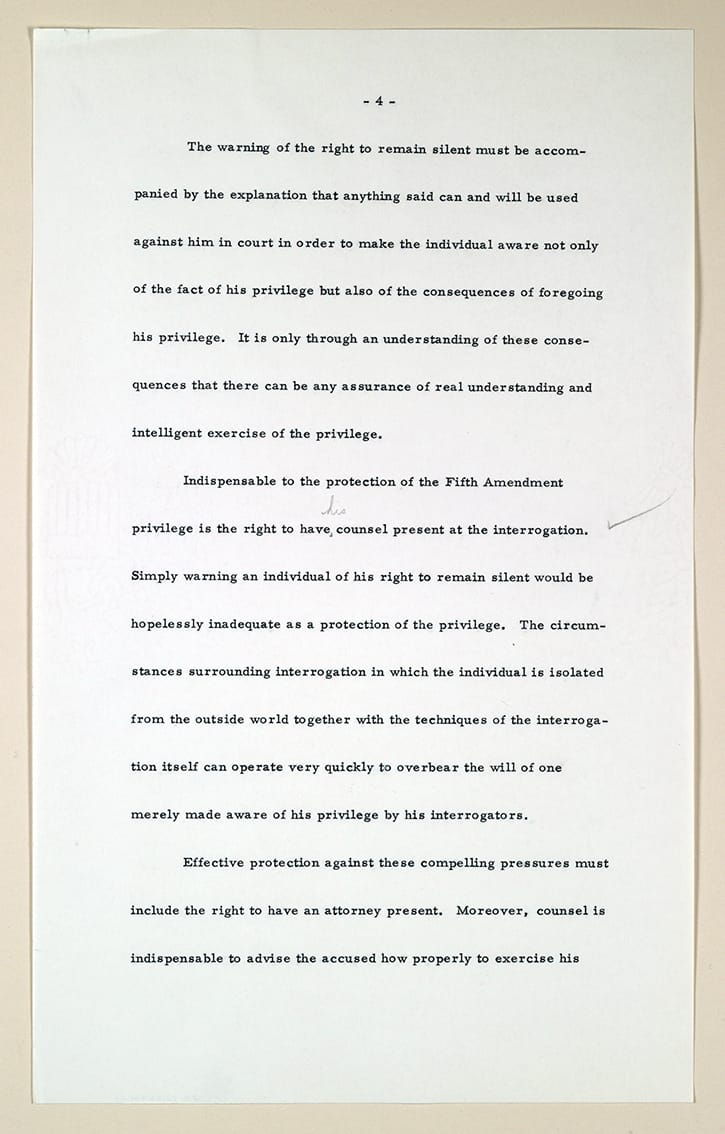
- Fifth through Eighth: rights of the accused — grand juries, no double jeopardy, no compelled self-incrimination, due process, just compensation for property taken, speedy public trial by jury, counsel, and no excessive bail or cruel and unusual punishment.
- Ninth: listing some rights does not deny others retained by the people.
- Tenth: powers not delegated to the United States, nor prohibited to the states, “are reserved to the States respectively, or to the people.”
Study this entry
Check your understanding
Try answering in your own words, then open the answer.
1.Why was this document written?Show answerHide
During the ratification debates of 1787–88, Anti-Federalists charged that the Constitution would open the way to tyranny because it contained no bill of rights. The memory of British violations of colonial liberties was fresh, and most state constitutions already had declarations of rights.From “Historical circumstances” above.
2.What are its principal ideas?Show answerHide
- First Amendment: no establishment of religion; free exercise of religion; freedom of speech, press, assembly, and petition. - Second and Third: the right to keep and bear arms; no quartering of soldiers in homes in peacetime. - Fourth: protection against unreasonable searches and seizures; warrants require probable cause. - Fifth through Eighth: rights of the accused — grand juries, no double jeopardy, no compelled self-incrimination, due process, just compensation for property taken, speedy public trial by jury, counsel, and no excessive bail or cruel and unusual punishment. - Ninth: listing some rights does not deny others retained by the people. - Tenth: powers not delegated to the United States, nor prohibited to the states, “are reserved to the States respectively, or to the people.”From “Principal ideas” above.
Turn this entry into 11 flashcards (key facts, dates, and why it matters) and review them in Learn.
Related History
How this connects to the rest of the atlas.
Documents
Court cases
.jpg)
Sources
- 1.Bill of Rights (1791) — Milestone Documents
National Archives · Primary source · cited for proposal, ratification, the 27th Amendment
- 2.The Bill of Rights: A Transcription
National Archives · Primary source · cited for text of the amendments
- 3.James Madison (1751–1836)
Encyclopedia Virginia, Virginia Humanities · Scholarly · cited for Madison’s nineteen proposals
- 4.10th Amendment — Rights Reserved to States or People
National Constitution Center · Institutional · cited for text of the Tenth Amendment
Image credits
- Bill of Rights - DPLA - a65f6d0b6210c18d17c596908ebcf270 (page 1), National Archives and Records Administration. Office of the Federal Register. 4/1/1985, 25 September 1789, 25 September 1789. Via Wikimedia Commons · Public domain · Source
Written for American History Atlas from the sources above. See how entries are researched.
Atlas by Alexander. More on Telegram.