Court CaseCivil Rights and Social Transformation
Miranda v. Arizona
The ruling that requires police to warn suspects of their rights
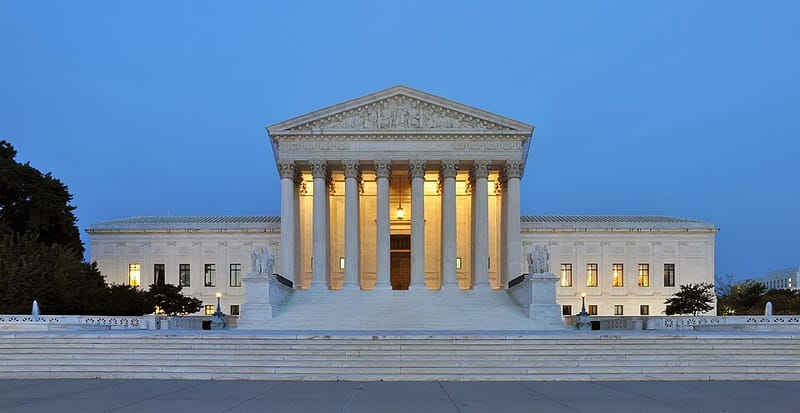
1966Washington, D.C.
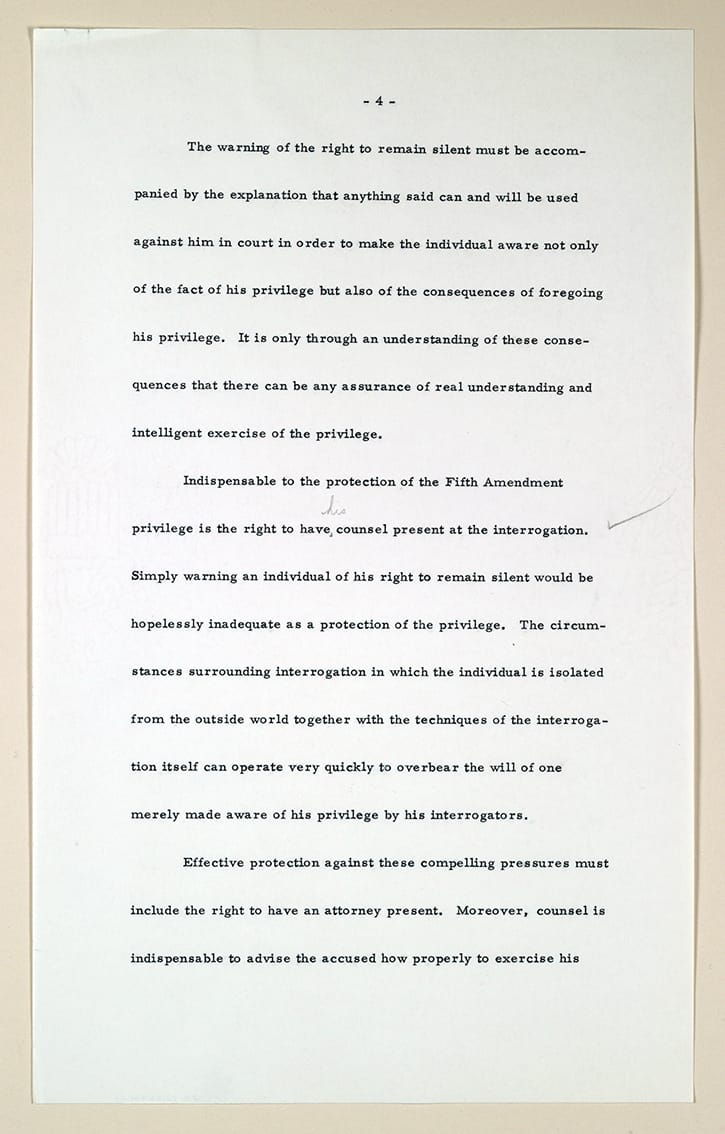
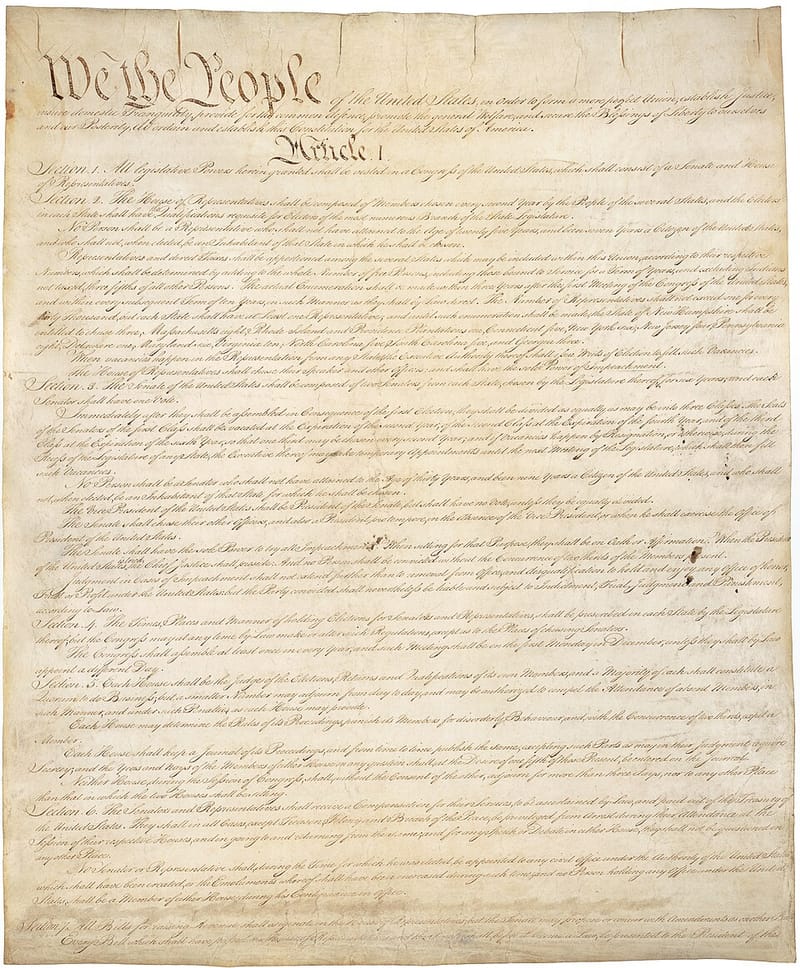
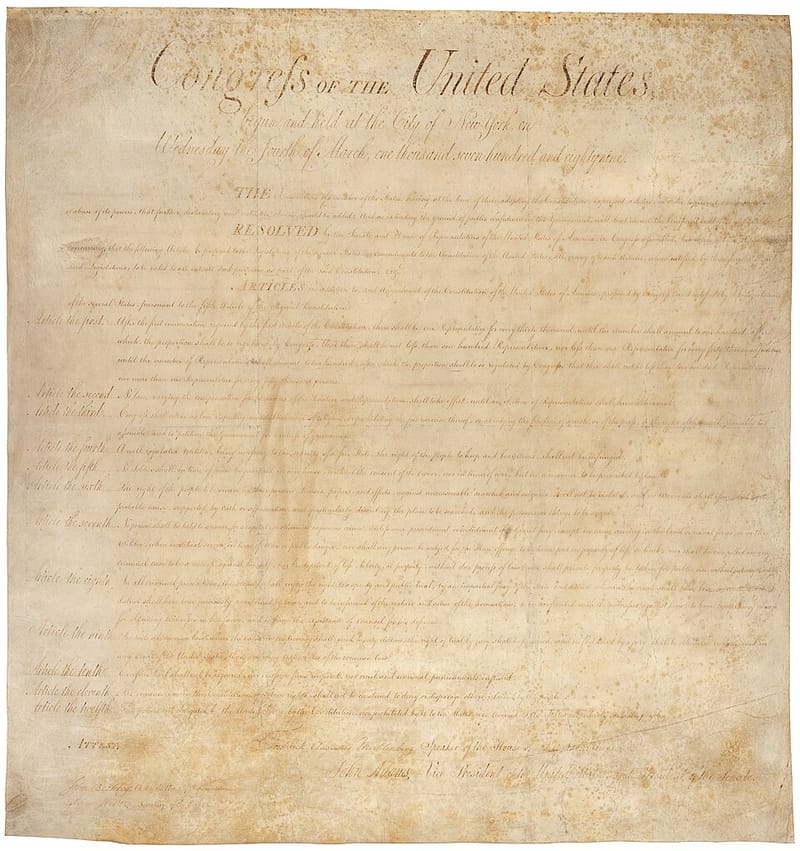
In Miranda v. Arizona (1966), the Supreme Court held that the Fifth Amendment’s protection against self-incrimination applies to police interrogation. Before questioning a suspect in custody, police must warn that the suspect has the right to remain silent, that anything said can be used in court, and that the suspect has the right to a lawyer — appointed if necessary. These requirements became known as “Miranda warnings.”
Key facts
- Citation
- 384 U.S. 436 (1966)
- Decided
- June 13, 1966
- Vote
- 5–4
- Majority opinion
- Chief Justice Earl Warren
- Location
- Washington, D.C.
- Decided
- June 13, 1966
- Vote
- 5–4
- Opinion
- Chief Justice Earl Warren
- Dissenters
- Justices Tom Clark, John Marshall Harlan, Potter Stewart, and Byron White
- Rule
- Warnings required before custodial interrogation
Why it matters
Miranda turned a constitutional principle into a concrete practice that protects people at the moment they are most vulnerable to the power of the state.
Historical context
The case consolidated four cases in which suspects confessed after police questioning without being told of their rights. Ernesto Miranda was arrested at his home on March 13, 1963, and questioned for two hours about a kidnapping and rape. Police obtained a written confession without telling him he had a right to a lawyer. It was used at his trial, and he was convicted; Arizona’s Supreme Court affirmed because he had not specifically asked for counsel.
The legal question
Does the Fifth Amendment’s protection against self-incrimination extend to the police interrogation of a suspect?
The ruling
Yes. Statements obtained through custodial interrogation cannot be used unless the suspect was warned of his rights and knowingly and intelligently waived them.
The Court’s reasoning
Chief Justice Warren reasoned that procedural safeguards were needed to protect the privilege against self-incrimination in the coercive setting of police custody. Suspects must be told they have the right to remain silent, that anything they say can be used against them, and that they have the right to an attorney, appointed if they cannot afford one.
Consequences
Four justices dissented. Justice Clark argued the ruling unduly hampered the police; Justice Harlan found no basis in precedent or history for requiring warnings; Justice White argued that custodial interrogation was not inherently coercive and that the ruling would undermine the use of confessions.
Later interpretation
How later courts, scholars, and the public have judged the case — not part of the ruling itself.
Miranda was part of the Warren Court’s broader reshaping of the administration of criminal justice, which, as the National Archives notes, accompanied its landmark rulings on race relations and the political process.
Study this entry
Check your understanding
Try answering in your own words, then open the answer.
1.What question did the Court have to answer?Show answerHide
Does the Fifth Amendment’s protection against self-incrimination extend to the police interrogation of a suspect?From “The legal question” above.
2.What did the Court decide?Show answerHide
Yes. Statements obtained through custodial interrogation cannot be used unless the suspect was warned of his rights and knowingly and intelligently waived them.From “The ruling” above.
3.How did the Court justify its decision?Show answerHide
Chief Justice Warren reasoned that procedural safeguards were needed to protect the privilege against self-incrimination in the coercive setting of police custody.From “The Court’s reasoning” above.
4.What were the consequences?Show answerHide
Four justices dissented. Justice Clark argued the ruling unduly hampered the police; Justice Harlan found no basis in precedent or history for requiring warnings; Justice White argued that custodial interrogation was not inherently coercive and that the ruling would undermine the use of confessions.From “Consequences” above.
Turn this entry into 9 flashcards (key facts, dates, and why it matters) and review them in Learn.
Related History
How this connects to the rest of the atlas.
Documents
Court cases
.jpg)
Sources
- 1.Miranda v. Arizona
Oyez (Cornell LII, Justia, Chicago-Kent College of Law) · Scholarly · cited for facts, question, holding, vote, dissents
- 2.Brown v. Board of Education (1954) — Milestone Documents
National Archives · Primary source · cited for ruling, Brown II, reaction
Image credits
- Chief Justice Earl Warren - Miranda v. Arizona (1966), Chief Justice Earl Warren (1891–1974), 1966-06-13. Via Wikimedia Commons · Public domain · Source
Written for American History Atlas from the sources above. See how entries are researched.
Atlas by Alexander. More on Telegram.