EventIndustrialization and the Gilded Age
The Battle of the Little Bighorn
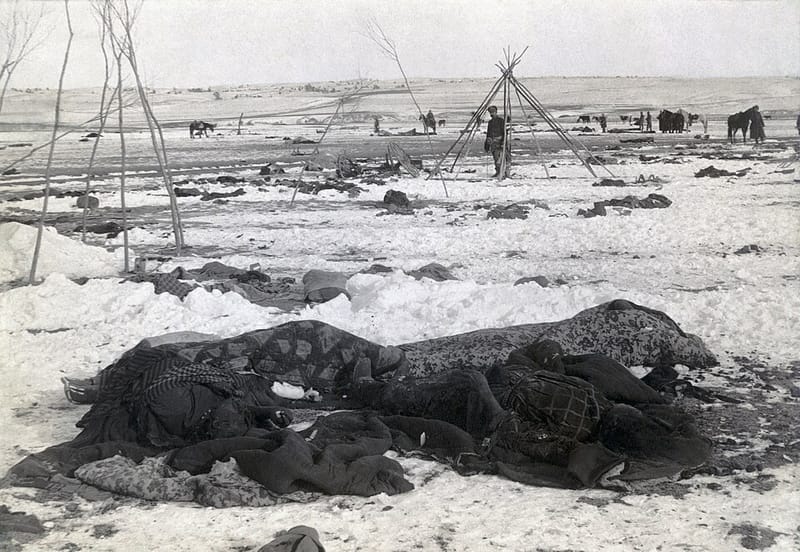
Lakota, Cheyenne, and Arapaho warriors destroy Custer’s command, June 1876
June 25–26, 1876Little Bighorn River, south-central Montana
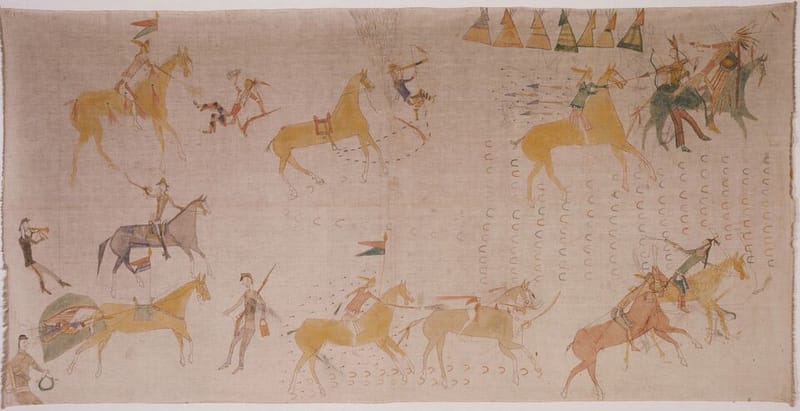
On June 25–26, 1876, warriors of the Lakota, Northern Cheyenne, and Arapaho defeated the U.S. 7th Cavalry along the Little Bighorn River in Montana, killing Lieutenant Colonel George Armstrong Custer and every soldier in the five companies under his immediate command. The battle, which Native people call the Battle of the Greasy Grass, was a stunning victory for the nations resisting confinement to reservations — but a short-lived one. Within a year most had surrendered, and the government seized the sacred Black Hills.
Key facts
- Date
- June 25–26, 1876
- Location
- Little Bighorn River, south-central Montana
- Dates
- June 25–26, 1876
- Native forces
- Lakota, Northern Cheyenne, and Arapaho; a village of about 8,000 people with 1,500–1,800 warriors
- U.S. forces
- 7th Cavalry under Custer, with Crow and Arikara scouts
- Losses
- Custer’s five companies annihilated; about 80 Lakota and Cheyenne killed, according to the NPS
Why it matters
The Little Bighorn was the greatest Native military victory of the Plains wars and a symbol of resistance — but it also hastened the final conquest of the Northern Plains.
Historical background
After fierce fighting in 1865–1867, several Lakota leaders signed the Fort Laramie Treaty of 1868, which created the Great Sioux Reservation in the western half of present-day South Dakota, including the Black Hills, sacred to the Lakota. Leaders such as Sitting Bull and Crazy Horse rejected the reservation system, and many bands that had not signed the treaty continued to hunt on unceded lands.
Causes and contributing factors
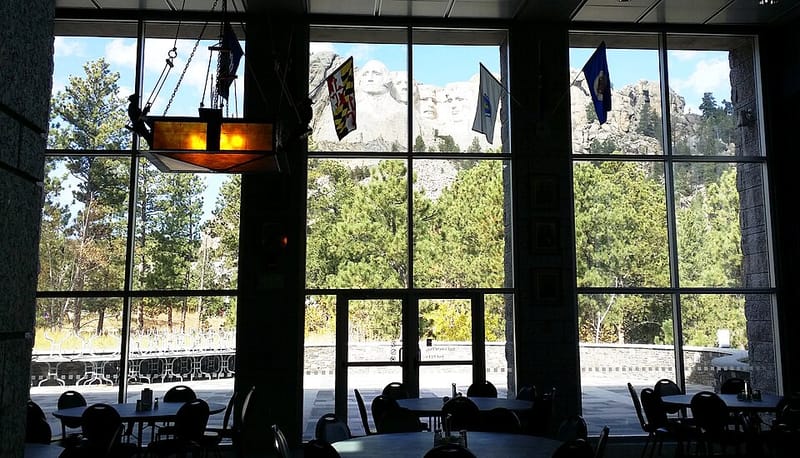
In 1874 Custer led an expedition into the Black Hills, inside the reservation; geologists found gold, and miners poured in, in direct violation of the treaty. The United States offered to buy the Hills; the Lakota rejected the price. In the winter of 1875, the government declared that bands not on reservations by January 31, 1876, would be considered hostile, and the army launched a campaign with three columns to force them back.
What happened
The Lakota and Cheyenne had gathered in large numbers along the Little Bighorn after their annual Sun Dance, where Sitting Bull had a vision of soldiers falling into the village. Custer, ordered to approach from the south, believed his regiment had been detected and attacked on June 25 without waiting for the other columns. He split his command. Major Marcus Reno’s battalion charged the south end of the village, was driven back across the river with heavy losses, and dug in on the bluffs, where Captain Frederick Benteen joined him. Custer led five companies north along the ridges east of the river. Overwhelmed by superior numbers and firepower, his entire command was killed. Reno and Benteen’s men were besieged until the village moved away on the evening of June 26.
Immediate consequences
News of Custer’s defeat shocked the nation, which had not believed Plains peoples capable of destroying a modern cavalry force. The army sent more troops; most of the bands declared “hostile” surrendered within a year, and Sitting Bull led his followers into Canada.
Long-term significance
The National Park Service calls the battle “a momentary victory” for the Lakota and Cheyenne. The government took the Black Hills without compensation — a seizure the Lakota have contested ever since. In popular culture, “Custer’s Last Stand” became a heroic myth; the battlefield, now Little Bighorn Battlefield National Monument, today commemorates both the soldiers and the Native warriors who fought there.
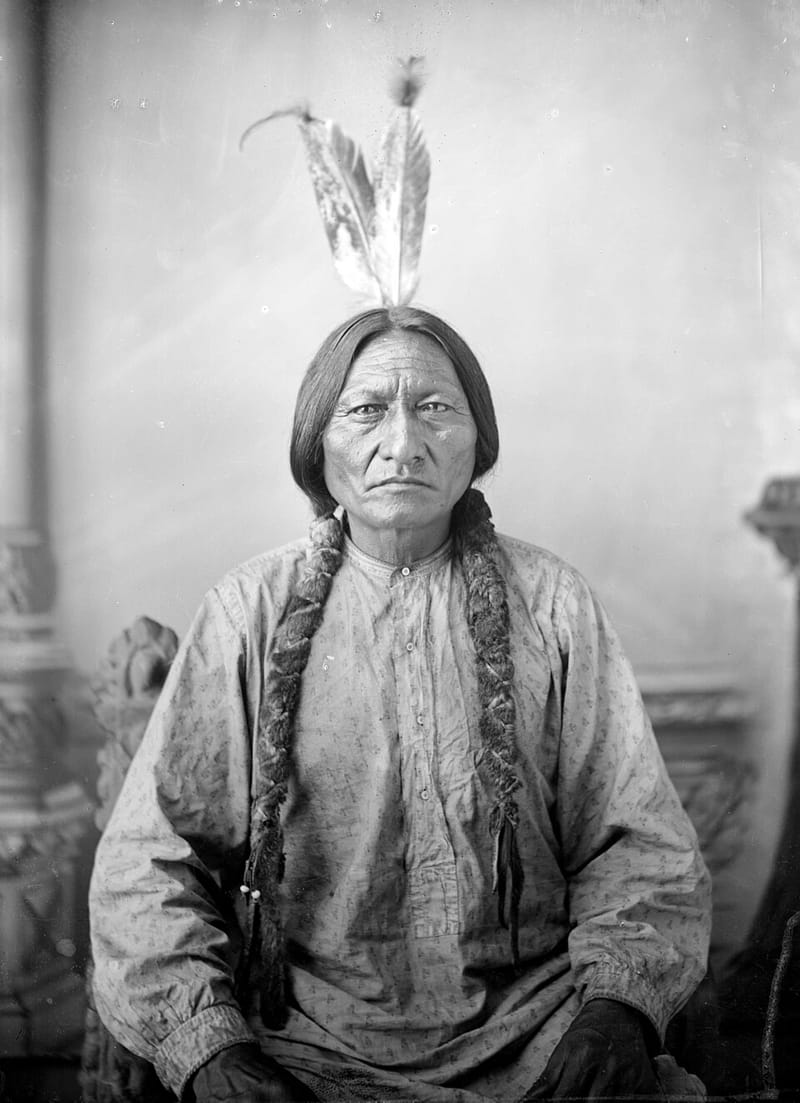
Key peopleSitting Bull
Study this entry
Check your understanding
Try answering in your own words, then open the answer.
1.What led to the Battle of the Little Bighorn?Show answerHide
In 1874 Custer led an expedition into the Black Hills, inside the reservation; geologists found gold, and miners poured in, in direct violation of the treaty. The United States offered to buy the Hills; the Lakota rejected the price.From “Causes and contributing factors” above.
2.What happened?Show answerHide
The Lakota and Cheyenne had gathered in large numbers along the Little Bighorn after their annual Sun Dance, where Sitting Bull had a vision of soldiers falling into the village. Custer, ordered to approach from the south, believed his regiment had been detected and attacked on June 25 without waiting for the other columns.From “What happened” above.
3.What were the immediate consequences?Show answerHide
News of Custer’s defeat shocked the nation, which had not believed Plains peoples capable of destroying a modern cavalry force. The army sent more troops; most of the bands declared “hostile” surrendered within a year, and Sitting Bull led his followers into Canada.From “Immediate consequences” above.
4.Why does it still matter?Show answerHide
The National Park Service calls the battle “a momentary victory” for the Lakota and Cheyenne. The government took the Black Hills without compensation — a seizure the Lakota have contested ever since.From “Long-term significance” above.
Turn this entry into 9 flashcards (key facts, dates, and why it matters) and review them in Learn.
Related History
How this connects to the rest of the atlas.
Events

Sources
- 1.Story of the Battle
National Park Service, Little Bighorn Battlefield National Monument · Institutional · cited for background, campaign, battle, aftermath
- 2.Sitting Bull
National Park Service, Little Bighorn Battlefield National Monument · Institutional · cited for life, leadership, Canada, surrender, death
- 3.The American Yawp, “Conquering the West”
The American Yawp (eds. Joseph Locke and Ben Wright; Stanford University Press) · Scholarly · cited for Plains wars, Dawes Act, Ghost Dance, Wounded Knee, railroads
Image credits
- Battle of Little Bighorn, White Swan, circa 1890. Via Wikimedia Commons · Public domain · Source
Written for American History Atlas from the sources above. See how entries are researched.
Atlas by Alexander. More on Telegram.