EventIndustrialization and the Gilded Age
The Wounded Knee Massacre
The U.S. Army kills hundreds of Lakota at Wounded Knee Creek, December 1890
December 29, 1890Wounded Knee Creek, Pine Ridge Reservation, South Dakota
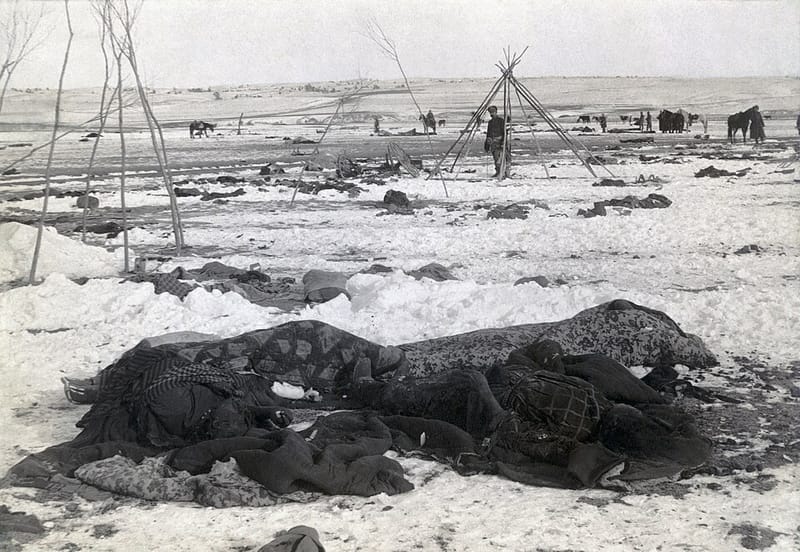
On December 29, 1890, soldiers of the U.S. 7th Cavalry surrounded a band of Lakota led by Spotted Elk (Big Foot) at Wounded Knee Creek on the Pine Ridge Reservation and attempted to disarm them. A shot was fired, and the soldiers opened fire with heavy weapons, killing between 150 and 300 Lakota men, women, and children. About two dozen soldiers also died, many probably from their own side’s fire. Wounded Knee marked the end of sustained armed Native resistance on the Plains.
Key facts
- Date
- December 29, 1890
- Location
- Wounded Knee Creek, Pine Ridge Reservation, South Dakota
- Date
- December 29, 1890
- Lakota dead
- Estimates range from about 150 to 300, many of them women and children
- Army dead
- About 25
- Context
- Federal alarm over the Ghost Dance; the killing of Sitting Bull on December 15
Why it matters
The massacre at Wounded Knee is remembered as the violent end of the Plains wars and as one of the gravest atrocities committed by U.S. forces against Native people.
Historical background
By 1890 the Lakota had lost the Black Hills, their bison-based economy had collapsed, and they lived on shrinking reservations under government agents. A Paiute prophet, Wovoka, taught that if Native people lived justly and performed the Ghost Dance, their ancestors would return, the whites would vanish, and the buffalo would again roam the Plains. Members of many nations, including the Lakota, adopted the Ghost Dance.
Causes and contributing factors
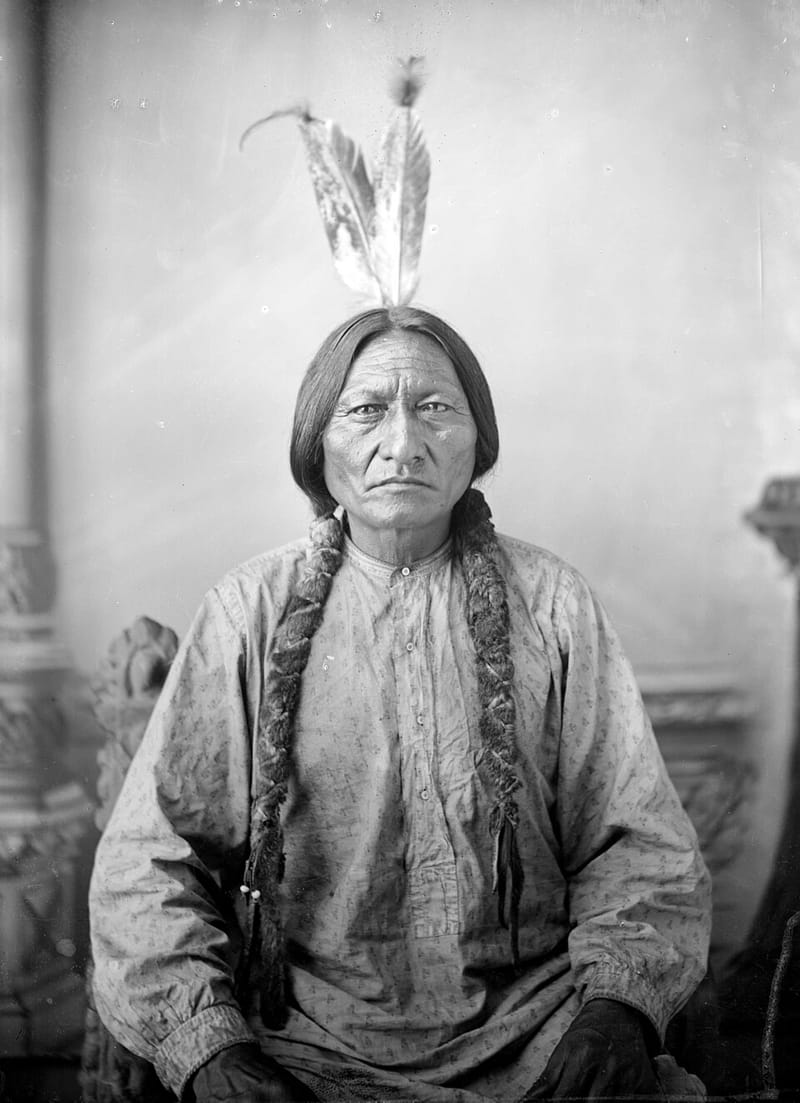
White settlers and federal officials feared the Ghost Dance meant an armed uprising, and troops were sent to the Lakota reservations. On December 15, 1890, Lakota police trying to arrest Sitting Bull at Standing Rock killed him. Fearing more violence, Spotted Elk led his band toward the Pine Ridge Agency to seek refuge. The 7th Cavalry intercepted them and escorted them to Wounded Knee Creek.
What happened
On the morning of December 29, cavalrymen entered the camp to disarm the band. Tensions flared and a shot was fired — it is unclear by whom. The soldiers then fired their heavy weaponry indiscriminately into the camp. When the shooting stopped, between 150 and 300 Lakota were dead, nearly half of them women and children by one estimate. About two dozen soldiers were killed, by concealed Lakota weapons or by friendly fire.
Immediate consequences
The dead were buried in a mass grave. The killings ended the Ghost Dance as a mass movement and effectively ended armed Native resistance on the Plains.
Long-term significance
Wounded Knee became a symbol of the destruction of Native nations by the United States. In 1973, activists of the American Indian Movement occupied the town of Wounded Knee for 71 days, drawing on the site’s meaning to protest treaty violations and conditions on the reservation.
Study this entry
Check your understanding
Try answering in your own words, then open the answer.
1.What led to the Wounded Knee Massacre?Show answerHide
White settlers and federal officials feared the Ghost Dance meant an armed uprising, and troops were sent to the Lakota reservations. On December 15, 1890, Lakota police trying to arrest Sitting Bull at Standing Rock killed him.From “Causes and contributing factors” above.
2.What happened?Show answerHide
On the morning of December 29, cavalrymen entered the camp to disarm the band. Tensions flared and a shot was fired — it is unclear by whom.From “What happened” above.
3.What were the immediate consequences?Show answerHide
The dead were buried in a mass grave. The killings ended the Ghost Dance as a mass movement and effectively ended armed Native resistance on the Plains.From “Immediate consequences” above.
4.Why does it still matter?Show answerHide
Wounded Knee became a symbol of the destruction of Native nations by the United States. In 1973, activists of the American Indian Movement occupied the town of Wounded Knee for 71 days, drawing on the site’s meaning to protest treaty violations and conditions on the reservation.From “Long-term significance” above.
Turn this entry into 8 flashcards (key facts, dates, and why it matters) and review them in Learn.
Related History
How this connects to the rest of the atlas.

Sources
- 1.The American Yawp, “Conquering the West”
The American Yawp (eds. Joseph Locke and Ben Wright; Stanford University Press) · Scholarly · cited for Plains wars, Dawes Act, Ghost Dance, Wounded Knee, railroads
- 2.U.S. Army massacres Indians at Wounded Knee
HISTORY (A&E Networks) · Reference · cited for Ghost Dance, Sitting Bull’s death, the massacre
Image credits
- Wounded Knee aftermath5, Wounded_Knee_aftermath3.jpg : Trager & Kuhn, Chadron, Nebr. derivative work: Durova ( talk ), 2010-03-15 22:49. Via Wikimedia Commons · Public domain · Source
Written for American History Atlas from the sources above. See how entries are researched.
Atlas by Alexander. More on Telegram.