PersonExpansion and Sectional Conflict
John Brown
Abolitionist who led the 1859 raid on Harpers Ferry
1800–1859
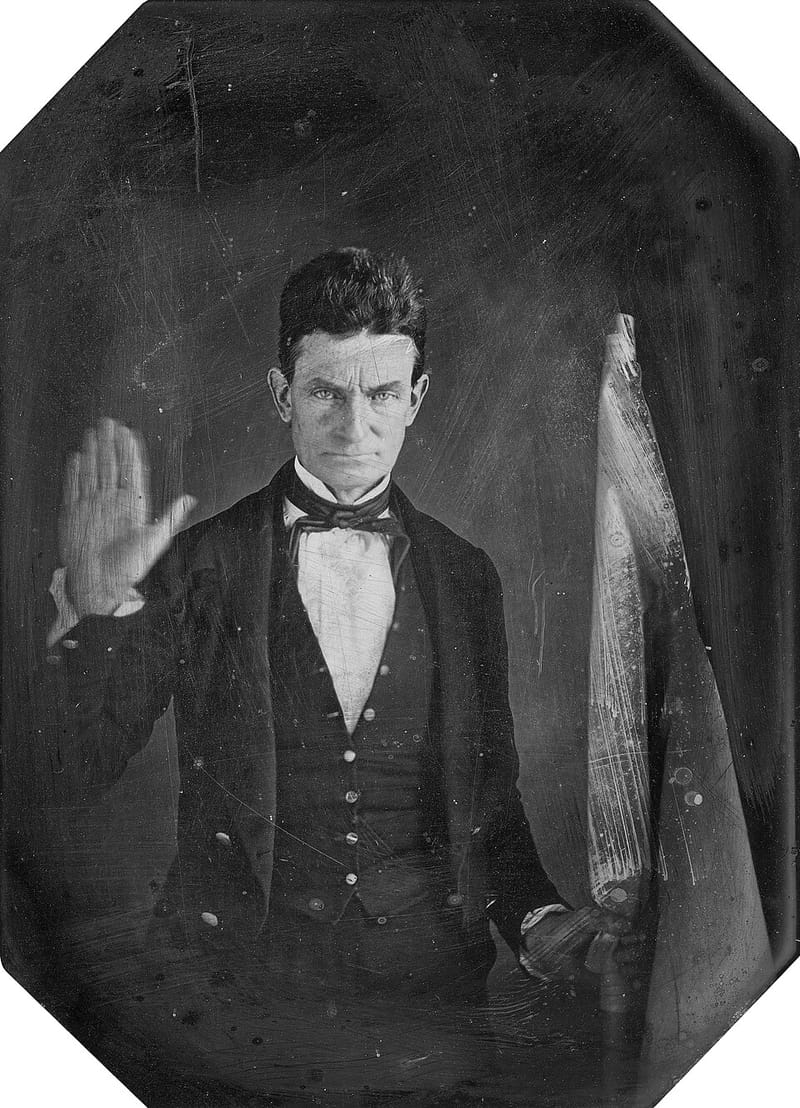
John Brown was a white abolitionist who believed slavery was a sin that only violence could end. After killing pro-slavery settlers in “Bleeding Kansas,” he led twenty-one men in an attack on the federal armory at Harpers Ferry, Virginia, in October 1859, hoping to spark an uprising of enslaved people. The raid collapsed within thirty-six hours; Brown was captured, tried for treason, and hanged. Hailed as a martyr in the North and denounced as a terrorist in the South, he deepened the division that led to the Civil War.
Key facts
- Born
- May 9, 1800, Torrington, Connecticut
- Died
- December 2, 1859, Charles Town, Virginia (now West Virginia)
- Roles
- Abolitionist; Tanner, farmer, and wool merchant; Antislavery fighter in Kansas; Leader of the raid on Harpers Ferry
- Born
- May 9, 1800, Torrington, Connecticut
- Raid
- October 16–18, 1859, with 21 followers
- Captured by
- U.S. Marines commanded by Colonel Robert E. Lee
- Executed
- December 2, 1859, in Charles Town, Virginia
Why it matters
John Brown’s raid convinced many Southerners that the North would not leave slavery alone, and many Northerners that slavery could not be ended peacefully — pushing the nation closer to civil war.
Early life and context
Brown was born on May 9, 1800, in Torrington, Connecticut, and grew up in Hudson, Ohio. As a boy he saw an enslaved boy he had befriended savagely beaten — a sight that, with his conviction that slavery was a sin against God, shaped the rest of his life. He set out to study for the ministry, but eye trouble and lack of money forced him home to his father’s trade of tanning leather. He married twice and fathered twenty children, only eleven of whom survived to adulthood.
For decades Brown failed at one business after another — tanner, farmer, surveyor, land speculator, wool merchant — while helping fugitives where he could: his Pennsylvania tannery had a secret room to hide people escaping slavery. In 1849 he moved his family to North Elba, in the Adirondacks of New York, to live among Black farmers settled on land given by the abolitionist Gerrit Smith, a community Brown called “Timbukto,” and taught his neighbors how to clear land and build cabins.
Major actions and achievements
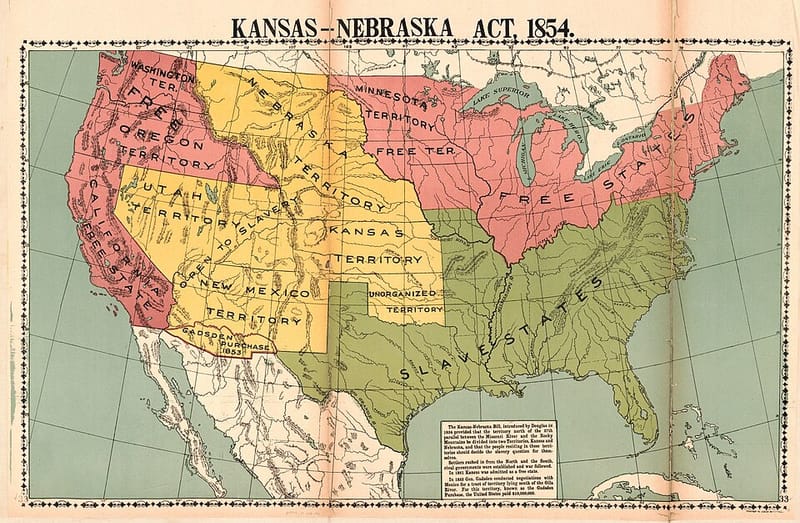
When the Kansas-Nebraska Act turned Kansas into a battleground over slavery, Brown followed members of his family there to “strike a blow for freedom.” In retaliation for pro-slavery violence, he and his followers murdered several pro-slavery settlers — the most controversial act of his life before Harpers Ferry. Convinced that a strike at the heart of slavery would do more than fighting on the plains, he moved east and planned a bigger blow, recruiting men including Black radicals from Oberlin, Ohio, and Canada; he asked Frederick Douglass to join, but Douglass refused.
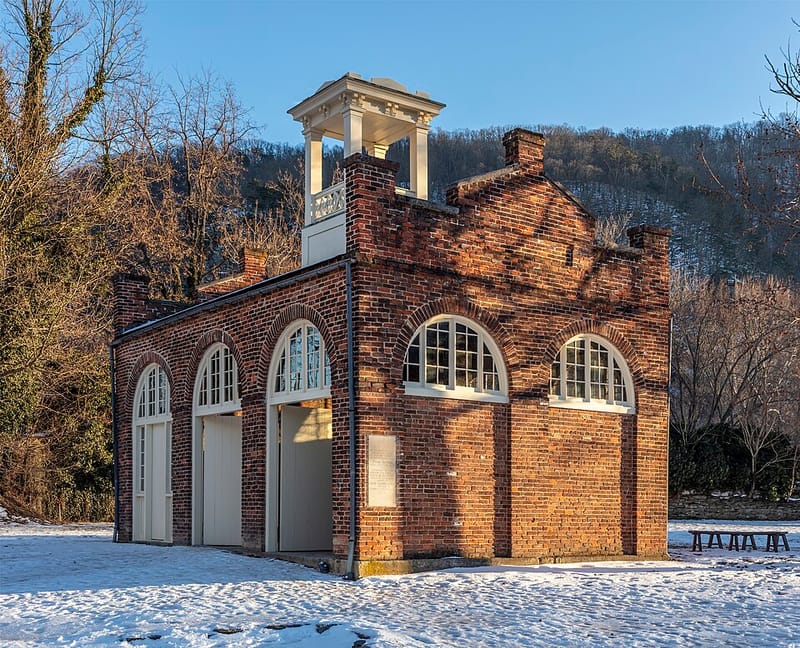
On the night of October 16, 1859, Brown and twenty-one followers seized the U.S. armory and rifle factory at Harpers Ferry, Virginia. He meant it as a “trumpet blast” that would launch a guerrilla campaign in the mountains and make “property in slaves insecure.” No uprising came; white townspeople rose against the raiders far faster than Brown expected. Ten of his men, including his own sons, were killed, and on October 18 U.S. Marines under Army Colonel Robert E. Lee captured Brown. Virginia tried him for treason against the state, conspiring with slaves to rebel, and murder; he was convicted and hanged at Charles Town on December 2, 1859.
Beliefs and ideas
Brown’s abolitionism was religious and absolute: slavery was a sin against God. He came to believe that only force could destroy it, and he lived among Black farmers at North Elba and recruited Black allies for his raid. On the day of his execution he wrote: “I, John Brown, am now quite certain that the crimes of this guilty land will never be purged away but with blood.”
Controversies, limits, and criticism
Few figures in American history are judged so differently. To many in the North, his execution made him a martyr; to white Southerners, the raid proved that abolitionists meant to incite slave insurrection and murder. Even Republicans tried to distance themselves from him, presenting their party as moderate. Historians still debate whether his violence — especially the killings in Kansas — should be understood as terrorism, as justified resistance to a violent system, or as both.
Legacy
Brown’s raid and execution hardened sectional attitudes on the eve of the 1860 election, and his prophecy that slavery would end only in blood was fulfilled within two years. In death he became an icon: decades later, the painter Thomas Hovenden portrayed him as a saint, stooping to kiss a Black baby on his way to the gallows.
Study this entry
Check your understanding
Try answering in your own words, then open the answer.
1.What shaped John Brown early in life?Show answerHide
Brown was born on May 9, 1800, in Torrington, Connecticut, and grew up in Hudson, Ohio. As a boy he saw an enslaved boy he had befriended savagely beaten — a sight that, with his conviction that slavery was a sin against God, shaped the rest of his life.From “Early life and context” above.
2.What were John Brown’s major achievements?Show answerHide
When the Kansas-Nebraska Act turned Kansas into a battleground over slavery, Brown followed members of his family there to “strike a blow for freedom.”From “Major actions and achievements” above.
3.What criticism or controversy surrounds John Brown?Show answerHide
Few figures in American history are judged so differently. To many in the North, his execution made him a martyr; to white Southerners, the raid proved that abolitionists meant to incite slave insurrection and murder.From “Controversies, limits, and criticism” above.
4.How is John Brown remembered?Show answerHide
Brown’s raid and execution hardened sectional attitudes on the eve of the 1860 election, and his prophecy that slavery would end only in blood was fulfilled within two years. In death he became an icon: decades later, the painter Thomas Hovenden portrayed him as a saint, stooping to kiss a Black baby on his way to the gallows.From “Legacy” above.
Turn this entry into 9 flashcards (key facts, dates, and why it matters) and review them in Learn.
Related History
How this connects to the rest of the atlas.
People
Movements

Sources
- 1.John Brown
National Park Service · Institutional · cited for life, Kansas, Harpers Ferry raid, trial, execution, last words
- 2.Harpers Ferry — History & Culture
National Park Service, Harpers Ferry National Historical Park · Institutional · cited for layers of history at Harpers Ferry
- 3.The American Yawp, “The Sectional Crisis”
The American Yawp (eds. Joseph Locke and Ben Wright; Stanford University Press) · Scholarly · cited for Kansas killings, raid recruits, Douglass, martyrdom, Republican reaction
Image credits
- John Brown by Augustus Washington, 1846-7, Augustus Washington, between 1846 and 1847. Via Wikimedia Commons · Public domain · Source
Written for American History Atlas from the sources above. See how entries are researched.
Atlas by Alexander. More on Telegram.