DocumentCivil War and Reconstruction
The Gettysburg Address
Lincoln’s brief speech on the meaning of the war
November 19, 1863Soldiers’ National Cemetery, Gettysburg, Pennsylvania
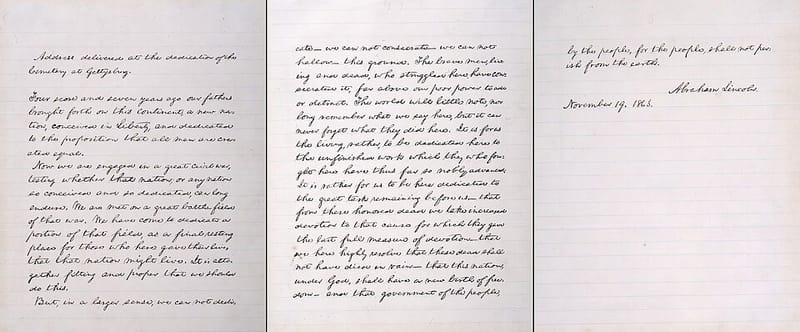
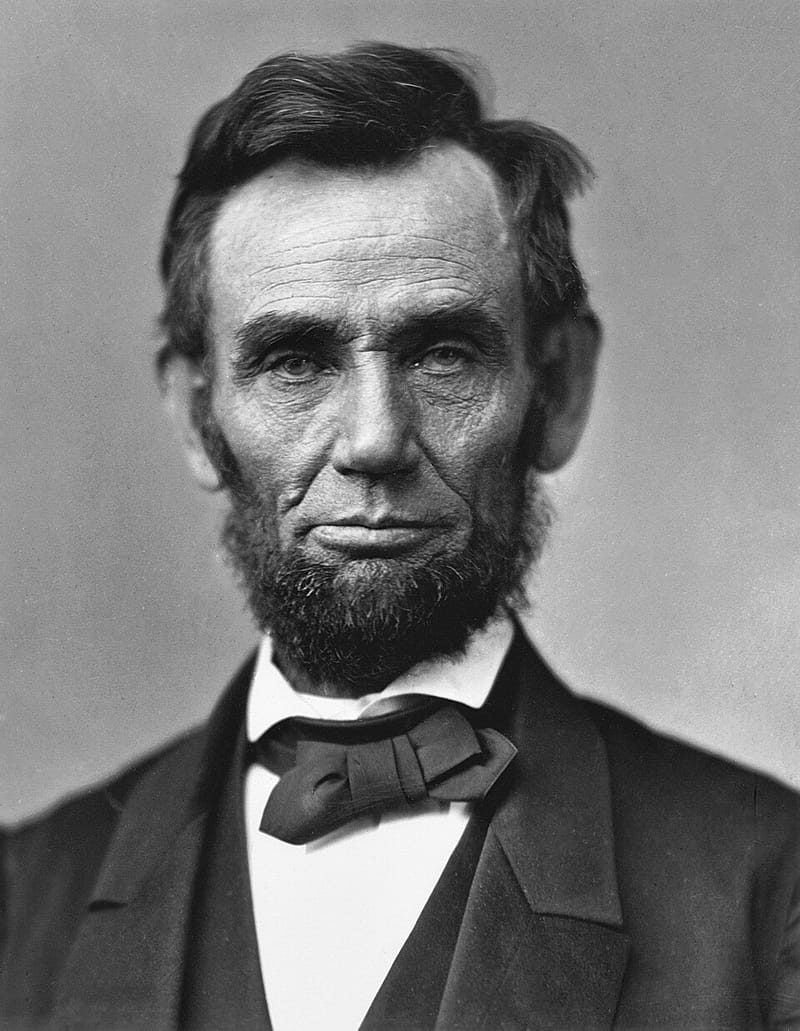
On November 19, 1863, at the dedication of the Soldiers’ National Cemetery at Gettysburg, President Abraham Lincoln gave brief remarks. Reaching back to 1776 — “Four score and seven years ago” — he described the Civil War as a test of whether a nation “dedicated to the proposition that all men are created equal” could endure, and called on the living to ensure “that this nation under God shall have a new birth of freedom.” It is among the most celebrated speeches in American history.
Key facts
- Date
- November 19, 1863
- Author
- President Abraham Lincoln
- Location
- Soldiers’ National Cemetery, Gettysburg, Pennsylvania
- Delivered
- November 19, 1863, at the cemetery’s dedication
- Manuscripts
- Five known copies; the Bliss copy, the only one Lincoln signed, is the standard text
- Where engraved
- The south wall of the Lincoln Memorial
Read the text at the National Park Service
Why it matters
In a few sentences, Lincoln recast the Civil War as a struggle not only to save the Union but to fulfill the Declaration’s promise of equality — giving the war, and American democracy, an enduring statement of purpose.
Historical circumstances
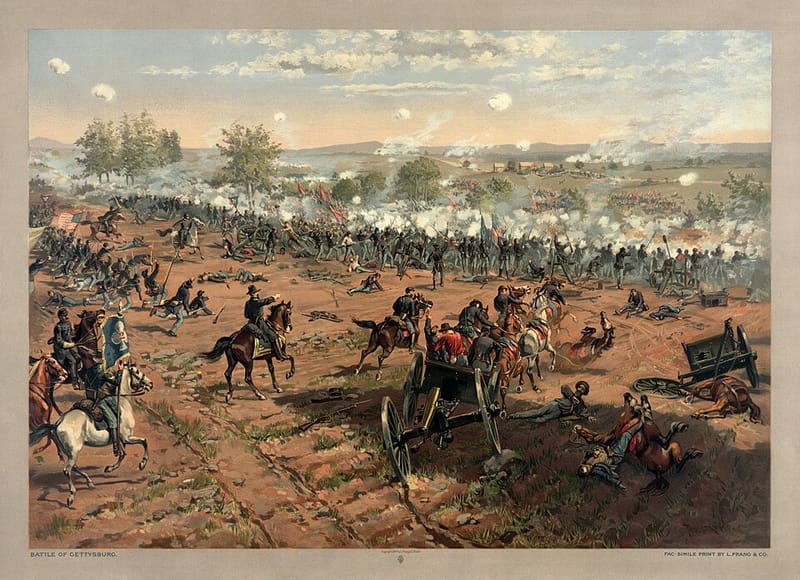
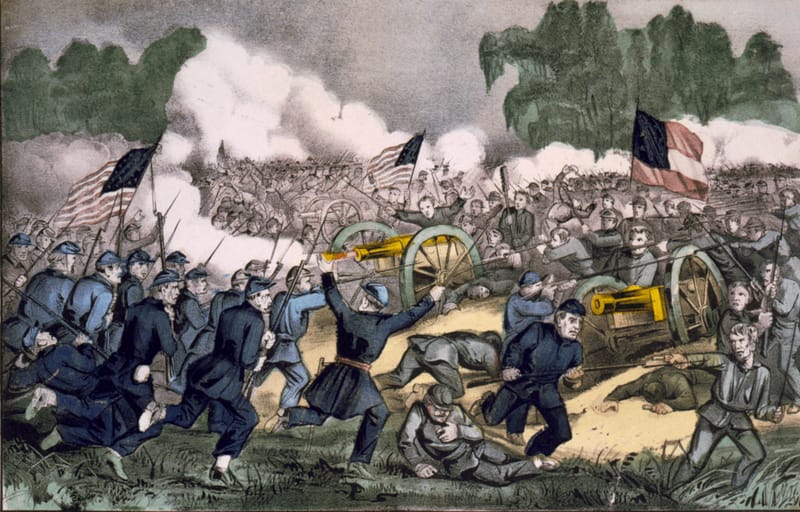
After the Battle of Gettysburg in July 1863, community leaders lobbied for a permanent cemetery for the Union dead on the battlefield. Lincoln was invited to offer brief remarks at its dedication. Five manuscript copies survive, each with small differences; the one Lincoln later wrote out for the historian George Bancroft’s collection, known as the Bliss copy, is the only one he signed and has become the standard version.
Principal ideas
- The nation began in 1776. Lincoln dated the nation not from the Constitution but from the Declaration of Independence — “a new nation conceived in liberty, and dedicated to the proposition that all men are created equal.”
- The war as a test. The war was “testing whether that nation or any nation so conceived and so dedicated, can long endure.”
- The living must finish the work. The soldiers had consecrated the ground “far above our poor power to add or detract”; the task of the living was to be dedicated to “the unfinished work” for which they died.
- A new birth of freedom. The nation should have “a new birth of freedom ~ and that government of the people by the people for the people shall not perish from the earth.”
Study this entry
Check your understanding
Try answering in your own words, then open the answer.
1.Why was this document written?Show answerHide
After the Battle of Gettysburg in July 1863, community leaders lobbied for a permanent cemetery for the Union dead on the battlefield. Lincoln was invited to offer brief remarks at its dedication.From “Historical circumstances” above.
2.What are its principal ideas?Show answerHide
- The nation began in 1776. Lincoln dated the nation not from the Constitution but from the Declaration of Independence — “a new nation conceived in liberty, and dedicated to the proposition that all men are created equal.” - The war as a test. The war was “testing whether that nation or any nation so conceived and so dedicated, can long endure.” - The living must finish the work. The soldiers had consecrated the ground “far above our poor power to add or detract”; the task of the living was to be dedicated to “the unfinished work” for which they died. - A new birth of freedom. The nation should have “a new birth of freedom ~ and that government of the people by the people for the people shall not perish from the earth.”From “Principal ideas” above.
Turn this entry into 10 flashcards (key facts, dates, and why it matters) and review them in Learn.
Related History
How this connects to the rest of the atlas.
Events

Sources
- 1.Gettysburg Address
National Park Service, Lincoln Memorial · Primary source · cited for Bliss copy and text
- 2.Gettysburg
American Battlefield Trust · Scholarly · cited for course and significance of the battle
- 3.Abraham Lincoln: Life in Brief
Miller Center, University of Virginia · Scholarly · cited for life, secession, war, emancipation, Black soldiers, legacy
Image credits
- Gettysburg Address - Bliss copy, Abraham Lincoln, March 1864. Via Wikimedia Commons · Public domain · Source
Written for American History Atlas from the sources above. See how entries are researched.
Atlas by Alexander. More on Telegram.