The French and Indian War
The North American front of the Seven Years’ War, 1754–1763
1754 – February 10, 1763Ohio Valley, New York, Pennsylvania, Canada, and the Great Lakes
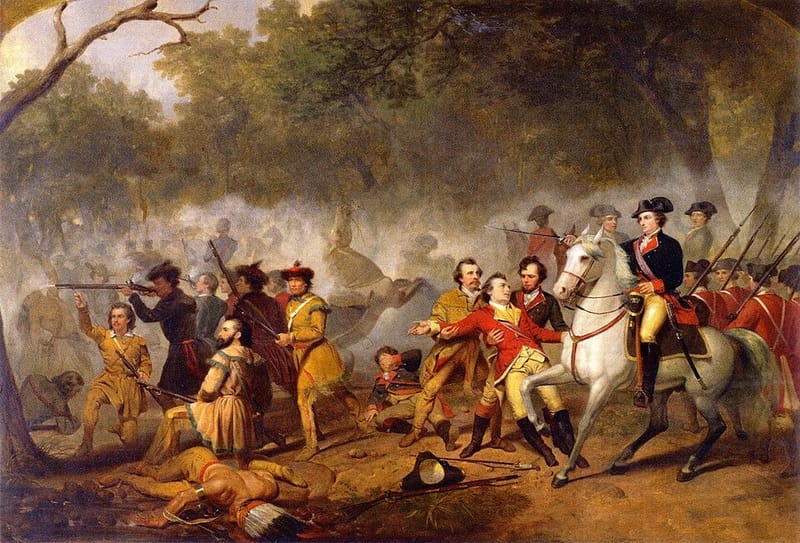
The French and Indian War was a contest between Britain and France — and their colonists and Native allies — for control of eastern North America. It began in 1754 with a clash in the Ohio Valley involving a young George Washington and became part of a global war. Britain won, gaining Canada and the lands east of the Mississippi, but the debts and frontier conflicts it inherited set off the quarrels that led to the American Revolution.
Key facts
- Date
- 1754 – February 10, 1763
- Location
- Ohio Valley, New York, Pennsylvania, Canada, and the Great Lakes
- Dating note
- Fighting began in 1754 in the upper Ohio Valley; the Treaty of Paris of February 1763 ended the war.
- Sides
- Britain, its colonists, and the Iroquois Confederacy vs. France, French colonists, and many Native allies
- Start
- 1754, in the disputed upper Ohio Valley
- Turning point
- After 1757; British forces conquered Canada in 1759
- Treaty
- Treaty of Paris, 1763
Why it matters
Britain’s triumph in the French and Indian War made it master of eastern North America — and created the debts, frontier tensions, and imperial reforms that within a dozen years cost it thirteen colonies.
Who fought
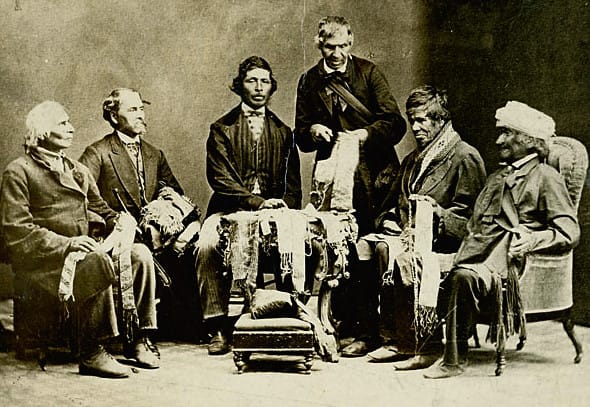
The war pitted Britain, the Anglo-American colonists, and the Iroquois (Haudenosaunee) Confederacy, which controlled most of upstate New York, against France, its colonists, and many Native nations of the Ohio Valley and Great Lakes. Native nations fought for their own reasons — trade, alliances, and above all the defense of their lands against British settlers. The name “French and Indian War” reflects the British colonists’ view of who their enemies were.
Political background
In 1753 Britain’s thirteen colonies reached roughly to the Appalachian Mountains. Beyond lay New France, a vast, thinly settled colony stretching from Canada through the Great Lakes and the Mississippi Valley to Louisiana. The boundary was undefined, and the upper Ohio River valley — where the French had built forts to secure their claim — was disputed by both empires and by the Native peoples who lived there.
Major phases
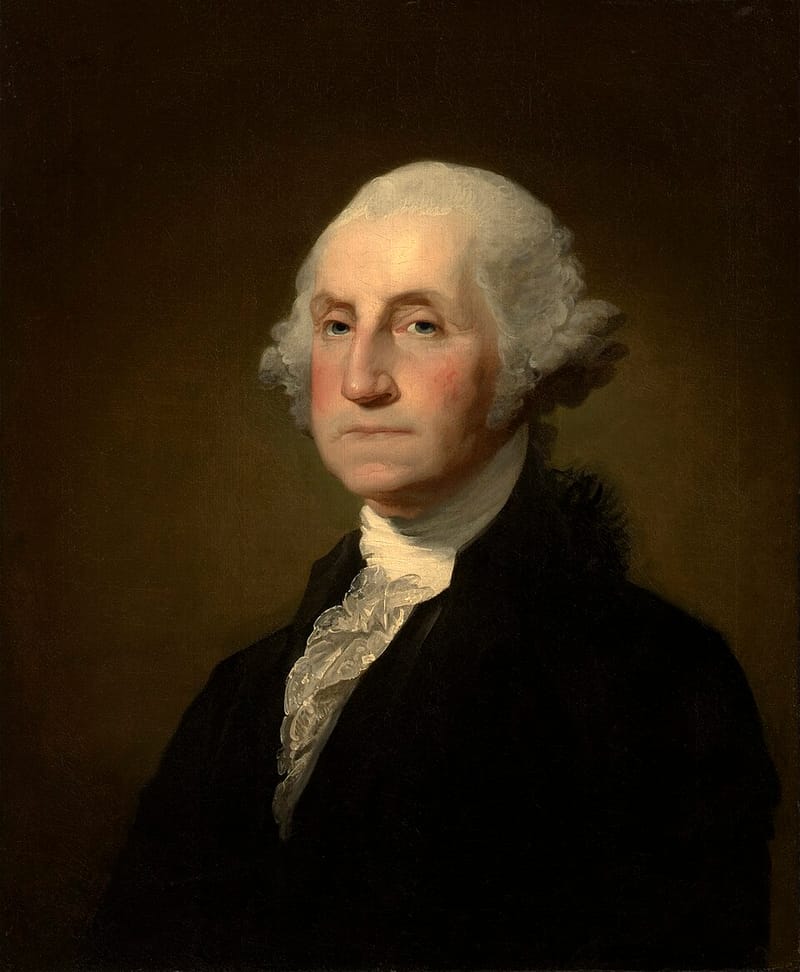
Opening clashes (1754–1755). In 1754 Virginia sent Lieutenant Colonel George Washington with a small force to expel the French. After a skirmish in which a French officer was killed, Washington was attacked at Fort Necessity and forced to surrender. In 1755 a larger British expedition under General Edward Braddock was ambushed on its way to Fort Duquesne (present-day Pittsburgh); Braddock was mortally wounded.
French successes and stalemate (1755–1757). The war in North America settled into a stalemate while fighting spread to Europe, where France captured the British base of Minorca in 1756.
British victory (1758–1760). Under William Pitt, Britain poured money and troops into America. British armies took French forts and in 1759 invaded and conquered Canada.
Global war and peace (1761–1763). After peace talks failed, Spain allied with France in 1761 and entered the war. The Treaty of Paris of 1763 ended it.
Turning points
- Washington at Fort Necessity (1754): a frontier skirmish that, through decisions in London and Paris, escalated into a world war.
- Braddock’s defeat (1755): showed how dependent European armies were on Native allies and frontier knowledge.
- The conquest of Canada (1759–1760): decided the war in North America.
Outcome
In the Treaty of Paris of 1763, Britain gained all French territory east of the Mississippi River as well as Spanish Florida, while returning Cuba to Spain. France was virtually removed from the North American mainland.
Consequences for American society
Victory left Britain with enormous debts and a vast new territory to govern. Without France to play against Britain, Native nations lost bargaining power; when British officers stopped the customary gift-giving that sustained alliances, the Ottawa leader Pontiac organized a broad pan-tribal war in 1763. Britain responded with the Proclamation of 1763, forbidding colonial settlement west of the Appalachians — infuriating settlers and land speculators. To pay for the war and frontier defense, Parliament began taxing the colonies, starting the chain of protests that led to the Stamp Act crisis and the American Revolution.
Study this entry
Check your understanding
Try answering in your own words, then open the answer.
1.Why did the war begin?Show answerHide
In 1753 Britain’s thirteen colonies reached roughly to the Appalachian Mountains. Beyond lay New France, a vast, thinly settled colony stretching from Canada through the Great Lakes and the Mississippi Valley to Louisiana.From “Political background” above.
2.What were the turning points?Show answerHide
- Washington at Fort Necessity (1754): a frontier skirmish that, through decisions in London and Paris, escalated into a world war. - Braddock’s defeat (1755): showed how dependent European armies were on Native allies and frontier knowledge. - The conquest of Canada (1759–1760): decided the war in North America.From “Turning points” above.
3.How did it end?Show answerHide
In the Treaty of Paris of 1763, Britain gained all French territory east of the Mississippi River as well as Spanish Florida, while returning Cuba to Spain. France was virtually removed from the North American mainland.From “Outcome” above.
4.How did it change American society?Show answerHide
Victory left Britain with enormous debts and a vast new territory to govern. Without France to play against Britain, Native nations lost bargaining power; when British officers stopped the customary gift-giving that sustained alliances, the Ottawa leader Pontiac organized a broad pan-tribal war in 1763.From “Consequences for American society” above.
Turn this entry into 10 flashcards (key facts, dates, and why it matters) and review them in Learn.
Related History
How this connects to the rest of the atlas.
People

Sources
- 1.French and Indian War/Seven Years’ War, 1754–63
U.S. Department of State, Office of the Historian · Institutional · cited for sides, course of the war, peace terms, consequences
- 2.Proclamation Line of 1763, Quebec Act of 1774 and Westward Expansion
U.S. Department of State, Office of the Historian · Institutional · cited for Pontiac’s War and the Proclamation
- 3.Fort Necessity — History & Culture
National Park Service, Fort Necessity National Battlefield · Institutional · cited for Fort Necessity, 1754
- 4.George Washington (1732–1799)
Encyclopedia Virginia, Virginia Humanities · Scholarly · cited for Washington’s 1754 expedition and Braddock’s defeat
Image credits
- Major George Washington on a white horse at the Battle of the Monongahela in the French and Indian War, Junius Brutus Stearns, between circa 1849 and circa 1856. Via Wikimedia Commons · Public domain · Source
Written for American History Atlas from the sources above. See how entries are researched.
Atlas by Alexander. More on Telegram.