EventCivil Rights and Social Transformation
Stonewall Uprising
The 1969 protests that ignited the gay liberation movement
June 28, 1969Stonewall Inn and Christopher Street, Greenwich Village, New York City
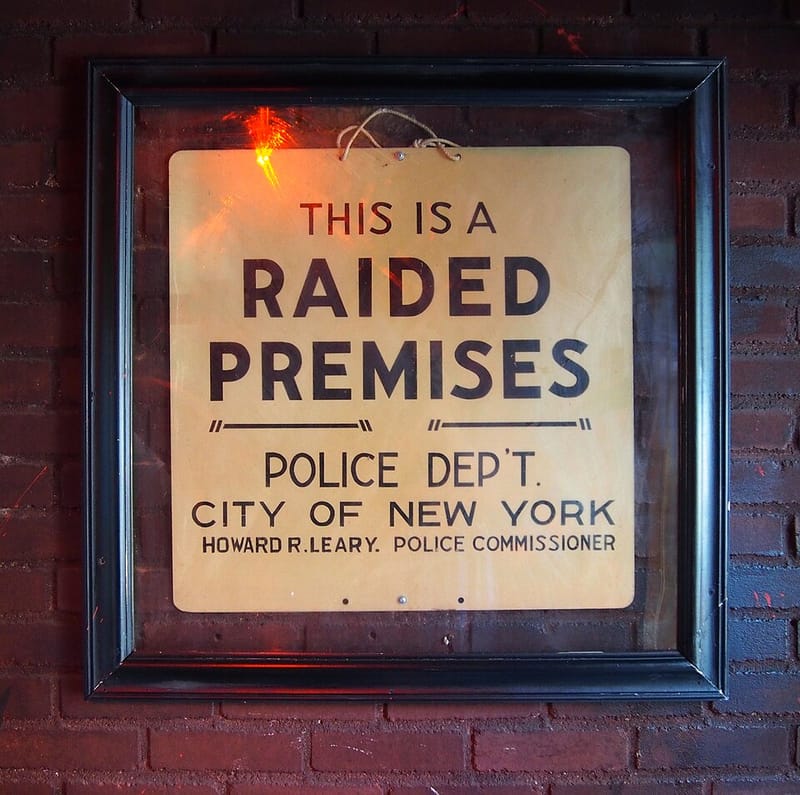
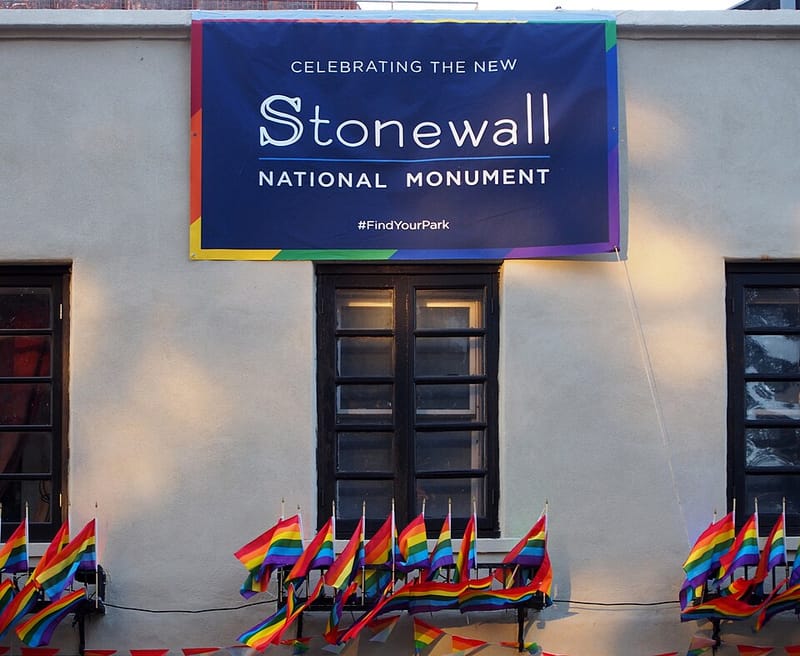
In the early hours of June 28, 1969, New York City police raided the Stonewall Inn, a gay bar in Greenwich Village. Instead of submitting, patrons protested and fought back, and riots and street confrontations continued for several nights. The uprising catalyzed a nationwide movement for gay and lesbian rights: almost overnight, calls for “homophile” respectability gave way to chants of “Gay Power!” The site is now Stonewall National Monument.
Key facts
- Date
- June 28, 1969
- Location
- Stonewall Inn and Christopher Street, Greenwich Village, New York City
- Dating note
- Began in the early hours of June 28, 1969, and continued for several nights.
- Date
- Beginning early on June 28, 1969
- Place
- The Stonewall Inn, Christopher Street, Greenwich Village
- Trigger
- A police raid on the bar
- Duration
- Several nights of protest
- Legacy
- Stonewall National Monument; the Stonewall Inn is a National Historic Landmark
Why it matters
Perhaps no single event did more to galvanize gay and lesbian activism in the United States than the Stonewall uprising.
Historical background
In the 1960s homosexuality was widely stigmatized as a mental illness or a moral failing and was regulated by law. Police regularly raided gay bars. Earlier “homophile” organizations had sought acceptance by emphasizing respectability and gradual change.
Causes and contributing factors
Young gay activists, inspired by the Black Power movement, the New Left’s protests against the Vietnam War, and the counterculture’s demand for sexual freedom, were growing impatient with the homophile movement’s caution and began to demand liberation rooted in pride.
What happened
When police raided the Stonewall Inn in the early morning of June 28, 1969, patrons resisted. The confrontation spilled into the surrounding streets and sparked riots and demonstrations that lasted several nights.
Immediate consequences
A national movement for gay liberation took shape. Activists urged gay Americans to come out, arguing that secrecy fed stigma.
Long-term significance
Stonewall became the symbolic beginning of the modern struggle for the civil rights of gay and lesbian Americans. In 1973 the American Psychiatric Association stopped classifying homosexuality as a mental illness. The Stonewall Inn was later designated a National Historic Landmark, and the adjacent Christopher Park became Stonewall National Monument.
Study this entry
Check your understanding
Try answering in your own words, then open the answer.
1.What led to Stonewall Uprising?Show answerHide
Young gay activists, inspired by the Black Power movement, the New Left’s protests against the Vietnam War, and the counterculture’s demand for sexual freedom, were growing impatient with the homophile movement’s caution and began to demand liberation rooted in pride.From “Causes and contributing factors” above.
2.What happened?Show answerHide
When police raided the Stonewall Inn in the early morning of June 28, 1969, patrons resisted. The confrontation spilled into the surrounding streets and sparked riots and demonstrations that lasted several nights.From “What happened” above.
3.What were the immediate consequences?Show answerHide
A national movement for gay liberation took shape. Activists urged gay Americans to come out, arguing that secrecy fed stigma.From “Immediate consequences” above.
4.Why does it still matter?Show answerHide
Stonewall became the symbolic beginning of the modern struggle for the civil rights of gay and lesbian Americans. In 1973 the American Psychiatric Association stopped classifying homosexuality as a mental illness.From “Long-term significance” above.
Turn this entry into 11 flashcards (key facts, dates, and why it matters) and review them in Learn.
Related History
How this connects to the rest of the atlas.
Court cases
Movements

Sources
- 1.Learn About the Park — Stonewall National Monument
National Park Service · Institutional · cited for June 28, 1969 raid and uprising; monument and Stonewall Inn
- 2.Stonewall National Monument
National Park Service · Institutional · cited for monument location
- 3.The American Yawp, “The Unraveling”
The American Yawp (eds. Joseph Locke and Ben Wright; Stanford University Press) · Scholarly · cited for 1970s: Vietnam’s end, Watergate, feminism, environmentalism
Image credits
- Stonewall Inn raid sign pride weekend 2016, Rhododendrites, 2016-06-25 16:58:01. Via Wikimedia Commons · CC BY-SA 4.0 · Source
Written for American History Atlas from the sources above. See how entries are researched.
Atlas by Alexander. More on Telegram.