PlaceWorld War II and the Early Cold War
Manzanar
A War Relocation Center in California’s Owens Valley, now a National Historic Site
Owens Valley, Inyo County, California (between Lone Pine and Independence on U.S. 395)
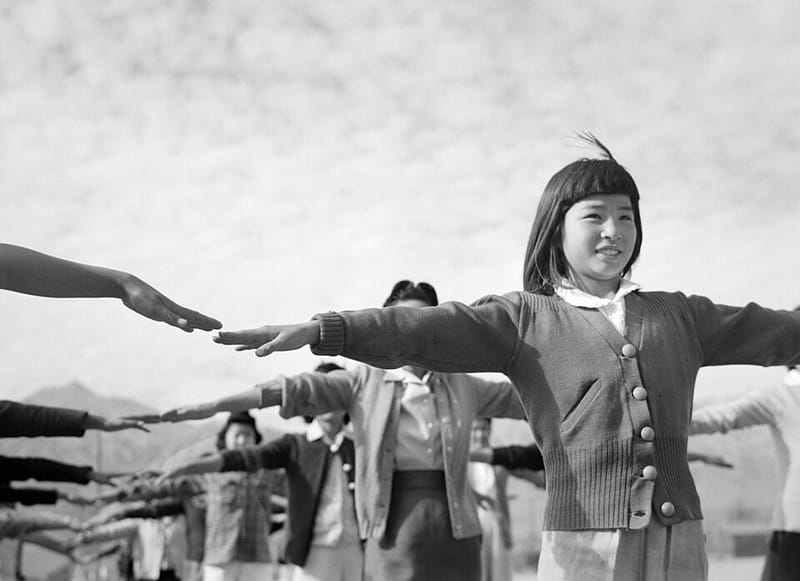
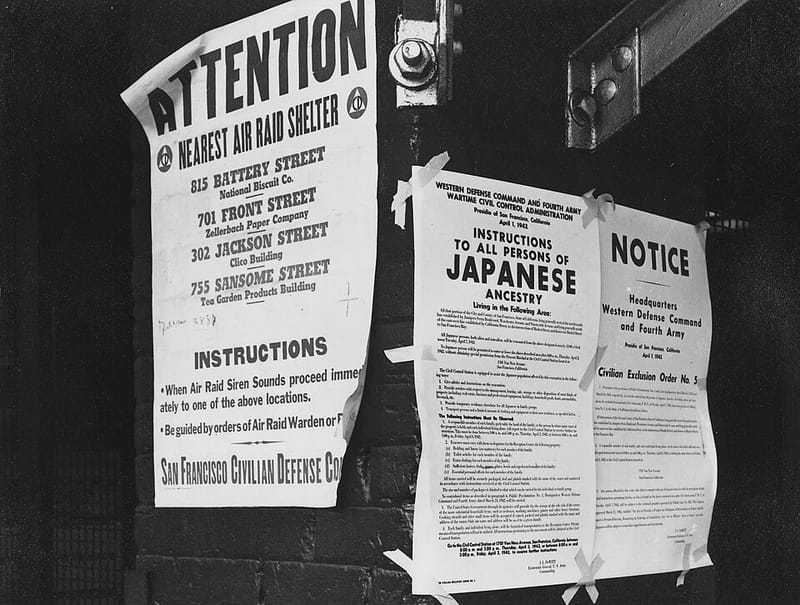
Manzanar was one of ten War Relocation Centers where Japanese Americans were incarcerated during World War II. Built in 1942 on land the Army leased from the city of Los Angeles in California’s Owens Valley, at the foot of the Sierra Nevada, it held families forcibly removed from the West Coast under Executive Order 9066. Today it is a National Historic Site that preserves the camp’s story — and the earlier displacement of the valley’s Paiute people and farm settlers.
Key facts
- Location
- Owens Valley, Inyo County, California (between Lone Pine and Independence on U.S. 395)
- Name
- Spanish for “apple orchard”
- Camp built
- 1942, on 6,200 acres leased by the Army from Los Angeles
- Buildings
- About 800 during the war; all but three were dismantled or moved afterward
- Pilgrimage
- Held each year on the last Saturday of April, sponsored by the Manzanar Committee
- Today
- Manzanar National Historic Site, National Park Service
Why it matters
Manzanar’s layered history of removal — Paiute, settler, and Japanese American — makes it a powerful place to reflect on who has been forced from the land.
About the place
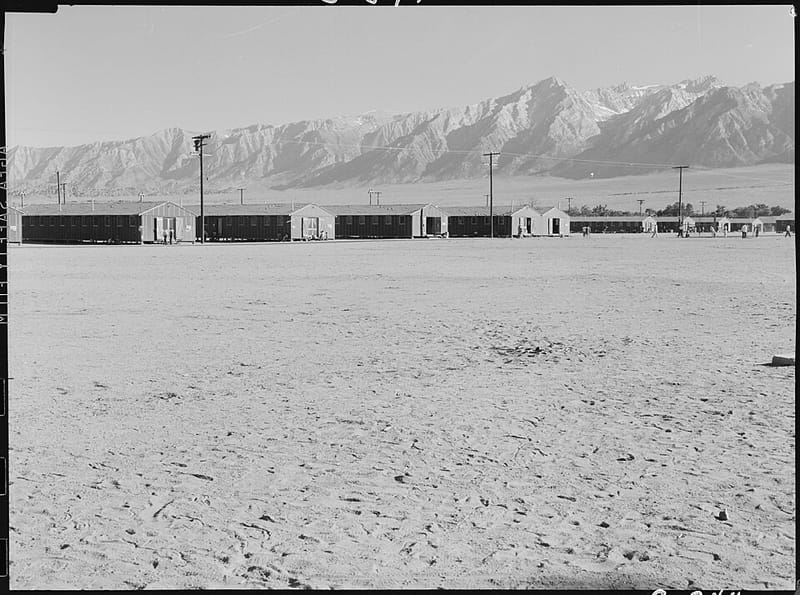
Manzanar lies on the floor of the Owens Valley, with Mount Williamson rising directly to the west. Most of the camp’s buildings are gone; the site includes a cemetery, historic orchards, and a visitor center. Photographers including Ansel Adams and Dorothea Lange documented life there during the war.
History
Earlier displacements. People used the Owens Valley for almost 10,000 years, and about 1,500 years ago the Owens Valley Paiute established settlements there, practicing a form of irrigated agriculture. After miners and ranchers moved in during the 1860s, the Army forcibly relocated nearly 1,000 Paiute to Fort Tejon in 1863. From 1910 the farm town of Manzanar grew apples, pears, peaches, and other crops. But Los Angeles bought up the valley’s water rights for its aqueduct, completed in 1913; by 1929 the city owned all of Manzanar’s land and water, and within five years the town was abandoned.
The camp. In 1942 the Army leased 6,200 acres at Manzanar from Los Angeles to confine Japanese Americans. Some valley residents opposed the camp; others helped build it and worked there. Families lived there in a fenced and guarded camp.
Remembrance. After the war nearly all of the camp’s roughly 800 buildings were removed. Former incarcerees and their descendants return each April on a pilgrimage, and the National Park Service has collected more than 715 oral history interviews about the camp and the valley.
Study this entry
Check your understanding
Try answering in your own words, then open the answer.
1.What is this place?Show answerHide
Manzanar lies on the floor of the Owens Valley, with Mount Williamson rising directly to the west. Most of the camp’s buildings are gone; the site includes a cemetery, historic orchards, and a visitor center.From “About the place” above.
2.What happened here?Show answerHide
Earlier displacements. People used the Owens Valley for almost 10,000 years, and about 1,500 years ago the Owens Valley Paiute established settlements there, practicing a form of irrigated agriculture. After miners and ranchers moved in during the 1860s, the Army forcibly relocated nearly 1,000 Paiute to Fort Tejon in 1863.From “History” above.
Turn this entry into 11 flashcards (key facts, dates, and why it matters) and review them in Learn.
Related History
How this connects to the rest of the atlas.
Events

Sources
- 1.People — Manzanar National Historic Site
National Park Service · Institutional · cited for Paiute, town, Los Angeles water, 1942 lease
- 2.Frequently Asked Questions — Manzanar National Historic Site
National Park Service · Institutional · cited for name, buildings, pilgrimage
- 3.Places — Manzanar National Historic Site
National Park Service · Institutional · cited for ten War Relocation Centers
- 4.Stories — Manzanar National Historic Site
National Park Service · Institutional · cited for oral history program
- 5.Manzanar National Historic Site
National Park Service · Institutional · cited for photographers of Manzanar
- 6.Executive Order 9066: Resulting in Japanese-American Incarceration (1942) — Milestone Documents
National Archives · Primary source · cited for order, removal, camps, numbers, redress
Image credits
- Calesthenics [sic] / photograph by Ansel Adams., Ansel Adams, Taken in 1943. Via Wikimedia Commons · Public domain · Source
Written for American History Atlas from the sources above. See how entries are researched.
Atlas by Alexander. More on Telegram.