EventCivil Rights and Social Transformation
The Little Rock Nine
The desegregation of Central High School, 1957
September 4–25, 1957Little Rock, Arkansas
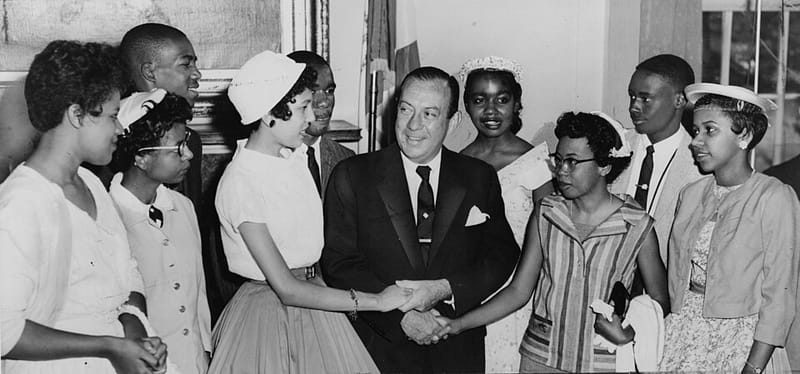
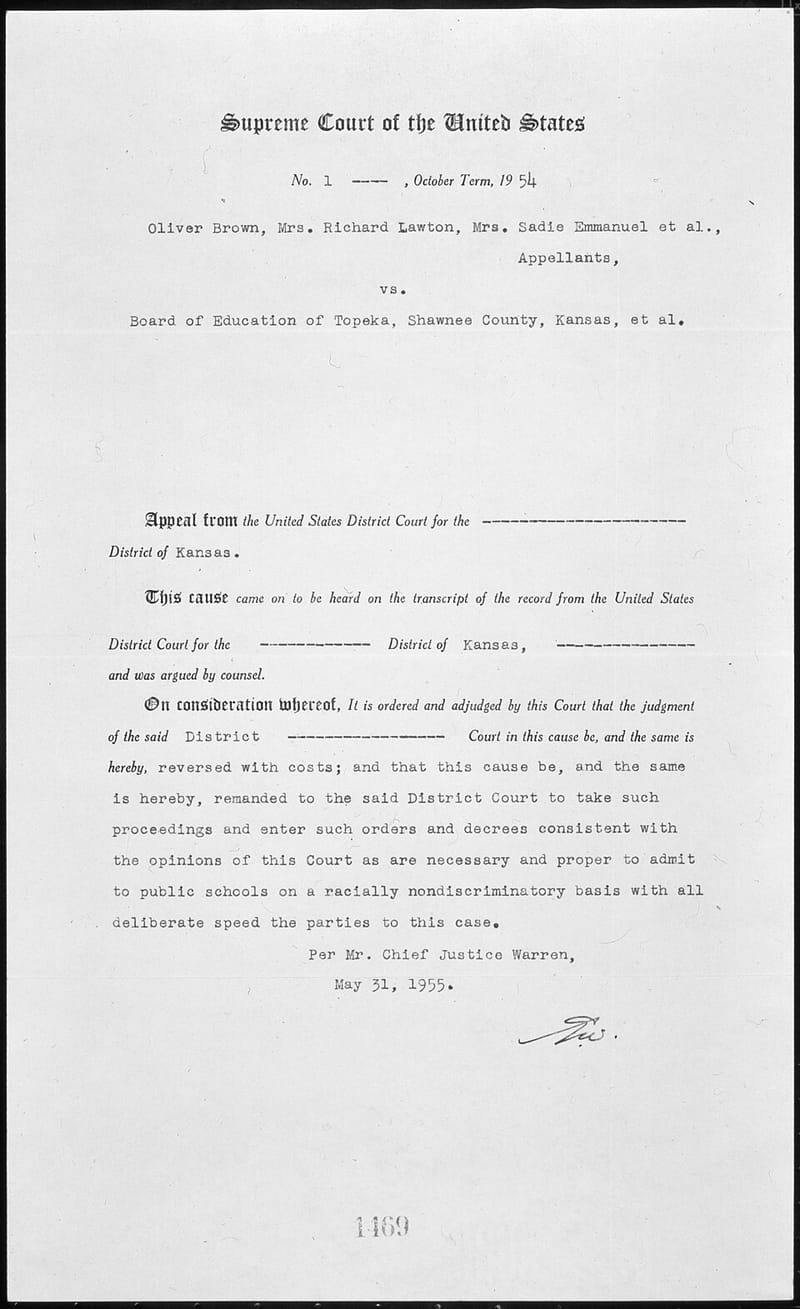
In September 1957, nine Black students tried to enroll at all-white Central High School in Little Rock, Arkansas, under a court-ordered desegregation plan. Governor Orval Faubus sent the Arkansas National Guard to keep them out, and a white mob gathered outside. After weeks of standoff, President Dwight D. Eisenhower sent troops of the Army’s 101st Airborne Division to escort and protect the students — a dramatic use of federal power to enforce Brown v. Board of Education.
Key facts
- Date
- September 4–25, 1957
- Location
- Little Rock, Arkansas
- The Nine
- Minnijean Brown, Terrence Roberts, Elizabeth Eckford, Ernest Green, Thelma Mothershed, Melba Pattillo, Gloria Ray, Jefferson Thomas, and Carlotta Walls
- Organizer
- Daisy Bates, president of the Arkansas NAACP
- Federal troops
- 101st Airborne Division, sent by President Eisenhower, September 1957
- First Black graduate
- Ernest Green, May 1958
- Honor
- NAACP Spingarn Medal, 1958
Why it matters
The Little Rock crisis was a defining test of Brown and of the federal government’s willingness to enforce it.
Historical background
Three years after the Supreme Court ruled in Brown that segregated schools were unconstitutional, Daisy Bates, president of the Arkansas NAACP, recruited nine students to enroll at Central High.
Causes and contributing factors
Governor Orval Faubus used state power to block the students and defy the federal courts.
What happened
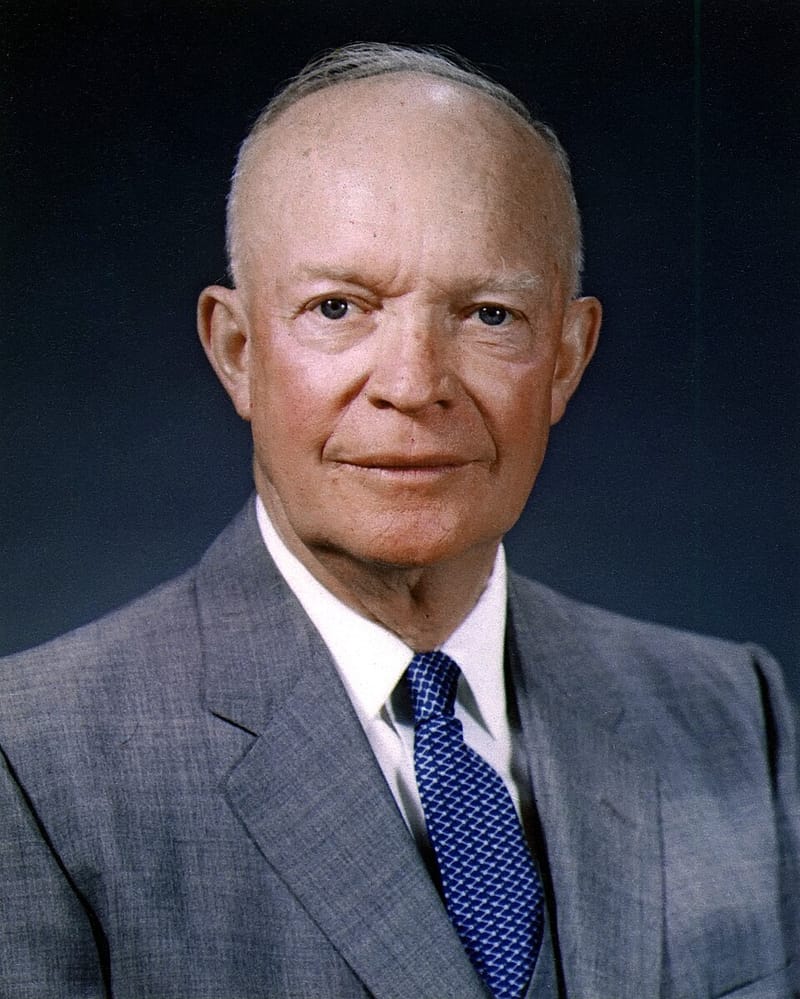
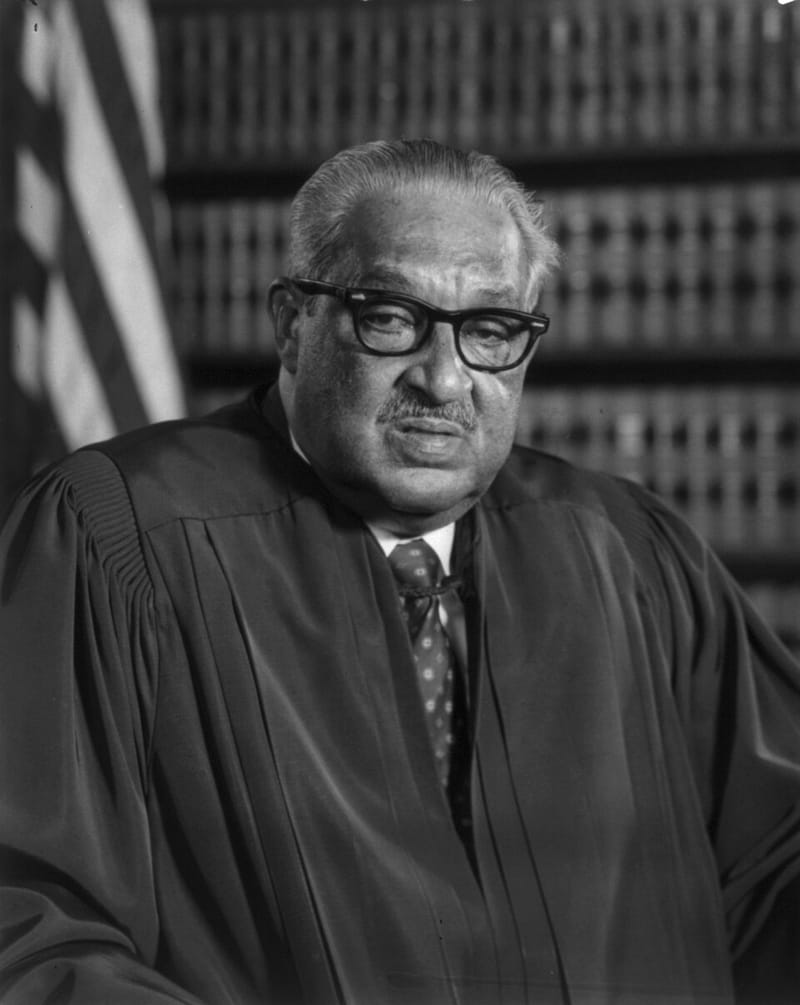
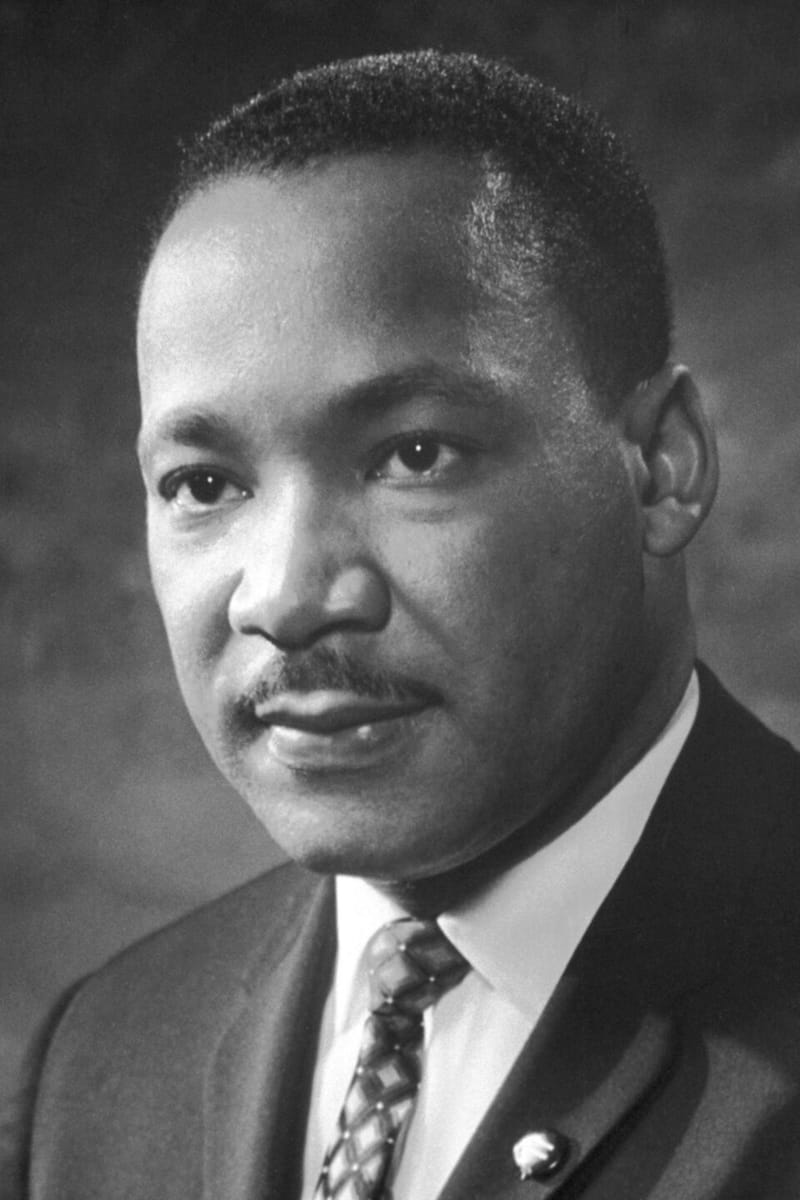
On September 4, 1957, the first day of school, a white mob gathered in front of Central High, and Faubus deployed the Arkansas National Guard to bar the Black students. NAACP lawyers, including Thurgood Marshall, won a federal injunction against the governor. On September 23 the students entered through a side entrance with police escorts but were rushed home as the mob grew. Martin Luther King Jr. urged Eisenhower to take “a strong forthright stand.” Aware that Little Rock was becoming an international embarrassment, Eisenhower reluctantly sent the 101st Airborne; soldiers and federalized National Guardsmen protected the students for the rest of the school year.
Immediate consequences
In May 1958 Ernest Green became Central High’s first Black graduate; King attended the ceremony. That fall Faubus closed all of Little Rock’s public high schools rather than continue desegregation, but the courts soon ordered the schools reopened and desegregation resumed.
Long-term significance
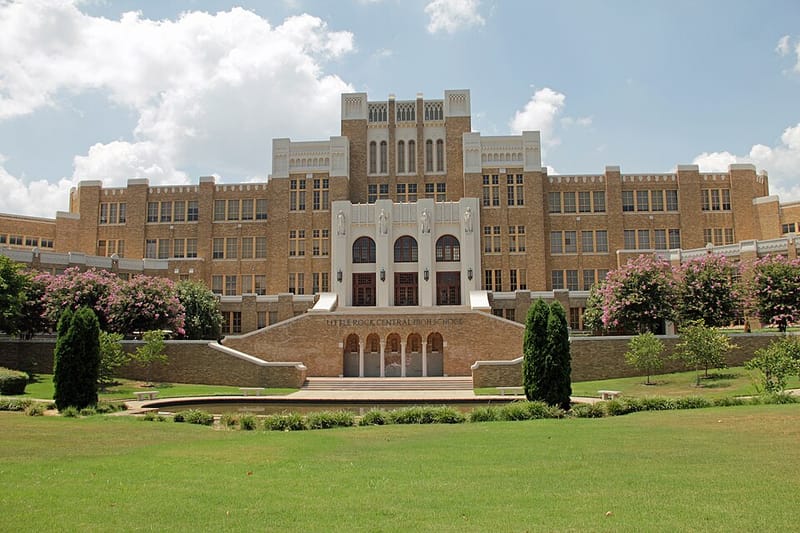
Little Rock showed that the federal government would use force to uphold the Constitution against state defiance, and it made the nine students symbols of courage. Central High School is now a National Historic Site — and still an operating public high school.
Study this entry
Check your understanding
Try answering in your own words, then open the answer.
1.What led to the Little Rock Nine?Show answerHide
Governor Orval Faubus used state power to block the students and defy the federal courts.From “Causes and contributing factors” above.
2.What happened?Show answerHide
On September 4, 1957, the first day of school, a white mob gathered in front of Central High, and Faubus deployed the Arkansas National Guard to bar the Black students. NAACP lawyers, including Thurgood Marshall, won a federal injunction against the governor.From “What happened” above.
3.What were the immediate consequences?Show answerHide
In May 1958 Ernest Green became Central High’s first Black graduate; King attended the ceremony. That fall Faubus closed all of Little Rock’s public high schools rather than continue desegregation, but the courts soon ordered the schools reopened and desegregation resumed.From “Immediate consequences” above.
4.Why does it still matter?Show answerHide
Little Rock showed that the federal government would use force to uphold the Constitution against state defiance, and it made the nine students symbols of courage. Central High School is now a National Historic Site — and still an operating public high school.From “Long-term significance” above.
Turn this entry into 11 flashcards (key facts, dates, and why it matters) and review them in Learn.
Related History
How this connects to the rest of the atlas.
People
Court cases

Sources
- 1.Little Rock School Desegregation
The Martin Luther King, Jr. Research and Education Institute, Stanford University · Scholarly · cited for Little Rock Nine, Faubus, Eisenhower
- 2.Frequently Asked Questions — Little Rock Central High School National Historic Site
National Park Service · Institutional · cited for school facts, enrollment, Arkansas desegregation
- 3.Marshall, Thurgood
The Martin Luther King, Jr. Research and Education Institute, Stanford University · Scholarly · cited for life and career
- 4.The American Yawp, “The Affluent Society”
The American Yawp (eds. Joseph Locke and Ben Wright; Stanford University Press) · Scholarly · cited for postwar civil rights, Brown, Till, Montgomery, Little Rock
Image credits
- Robert F. Wagner with Little Rock students NYWTS, New York World-Telegram and the Sun staff photographer: Albertin, Walter, photographer., 1958. Via Wikimedia Commons · Public domain · Source
Written for American History Atlas from the sources above. See how entries are researched.
Atlas by Alexander. More on Telegram.