DocumentCivil Rights and Social Transformation
Civil Rights Act of 1964
The law that outlawed segregation in public places and job discrimination
July 2, 1964
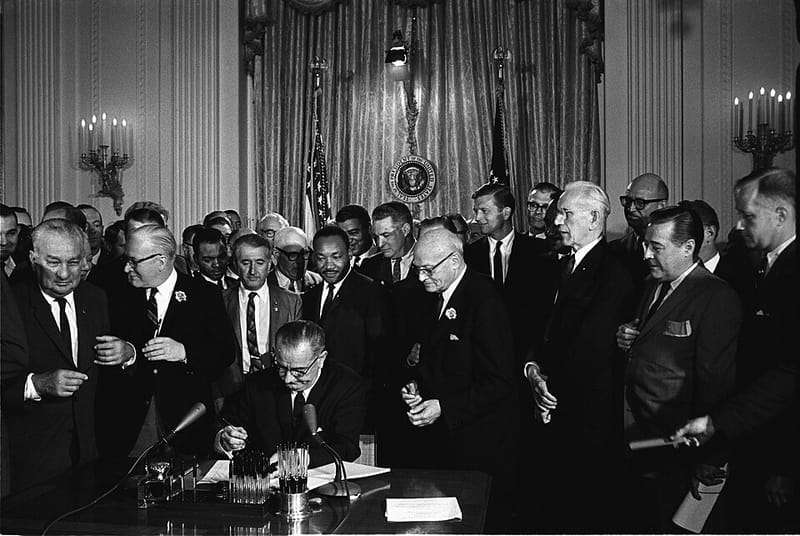
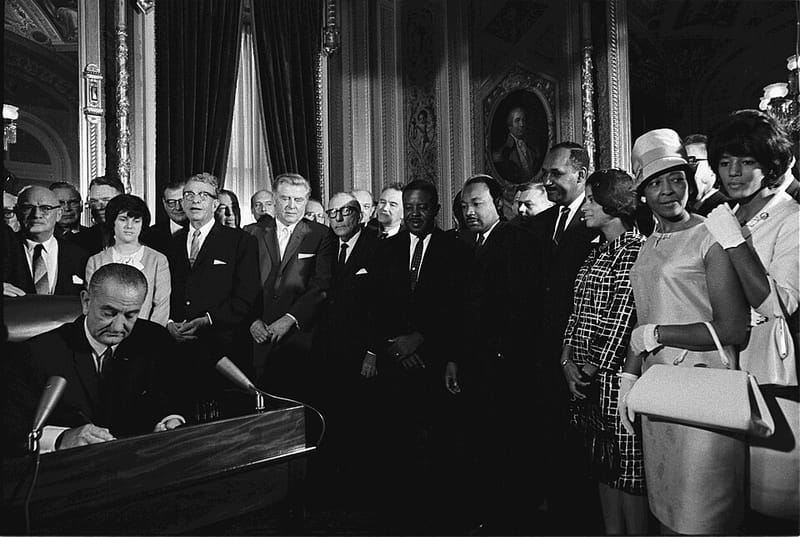
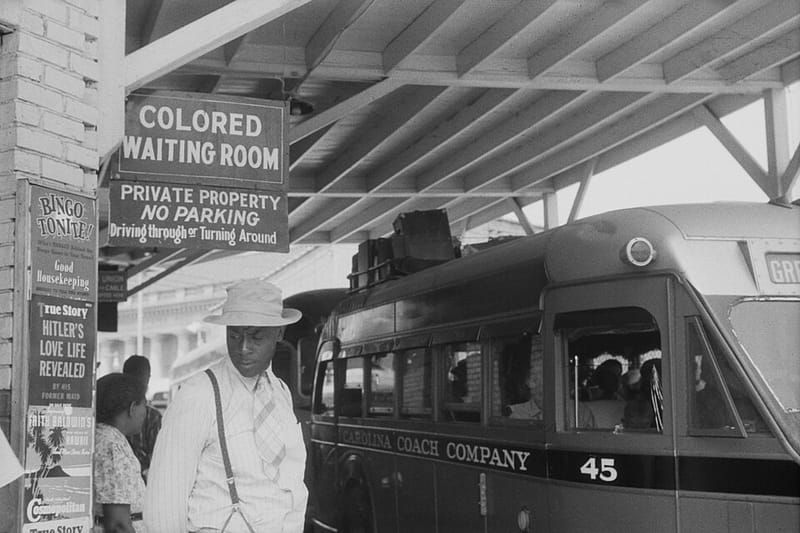
Signed by President Lyndon B. Johnson on July 2, 1964, the Civil Rights Act outlawed segregation in hotels, restaurants, theaters, and other public accommodations; ended segregation in public facilities; and banned discrimination in employment. Proposed by President John F. Kennedy in 1963 and pushed through Congress after his assassination, it overcame a long Southern filibuster. The National Archives calls it the most sweeping civil rights legislation since Reconstruction.
Key facts
- Date
- July 2, 1964
- Authors
- U.S. Congress; Lyndon B. Johnson (signed)
- Signed
- July 2, 1964, hours after final passage
- Senate vote
- 73–27, after breaking a Southern filibuster
- Key leaders
- Sen. Hubert Humphrey (D-MN), Senate Minority Leader Everett Dirksen (R-IL), President Johnson
- Title VII
- Banned employment discrimination; created the Equal Employment Opportunity Commission
- Predecessor
- Civil Rights Act of 1957, the first since Reconstruction
Read the act at the National Archives
Why it matters
With the Voting Rights Act a year later, the Civil Rights Act effectively ended legal Jim Crow.
Historical circumstances
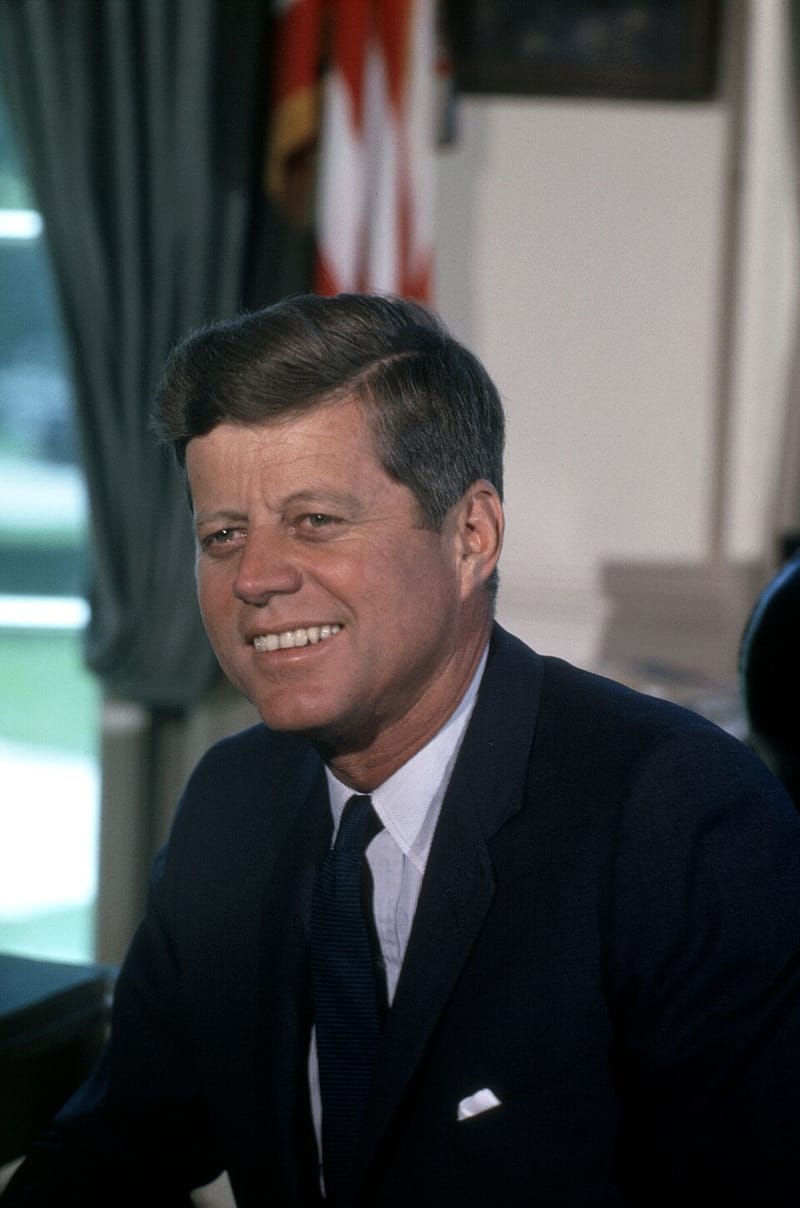
The Civil Rights Act of 1957 had created a civil rights division in the Justice Department and a Civil Rights Commission. After the Birmingham campaign, President Kennedy went on national television on June 11, 1963, declaring that “this nation … will not be fully free until all its citizens are free,” and sent a comprehensive bill to Congress. The March on Washington that August demanded its passage. After Kennedy was killed in November 1963, Johnson made the bill his priority.
Opponents bottled it up in the House Rules Committee until supporters threatened to bring it to the floor without committee approval. In the Senate, Southern Democrats filibustered. Senator Hubert Humphrey managed the bill, and Minority Leader Everett Dirksen persuaded enough Republicans to support it over Southern Democratic opposition; the Senate passed it 73 to 27, to applause from the galleries.
Principal ideas
The act outlawed segregation in businesses such as theaters, restaurants, and hotels, and in public places such as swimming pools and libraries; supported the desegregation of public schools; and barred discrimination in federally funded programs. Title VII banned discrimination in employment and created the Equal Employment Opportunity Commission, which today enforces laws against job discrimination based on race, color, religion, sex, national origin, disability, or age.
Study this entry
Check your understanding
Try answering in your own words, then open the answer.
1.Why was this document written?Show answerHide
The Civil Rights Act of 1957 had created a civil rights division in the Justice Department and a Civil Rights Commission.From “Historical circumstances” above.
2.What are its principal ideas?Show answerHide
The act outlawed segregation in businesses such as theaters, restaurants, and hotels, and in public places such as swimming pools and libraries; supported the desegregation of public schools; and barred discrimination in federally funded programs.From “Principal ideas” above.
Turn this entry into 12 flashcards (key facts, dates, and why it matters) and review them in Learn.
Related History
How this connects to the rest of the atlas.
Events
People
Movements

Institutions

Sources
- 1.Civil Rights Act (1964) — Milestone Documents
National Archives · Primary source · cited for provisions, passage, Senate vote
- 2.Civil Rights Act of 1964
The Martin Luther King, Jr. Research and Education Institute, Stanford University · Scholarly · cited for King and the act
- 3.The American Yawp, “The Sixties”
The American Yawp (eds. Joseph Locke and Ben Wright; Stanford University Press) · Scholarly · cited for civil rights, Great Society, Vietnam, social movements
- 4.Lyndon B. Johnson: Life in Brief
Miller Center, University of Virginia · Scholarly · cited for life and presidency
Image credits
- Lyndon Johnson signing Civil Rights Act, July 2, 1964, Cecil Stoughton, White House Press Office (WHPO), Taken on 2 July 1964. Via Wikimedia Commons · Public domain · Source
Written for American History Atlas from the sources above. See how entries are researched.
Atlas by Alexander. More on Telegram.