Tecumseh
Shawnee leader who built a confederacy of Native nations
c. 1768–1813
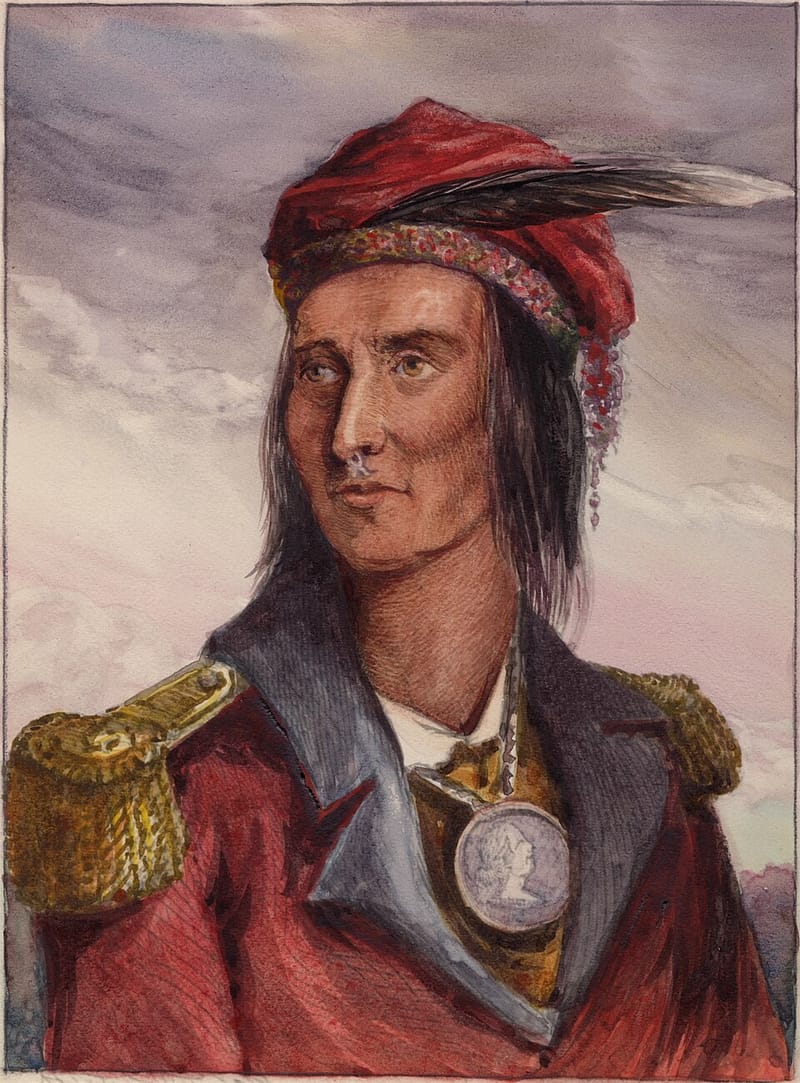
Tecumseh was a Shawnee leader who, with his brother Tenskwatawa, “the Prophet,” tried to unite the Native nations between the Great Lakes and the Gulf of Mexico against American expansion. He argued that Native lands belonged to all Native peoples in common and could not be sold by any single nation. His confederacy fought alongside Britain in the War of 1812, and his death at the Battle of the Thames in 1813 ended the last great effort at pan-Native resistance east of the Mississippi.
Key facts
- Born
- c. 1768, Scioto River valley, present-day Ohio
- Died
- October 5, 1813, Near Moraviantown, Upper Canada (Ontario)
- Roles
- Shawnee war leader and diplomat; Organizer of a pan-Native confederacy; British ally in the War of 1812
- Born
- About 1768, in the Ohio country
- Brother
- Tenskwatawa, a religious leader known as “the Prophet”
- Headquarters
- Prophetstown, at the junction of the Wabash and Tippecanoe Rivers, Indiana
- Died
- October 5, 1813, at the Battle of the Thames
Why it matters
Tecumseh offered the most ambitious Native answer to American expansion: a confederacy of nations defending their land in common. Its defeat opened the Midwest and South to rapid settlement and Indian removal.
Early life and context
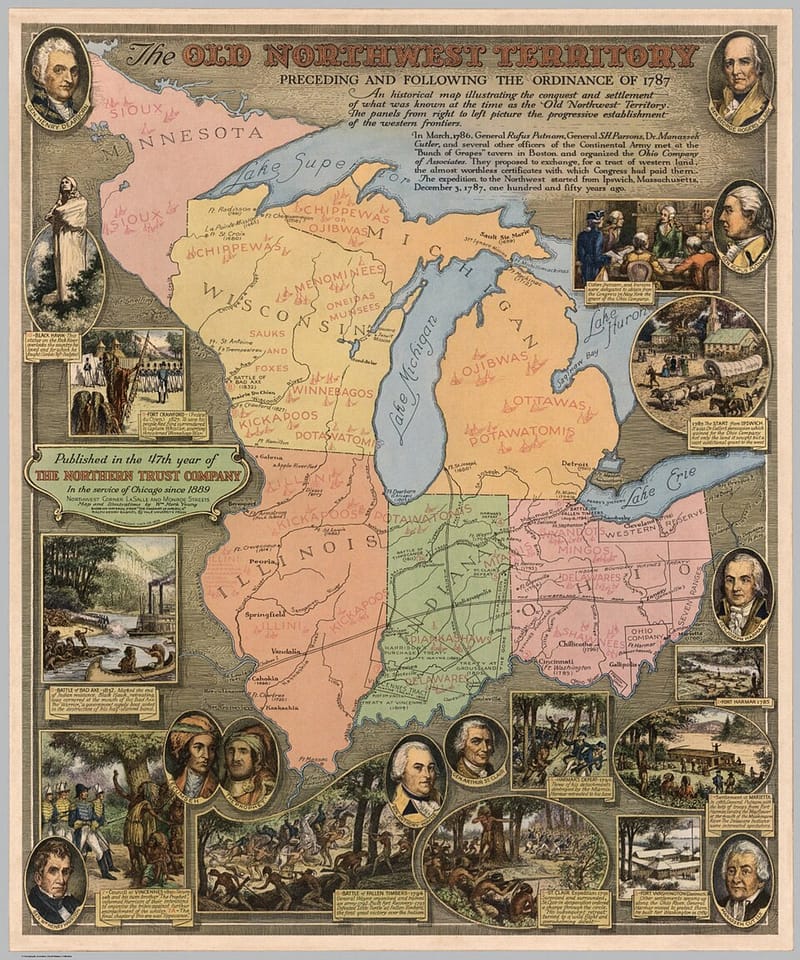
Tecumseh was born about 1768 in a Kispoko Shawnee village in the Scioto River valley of present-day Ohio, the son of Pukeshinwau, of the Panther Clan, and Methoataaskee, of the Turtle Clan. His parents had family ties to the Shawnee communities living among the Creeks in present-day Alabama — connections he would later draw on. In 1774, when Tecumseh was six, his father was killed at the Battle of Kanawha near Point Pleasant in present-day West Virginia. He grew up amid constant warfare between the Shawnee and settlers pushing into the Ohio Valley; an older brother who trained him, Cheeseekau, was also killed fighting Americans. Tecumseh fought at the Battle of Fallen Timbers in August 1794, a crushing Native defeat that led to the Treaty of Greenville (1795), in which Native nations ceded much of present-day Ohio and southeastern Indiana. Tecumseh refused to sign it.
Major actions and achievements
In the early 1800s, Tecumseh’s brother Tenskwatawa began preaching a spiritual revival that called on Native people to reject American goods and customs and return to their own ways. The brothers founded a village, Prophetstown, in Indiana, which drew followers from many nations.
Tecumseh turned the movement into a political and military alliance. When the 1809 Treaty of Fort Wayne required Indiana tribes to sell three million acres to the United States, he protested to Governor William Henry Harrison that no single nation had the right to sell land that belonged to all. He traveled widely to recruit allies; in September 1811 he and Tenskwatawa reached the Creek town of Tukabatchee, in present-day Alabama, urging the southern nations to resist assimilation and join the confederacy.
In November 1811, while Tecumseh was in the South, Harrison marched on Prophetstown with about 1,000 men. In the Battle of Tippecanoe on November 7, Harrison’s forces repelled an attack and burned the village. When the War of 1812 began, Tecumseh joined the British and helped capture Detroit in August 1812. After the American victory on Lake Erie in 1813, the British retreated into Upper Canada. Tecumseh insisted on a stand, and on October 5, 1813, at the Battle of the Thames, Harrison’s army defeated the British and their Native allies. Tecumseh was killed.
Beliefs and ideas
Tecumseh held that the land was the common inheritance of all Native peoples, that cessions by individual chiefs were illegitimate, and that only unity across tribal lines could stop American expansion. He paired this political vision with his brother’s call for spiritual renewal.
Controversies, limits, and criticism
Not all Native leaders followed Tecumseh; many believed accommodation with the United States offered a better chance of survival, and his movement deepened divisions within nations such as the Creek, where it helped spark civil war. Much of what is known about him comes from American and British sources, and accounts of his speeches and even of his death were often embellished after the fact. Who killed him is still disputed.
Legacy
Tecumseh’s death and the British withdrawal from the region ended organized resistance in the Old Northwest. His opponent, William Henry Harrison, rode the fame of Tippecanoe to the presidency in 1840. Admired even by his enemies, Tecumseh became a symbol of Native resistance and leadership in both the United States and Canada.
Study this entry
Check your understanding
Try answering in your own words, then open the answer.
1.What shaped Tecumseh early in life?Show answerHide
Tecumseh was born about 1768 in a Kispoko Shawnee village in the Scioto River valley of present-day Ohio, the son of Pukeshinwau, of the Panther Clan, and Methoataaskee, of the Turtle Clan. His parents had family ties to the Shawnee communities living among the Creeks in present-day Alabama — connections he would later draw on.From “Early life and context” above.
2.What were Tecumseh’s major achievements?Show answerHide
In the early 1800s, Tecumseh’s brother Tenskwatawa began preaching a spiritual revival that called on Native people to reject American goods and customs and return to their own ways. The brothers founded a village, Prophetstown, in Indiana, which drew followers from many nations.From “Major actions and achievements” above.
3.What criticism or controversy surrounds Tecumseh?Show answerHide
Not all Native leaders followed Tecumseh; many believed accommodation with the United States offered a better chance of survival, and his movement deepened divisions within nations such as the Creek, where it helped spark civil war.From “Controversies, limits, and criticism” above.
4.How is Tecumseh remembered?Show answerHide
Tecumseh’s death and the British withdrawal from the region ended organized resistance in the Old Northwest. His opponent, William Henry Harrison, rode the fame of Tippecanoe to the presidency in 1840.From “Legacy” above.
Turn this entry into 10 flashcards (key facts, dates, and why it matters) and review them in Learn.
Related History
How this connects to the rest of the atlas.

Sources
- 1.Tecumseh
Encyclopedia of Alabama, Alabama Humanities Alliance · Scholarly · cited for family, birth, father’s death, Fallen Timbers, southern ties
- 2.Tippecanoe
American Battlefield Trust · Scholarly · cited for Treaty of Fort Wayne, Prophetstown, Harrison’s march, Tecumseh’s absence
- 3.Battle of the Thames
American Battlefield Trust · Scholarly · cited for death of Tecumseh, end of the confederacy
- 4.A Brief Overview of the War of 1812
American Battlefield Trust · Scholarly · cited for campaigns, Creek War, burning of Washington, Fort McHenry, deaths
Image credits
- Tecumseh02, attributed to Owen Staples (1866–1949), based on the engraving published by Benson John Lossing [ 1 ], 1915 [ 1 ]. Via Wikimedia Commons · Public domain · Source
Written for American History Atlas from the sources above. See how entries are researched.
Atlas by Alexander. More on Telegram.