PersonExpansion and Sectional Conflict
Sojourner Truth
Abolitionist and women’s rights speaker who escaped slavery in New York
c. 1797–1883
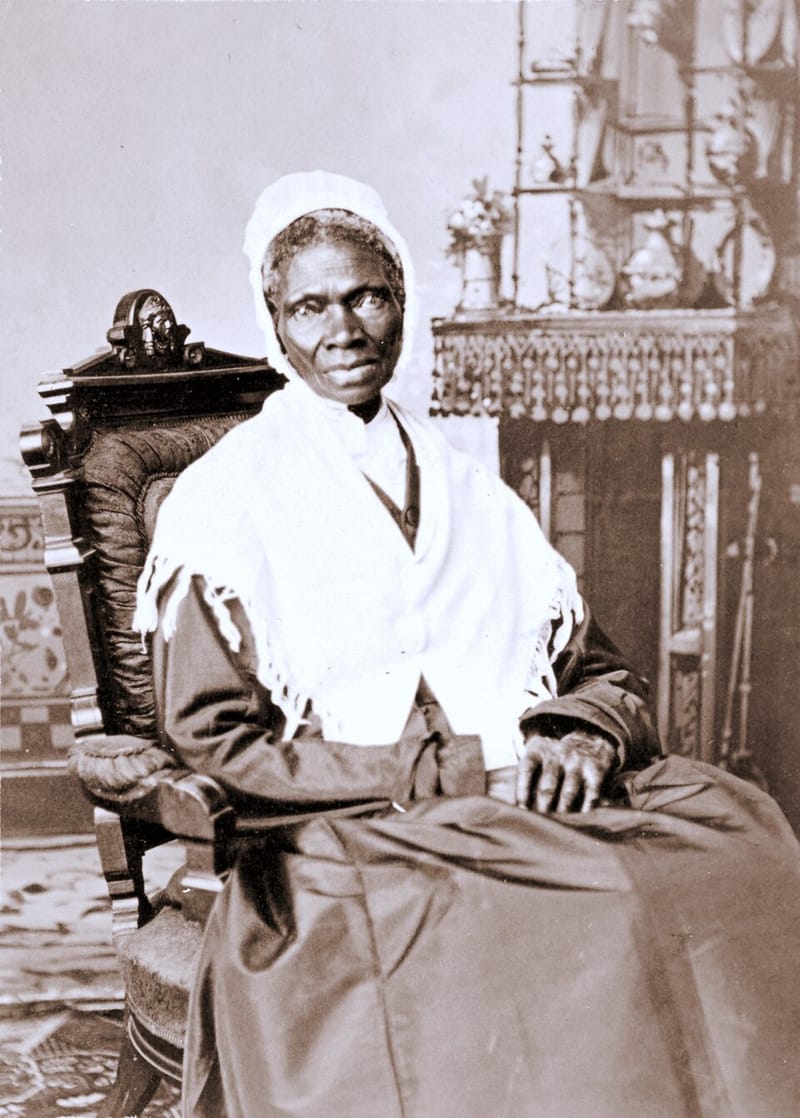
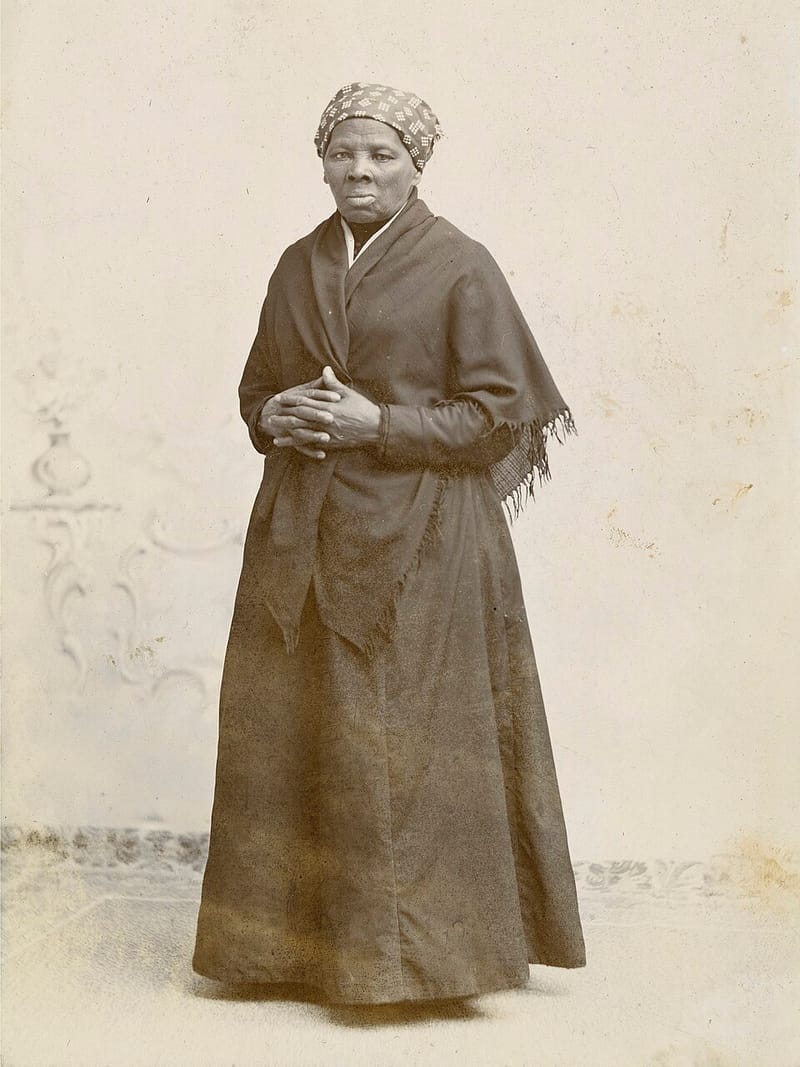
Sojourner Truth was born into slavery in New York as Isabella Baumfree, freed herself in 1826, and became one of the most powerful speakers of the nineteenth century against slavery and for women’s rights. She was the first Black woman to win a lawsuit against a white man — for the return of her son, sold illegally into Alabama. Never formally educated, she dictated a celebrated autobiography and moved audiences with speeches such as the one at Akron in 1851 later known as “Ain’t I a Woman?” In 2009 she became the first Black woman honored with a bust in the U.S. Capitol.
Key facts
- Born
- c. 1797, Ulster County, New York
- Died
- November 26, 1883, Battle Creek, Michigan
- Roles
- Abolitionist and women’s rights lecturer; Preacher; Recruiter for Black Union troops; Freedmen’s relief worker
- Born
- About 1797, enslaved in Ulster County, New York; she spoke only Dutch as a child
- Freedom
- Escaped with her infant daughter in 1826
- Legal victory
- Sued to recover her son Peter, illegally sold to Alabama, and won
- New name
- Took the name Sojourner Truth in 1843
Why it matters
Sojourner Truth made the case, from her own experience, that the struggles against slavery and for women’s rights were one struggle — and that neither could succeed while ignoring Black women.
Early life and context
Isabella Baumfree was born about 1797 in Ulster County, New York, one of perhaps ten to twelve children of enslaved parents, James and Elizabeth; all her siblings were sold away. Her first language was the Dutch of her enslavers. At nine she was sold away from her parents, together with a flock of sheep, for $100; she was sold twice more, and from 1810 was held by John Dumont of West Park, New York. There she endured harassment from Dumont’s wife and rape by Dumont. In 1815 she fell in love with Robert, an enslaved man from a neighboring farm, whose owner beat him to death for meeting her. She had five children — James, who died young; Diana, born of the rape; and Peter, Elizabeth, and Sophia, with an older enslaved man named Thomas — and later recalled struggling to feed her own babies because she was made to nurse her enslaver’s white children.
New York’s gradual emancipation law promised freedom on July 4, 1827, to those born before 1799. Dumont promised to free her before that date, then reneged. So in 1826 she walked away with her infant daughter Sophia, leaving her older children behind, and found refuge with Isaac and Maria Van Wagenen in New Paltz, who paid Dumont $20 for her labor until emancipation day.
Major actions and achievements
When Dumont illegally sold her five-year-old son Peter to an enslaver in Alabama, she took the case to court and, after a long fight, won his return in 1828 — becoming, the National Women’s History Museum notes, the first Black woman to sue a white man and win. A religious awakening followed. She moved to New York City and worked as a housekeeper, and in 1843, feeling called by God to “testify the hope that was in her,” took the name Sojourner Truth and set out to preach across the countryside. At the Northampton Association, a utopian abolitionist community in Massachusetts, she met William Lloyd Garrison and Frederick Douglass.
In 1850 Garrison published The Narrative of Sojourner Truth, which she had dictated to Olive Gilbert; she paid for her house in part by selling photographs of herself captioned “I sell the shadow to support the substance.” She spoke at the first National Women’s Rights Convention in Worcester in 1850 and, in May 1851, at the Ohio Women’s Rights Convention in Akron. During the Civil War she recruited Black men for the Union Army — her grandson served in the 54th Massachusetts — and in 1864 she worked for the National Freedmen’s Relief Association in Washington, met President Lincoln, and rode the city’s streetcars to challenge their segregation. After the war she lobbied for federal land grants for freed people and met President Grant.
Beliefs and ideas
A devout Christian who first learned Bible stories by ear, Truth tied her abolitionism to her faith and to a demand for equality that included women — and Black women in particular. Her speeches exposed how ideals of womanhood excluded Black women and the double burden of race and sex they bore. She also campaigned for prison reform and against capital punishment, and she supported women’s right to vote; in 1872 she went to the polls in Battle Creek and was turned away.
Controversies, limits, and criticism
Truth’s most famous words are also the hardest to pin down. She spoke without notes at Akron, and the first full account, published within a month, does not contain the phrase “Ain’t I a Woman?” That version appeared twelve years later, written by the suffragist Frances Dana Gage, who put a stereotyped Southern dialect into the mouth of a woman who had grown up speaking Dutch in New York. Gage’s version, reprinted for decades, is the one most people know. Earlier, while working in New York City, Truth had been falsely accused of poisoning and robbing an employer and was acquitted.
Legacy
Truth spent her last decades in Battle Creek, Michigan, where she died on November 26, 1883, at about eighty-six. She is remembered in murals and statues, in the name of NASA’s 1997 Mars rover Sojourner, and, since 2009, in a bust in the U.S. Capitol — the first honoring a Black woman there. Her life story, from the auction block to the lecture platform, made her a lasting symbol of the joined struggles for racial and gender equality.
Study this entry
Check your understanding
Try answering in your own words, then open the answer.
1.What shaped Sojourner Truth early in life?Show answerHide
Isabella Baumfree was born about 1797 in Ulster County, New York, one of perhaps ten to twelve children of enslaved parents, James and Elizabeth; all her siblings were sold away. Her first language was the Dutch of her enslavers.From “Early life and context” above.
2.What were Sojourner Truth’s major achievements?Show answerHide
When Dumont illegally sold her five-year-old son Peter to an enslaver in Alabama, she took the case to court and, after a long fight, won his return in 1828 — becoming, the National Women’s History Museum notes, the first Black woman to sue a white man and win. A religious awakening followed.From “Major actions and achievements” above.
3.What criticism or controversy surrounds Sojourner Truth?Show answerHide
Truth’s most famous words are also the hardest to pin down. She spoke without notes at Akron, and the first full account, published within a month, does not contain the phrase “Ain’t I a Woman?”From “Controversies, limits, and criticism” above.
4.How is Sojourner Truth remembered?Show answerHide
Truth spent her last decades in Battle Creek, Michigan, where she died on November 26, 1883, at about eighty-six. She is remembered in murals and statues, in the name of NASA’s 1997 Mars rover Sojourner, and, since 2009, in a bust in the U.S. Capitol — the first honoring a Black woman there.From “Legacy” above.
Turn this entry into 10 flashcards (key facts, dates, and why it matters) and review them in Learn.
Related History
How this connects to the rest of the atlas.
People
Movements

Sources
- 1.Sojourner Truth
National Women’s History Museum · Institutional · cited for life, escape, lawsuit, name, Akron speech, Civil War, death
- 2.Sojourner Truth
National Park Service · Institutional · cited for versions of the Akron speech; life
Image credits
- Sojourner truth c1870, Randall Studio, circa 1870. Via Wikimedia Commons · Public domain · Source
Written for American History Atlas from the sources above. See how entries are researched.
Atlas by Alexander. More on Telegram.