PersonCivil Rights and Social Transformation
Malcolm X
Black nationalist leader and critic of nonviolence
1925–1965
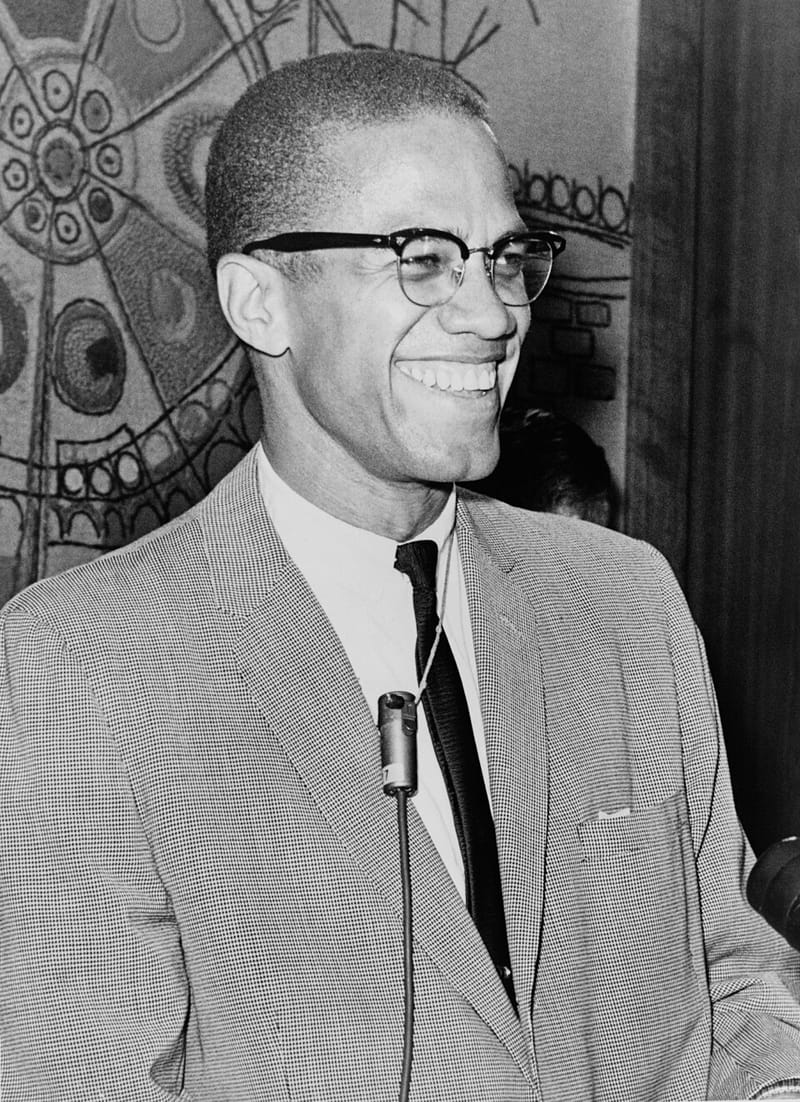
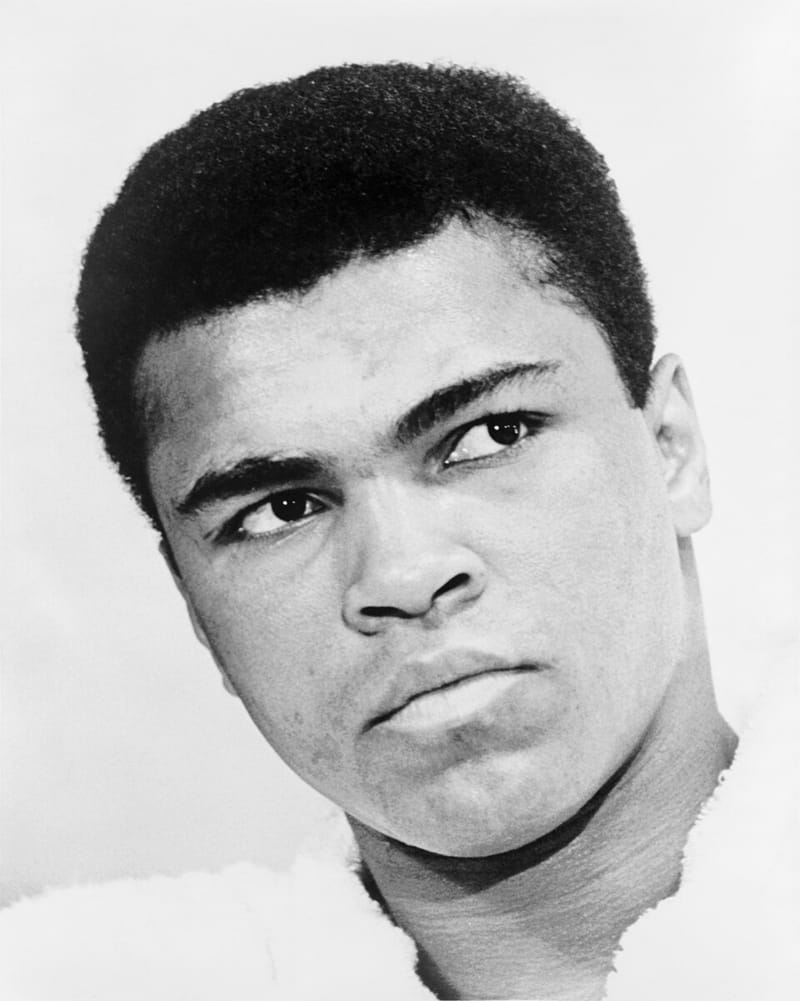
Malcolm X was the most visible voice of Black nationalism in the 1960s. Born Malcolm Little, he rose from a shattered childhood and a prison cell to become the national spokesman of the Nation of Islam, denouncing white racism and rejecting Martin Luther King Jr.’s nonviolence; he urged Black Americans to seek freedom “by any means necessary.” In 1964 he broke with the Nation, made the pilgrimage to Mecca, and began building bridges to the civil rights movement. He was assassinated in February 1965; his ideas shaped the Black Power movement.
Key facts
- Born
- May 19, 1925, Omaha, Nebraska
- Died
- February 21, 1965, New York City
- Roles
- Minister and national spokesman, Nation of Islam; Founder, Organization of Afro-American Unity (1964)
- Born
- May 19, 1925, Omaha, Nebraska, as Malcolm Little
- Nation of Islam
- Joined in prison; minister after his 1952 release; national spokesman by the late 1950s
- Break
- Left the Nation of Islam in spring 1964; pilgrimage to Mecca
- Met King
- Once, at the U.S. Capitol, March 1964
- Assassinated
- February 21, 1965
Why it matters
Malcolm X gave voice to Black anger and pride and offered a radical alternative to King’s philosophy, and his influence grew after his death.
Early life and context
Malcolm Little was born on May 19, 1925, in Omaha, Nebraska. His parents were active in Marcus Garvey’s movement — his father led a chapter of the Universal Negro Improvement Association — and his father’s activism drew threats from a white supremacist group, the Black Legion. In 1929 the family’s home in Lansing, Michigan, was burned, and two years later his father’s body was found on the town’s trolley tracks; police called both accidents, but the family believed the Black Legion responsible. “Some kind of psychological deterioration hit our family circle,” Malcolm recalled. His mother was later committed to a mental institution, and the children were split among foster homes and reform schools.
As a young man in Boston, Malcolm was arrested for burglary in 1946 and sentenced to ten years in prison. There he educated himself, and through his brother Reginald learned the teachings of Elijah Muhammad’s Nation of Islam, which held that white society worked to keep Black people from power. Paroled in 1952 after seven years, he took the name “X” in place of “Little,” which he considered a slave name.
Major actions and achievements
Brilliant and charismatic, Malcolm X became a minister and national spokesman of the Nation of Islam, founding mosques in cities such as Detroit and Harlem and using newspaper columns, radio, and television to spread its message. The organization’s membership grew from about 500 in 1952 to some 30,000 by 1963, largely credited to him. A 1959 television documentary, The Hate That Hate Produced, made him famous — so famous that his celebrity began to eclipse that of Elijah Muhammad. He married Betty Shabazz in 1958; they had four daughters.
In 1963 he learned that Elijah Muhammad had secretly fathered children with several women in the Nation, and his faith in his mentor collapsed. After he said that President Kennedy “never foresaw that the chickens would come home to roost so soon,” Muhammad silenced him for ninety days, and in March 1964 Malcolm left the Nation. That year his pilgrimage to Mecca transformed him: sharing his beliefs with people of many cultures, he came home saying he had met blond, blue-eyed men he could call his brothers. He founded Muslim Mosque, Inc., and the Organization of African American Unity, reached out to activists of the Student Nonviolent Coordinating Committee, and in early 1965 visited Selma, telling Coretta Scott King that he hoped to make her husband’s work easier: “If the white people realize what the alternative is, perhaps they will be more willing to hear Dr. King.”
Beliefs and ideas
In his Nation of Islam years Malcolm X preached Black pride, self-reliance, racial separation, and self-defense: “I don’t call it violence when it’s self-defense,” he said, “I call it intelligence.” He mocked a revolution built on loving one’s enemy — “That’s no revolution.” After Mecca he returned with a new outlook on integration and a message for all races, while still insisting that Black Americans must fight for their freedom rather than wait for it: “We want freedom now, but we’re not going to get it saying ‘We Shall Overcome.’ We’ve got to fight to overcome.”
Controversies, limits, and criticism
Malcolm X’s attacks on King and on integration, and his advocacy of separatism, made him one of the most polarizing figures of the era; King called his speeches a “great disservice” and rejected his overtures, and the two men met only once, briefly, in a Capitol hallway in March 1964. His remark about Kennedy’s death drew sharp criticism. The FBI infiltrated the Nation of Islam and watched him closely, and after his break with Elijah Muhammad informants warned that he had been marked for death.
Legacy
On February 14, 1965, his family’s home in East Elmhurst, New York, was firebombed. A week later, on February 21, three gunmen shot him at a speaking engagement at Manhattan’s Audubon Ballroom; he was thirty-nine. Three members of the Nation of Islam were convicted, but in 2021 the Manhattan district attorney moved to vacate the convictions of two of them, finding that prosecutors, the FBI, and the police had withheld key evidence. King called the murder a “great tragedy” and wrote that Malcolm had “the great ability to put his finger on the existence and root of the problem.” Many activists later embraced his message as the Black Power movement grew.
Study this entry
Check your understanding
Try answering in your own words, then open the answer.
1.What shaped Malcolm X early in life?Show answerHide
Malcolm Little was born on May 19, 1925, in Omaha, Nebraska. His parents were active in Marcus Garvey’s movement — his father led a chapter of the Universal Negro Improvement Association — and his father’s activism drew threats from a white supremacist group, the Black Legion.From “Early life and context” above.
2.What were Malcolm X’s major achievements?Show answerHide
Brilliant and charismatic, Malcolm X became a minister and national spokesman of the Nation of Islam, founding mosques in cities such as Detroit and Harlem and using newspaper columns, radio, and television to spread its message.From “Major actions and achievements” above.
3.What criticism or controversy surrounds Malcolm X?Show answerHide
Malcolm X’s attacks on King and on integration, and his advocacy of separatism, made him one of the most polarizing figures of the era; King called his speeches a “great disservice” and rejected his overtures, and the two men met only once, briefly, in a Capitol hallway in March 1964.From “Controversies, limits, and criticism” above.
4.How is Malcolm X remembered?Show answerHide
On February 14, 1965, his family’s home in East Elmhurst, New York, was firebombed. A week later, on February 21, three gunmen shot him at a speaking engagement at Manhattan’s Audubon Ballroom; he was thirty-nine.From “Legacy” above.
Turn this entry into 10 flashcards (key facts, dates, and why it matters) and review them in Learn.
Related History
How this connects to the rest of the atlas.
Events
People

Sources
- 1.Malcolm X
The Martin Luther King, Jr. Research and Education Institute, Stanford University · Scholarly · cited for life, Nation of Islam, relationship with King, assassination
- 2.March on Washington for Jobs and Freedom
The Martin Luther King, Jr. Research and Education Institute, Stanford University · Scholarly · cited for goals, organizers, speakers, attendance
- 3.The American Yawp, “The Sixties”
The American Yawp (eds. Joseph Locke and Ben Wright; Stanford University Press) · Scholarly · cited for civil rights, Great Society, Vietnam, social movements
- 4.Biography
The Official Website of Malcolm X (Estate of Malcolm X) · Reference · cited for family, prison, Nation of Islam career, break with Elijah Muhammad, Mecca, assassination
- 5.NYC district attorney moves to clear names of 2 men in Malcolm X’s 1965 assassination
ABC7 News (Associated Press) · Reference · cited for 2021 move to vacate two convictions
Image credits
- Malcolm X NYWTS 2a, Ed Ford, World Telegram staff photographer, 1964-03-12. Via Wikimedia Commons · Public domain · Source
Written for American History Atlas from the sources above. See how entries are researched.
Atlas by Alexander. More on Telegram.