EventCivil Rights and Social Transformation
The Cuban Missile Crisis
The October 1962 showdown in which the superpowers came closest to nuclear war
October 14 – November 20, 1962Cuba, Washington, and Moscow
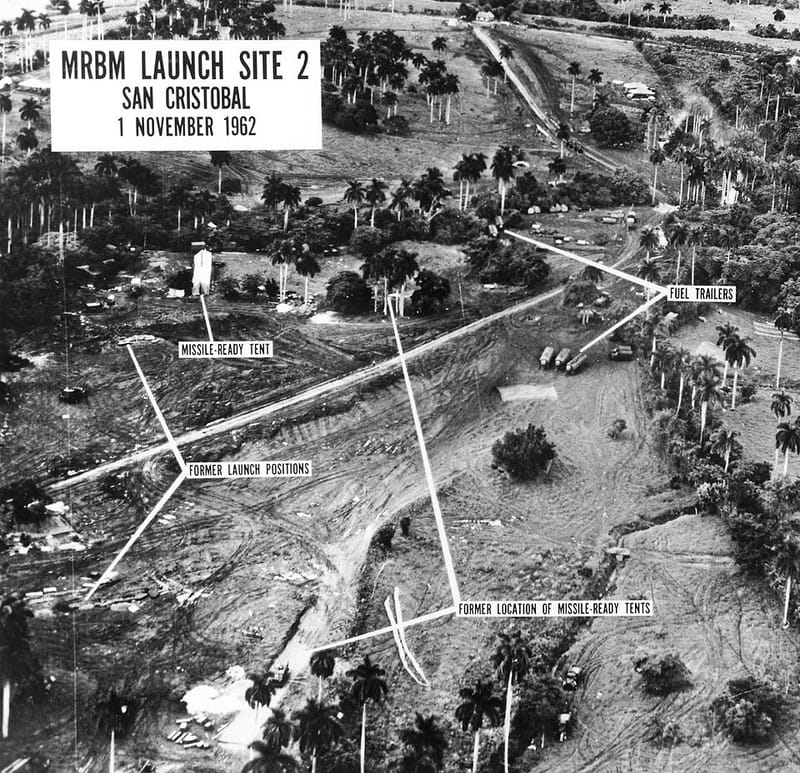
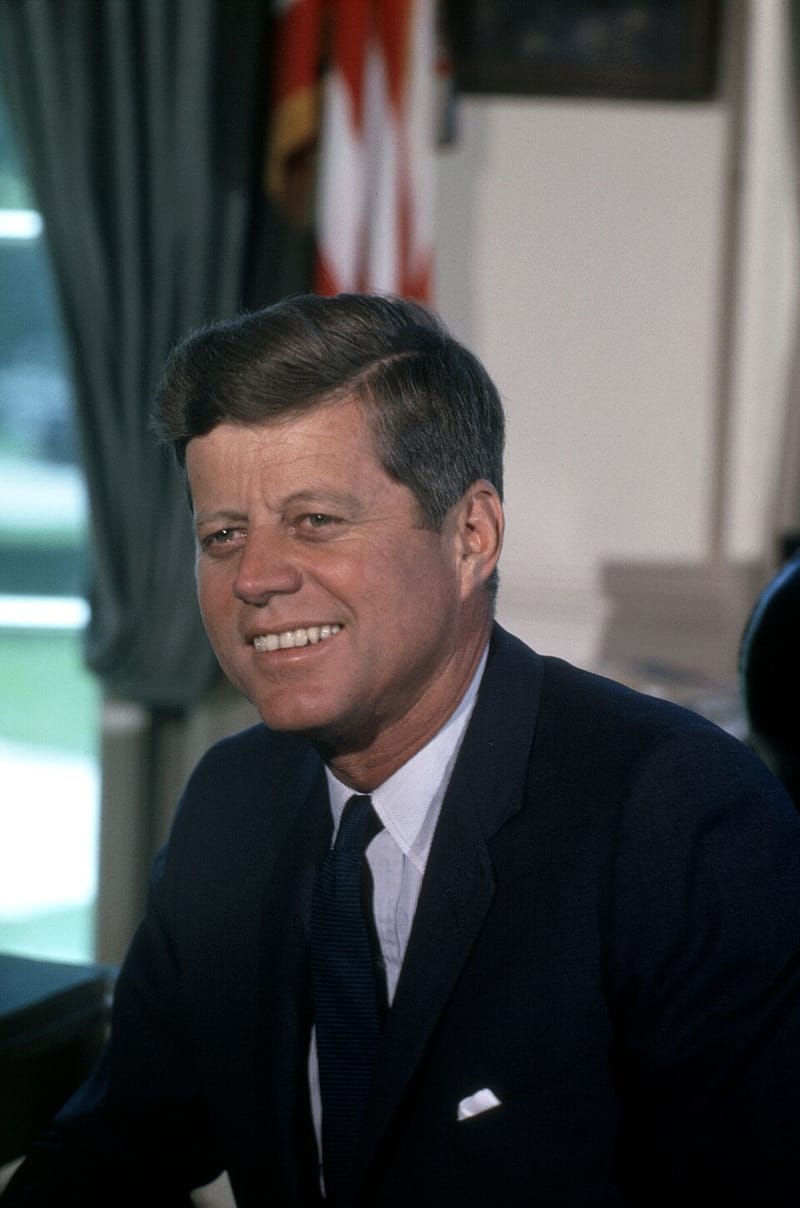
In October 1962 an American U-2 spy plane photographed Soviet nuclear missile sites under construction in Cuba. In the days that followed, President John F. Kennedy and Soviet leader Nikita Khrushchev faced each other in the most dangerous confrontation of the Cold War, the moment when the two superpowers came closest to nuclear conflict. Kennedy imposed a naval “quarantine” of the island; Khrushchev finally agreed to remove the missiles in exchange for an American pledge not to invade Cuba — and a secret promise to pull U.S. missiles out of Turkey.
Key facts
- Date
- October 14 – November 20, 1962
- Location
- Cuba, Washington, and Moscow
- Discovery
- October 14, 1962: a U-2 photographs missile sites under construction in Cuba
- Quarantine
- Announced on national television on October 22, 1962
- Closest call
- U.S. forces at DEFCON 2 — war involving the Strategic Air Command imminent; a U-2 shot down over Cuba on October 27
- The deal
- Soviet missiles removed; U.S. pledge not to invade Cuba; secretly, U.S. Jupiter missiles withdrawn from Turkey (April 1963)
- Aftermath
- A White House–Kremlin “Hotline” and the 1963 treaty limiting nuclear tests
Why it matters
The crisis brought the world to the edge of nuclear war and then pushed both superpowers to step back: they set up a direct line of communication and took the first steps toward controlling the nuclear arms race.
Historical background
After the failed CIA-backed Bay of Pigs invasion of April 1961, the Kennedy administration planned a covert campaign against Fidel Castro’s government, Operation Mongoose. In July 1962 Khrushchev reached a secret agreement with Castro to place Soviet nuclear missiles in Cuba, both to deter another invasion and, as historians at the Miller Center note, to offset the large American lead in nuclear weapons. Along with the missiles came some 42,000 Soviet troops. Construction began in late summer. When American surveillance flights detected a general Soviet arms buildup, Kennedy publicly warned on September 4 against bringing offensive weapons into Cuba.
Causes and contributing factors
The crisis grew out of the arms race and the Cold War rivalry over Cuba. The Soviets wanted to protect Castro’s government, to compete with China for the loyalty of revolutionaries worldwide, and to neutralize the large American advantage in nuclear weapons. The United States — which itself had nuclear missiles in Turkey aimed at the Soviet Union — declared that it would not permit offensive weapons in Cuba. Secrecy and mutual misunderstanding turned the deployment into a showdown.
What happened
On October 14 a U-2 took pictures clearly showing sites for medium- and intermediate-range nuclear missiles; the next day the photographs reached the White House. Kennedy gathered his closest advisers in secret meetings. All the Joint Chiefs of Staff urged an air strike followed by an invasion; others favored stern warnings. Kennedy chose a middle course. On October 22 he announced on national television a naval “quarantine” of Cuba — a word chosen because a “blockade” would legally mean a state of war — and warned that any missile launched from Cuba would be treated as a Soviet attack on the United States, “requiring a full retaliatory response upon the Soviet Union.”
Khrushchev called the quarantine an “act of aggression,” but on October 24 and 25 some Soviet ships turned back from the quarantine line. Meanwhile the missile sites neared readiness, and American forces went to DEFCON 2, meaning war involving the Strategic Air Command was imminent. On October 26 a Soviet agent approached ABC News reporter John Scali with an offer: the missiles would go if the United States promised not to invade. That night came a long, emotional letter from Khrushchev with a similar proposal, urging both sides to “untie that knot.” Hope faded the next day, October 27: a second Soviet message demanded the removal of U.S. Jupiter missiles from Turkey, and an American U-2 was shot down over Cuba. Kennedy chose to answer the first letter and ignore the second, while his brother, Attorney General Robert Kennedy, told the Soviet ambassador privately that the Turkish missiles would be removed soon — but could not be part of any public deal. On October 28 Khrushchev announced that the missiles would be dismantled and taken home.
Immediate consequences
The naval quarantine stayed in place until the Soviets also agreed to remove their IL-28 bombers; the United States ended it on November 20, 1962. The Jupiter missiles left Turkey in April 1963. The outcome strengthened Kennedy’s standing at home and abroad and helped repair the damage done by the Bay of Pigs. Because the two leaders had struggled throughout the crisis to understand each other’s intentions, a direct telephone link between the White House and the Kremlin — the “Hotline” — was set up.
Long-term significance
Having looked into the abyss, both superpowers began to reconsider the nuclear arms race. In 1963 the United States, Britain, and the Soviet Union agreed to ban nuclear tests in the atmosphere, in space, and underwater — an agreement Kennedy considered his greatest accomplishment. The State Department’s historians call the crisis a singular event of the Cold War, shaped as much by miscalculation and miscommunication as by calculation, and played out largely between the White House and the Kremlin themselves.
Key peopleJohn F. Kennedy
OrganizationsExecutive Committee of the National Security Council (ExComm), Joint Chiefs of Staff, Organization of American States
Study this entry
Check your understanding
Try answering in your own words, then open the answer.
1.What led to the Cuban Missile Crisis?Show answerHide
The crisis grew out of the arms race and the Cold War rivalry over Cuba. The Soviets wanted to protect Castro’s government, to compete with China for the loyalty of revolutionaries worldwide, and to neutralize the large American advantage in nuclear weapons.From “Causes and contributing factors” above.
2.What happened?Show answerHide
On October 14 a U-2 took pictures clearly showing sites for medium- and intermediate-range nuclear missiles; the next day the photographs reached the White House. Kennedy gathered his closest advisers in secret meetings.From “What happened” above.
3.What were the immediate consequences?Show answerHide
The naval quarantine stayed in place until the Soviets also agreed to remove their IL-28 bombers; the United States ended it on November 20, 1962. The Jupiter missiles left Turkey in April 1963.From “Immediate consequences” above.
4.Why does it still matter?Show answerHide
Having looked into the abyss, both superpowers began to reconsider the nuclear arms race. In 1963 the United States, Britain, and the Soviet Union agreed to ban nuclear tests in the atmosphere, in space, and underwater — an agreement Kennedy considered his greatest accomplishment.From “Long-term significance” above.
Turn this entry into 11 flashcards (key facts, dates, and why it matters) and review them in Learn.
Related History
How this connects to the rest of the atlas.

Sources
- 1.The Cuban Missile Crisis, October 1962
Office of the Historian, U.S. Department of State · Institutional · cited for timeline, quarantine, letters, secret Turkey deal, Hotline
- 2.John F. Kennedy: Foreign Affairs
Miller Center, University of Virginia (Marc J. Selverstone) · Scholarly · cited for Soviet motives, 42,000 troops, ExComm, end of quarantine, test ban
Image credits
- Missile launch site at San Cristobal, Cuba, see above, 1962-11-01. Via Wikimedia Commons · Public domain · Source
Written for American History Atlas from the sources above. See how entries are researched.
Atlas by Alexander. More on Telegram.