PersonThe Twenties and the Great Depression
Walt Disney
Creator of Mickey Mouse, the animated feature film, and Disneyland
1901–1966
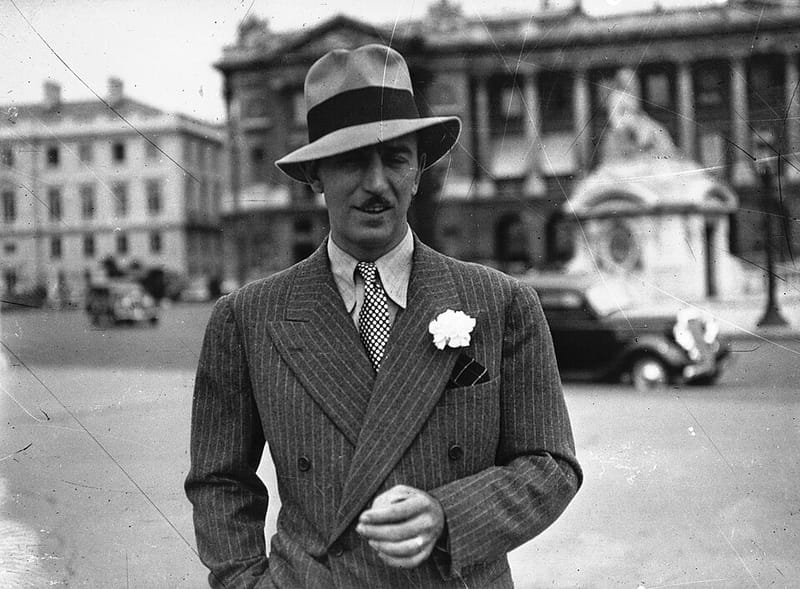
Walt Disney grew up on a Missouri farm and in Kansas City, went bankrupt with his first cartoon studio, and moved to Hollywood with almost nothing. With his brother Roy and the animator Ub Iwerks he created Mickey Mouse, who became a star in Steamboat Willie (1928), a cartoon with synchronized music that became the most successful sound cartoon of its day. His studio made Snow White and the Seven Dwarfs (1937), the first full-length animated feature, and later used television to build a new kind of entertainment empire, crowned by Disneyland in 1955. He won more Academy Awards than anyone in history.
Key facts
- Born
- December 5, 1901, Chicago, Illinois
- Died
- December 15, 1966
- Roles
- Animator and cartoon producer; Co-founder of the Walt Disney Studio; Film and television producer; Creator of Disneyland (1955)
- Mickey Mouse
- Debuted in Steamboat Willie (1928); Disney himself was Mickey’s voice
- First animated feature
- Snow White and the Seven Dwarfs (1937)
- Disneyland
- Opened in 1955 with financial backing from ABC; Main Street, U.S.A. was modeled on Marceline, Missouri
- Record
- Holds the record for most Academy Awards won
- Honors
- Presidential Medal of Freedom from Lyndon Johnson
Why it matters
Disney turned animated cartoons into feature-length art and an industry, and pioneered the merging of film, television, merchandise, and theme parks that defines modern entertainment. His sentimental vision of small-town America shaped how generations of Americans imagined childhood and their own past.
Early life and context
Walter Elias Disney was born on December 5, 1901, in Chicago, the son of Elias and Flora Disney; his brother Roy would later run the business side of his company. In 1906 the family moved to a farm near Marceline, Missouri, where Walt began to draw animals. “More things of importance happened to me in Marceline than have happened since,” he wrote in 1938. When the farm failed in 1911, the family moved to Kansas City, and nine-year-old Walt got up at 3:30 every morning, seven days a week, to deliver newspapers before school; on Saturdays he took classes at the Kansas City Art Institute. In 1918, after lying about his age with his mother’s help, he joined the Red Cross Ambulance Corps and spent nine months in France driving ambulances and supply trucks.
Back in Kansas City he met the artist Ub Iwerks and learned animation making one-minute advertisements to run before films. In 1922 he started his own studio, Laugh-O-Gram Films, and made Alice’s Wonderland, about a real girl entering a cartoon world. He had good ideas but was not a good businessman: his unpaid staff left, and in July 1923 he declared bankruptcy and left for Hollywood.
Major actions and achievements
With $500 borrowed from an uncle, Walt and Roy started the Disney Brothers Studio and sold a series of Alice Comedies. In 1927 they had a hit with Oswald the Lucky Rabbit — until their New York distributor hired away most of the animators and claimed that Universal owned the character. Determined to own his creations from then on, Disney worked with Roy and his one loyal animator, Iwerks, on a new character. Iwerks drew Mickey Mouse, Disney gave him his voice, and Steamboat Willie, with synchronized music, made him famous in 1928.
Through the Depression the studio kept experimenting. Disney bought exclusive rights to the new three-color Technicolor process, won his first Academy Award in 1932 for Flowers and Trees, and in 1937 released Snow White and the Seven Dwarfs, the first full-length animated feature. Pinocchio, Fantasia, Dumbo, and Bambi followed in the early 1940s, and during World War II the studio turned to training and patriotic films. In the 1950s Disney moved into live-action movies and television; his Disneyland show’s Davy Crockett episodes set boys everywhere wearing coonskin caps, and The Mickey Mouse Club began on ABC in 1955. That same year, with ABC’s financial backing, he opened Disneyland, a park where visitors could step into his films instead of just watching them. Its Main Street, U.S.A. was modeled on the downtown of Marceline.
Beliefs and ideas
Disney built his empire on what he considered good, old-fashioned fun and a sentimental picture of small-town America. He had a profound sense of what the public wanted and tapped the moods of each era — the hardships of the Depression, the patriotism of the 1940s, the anticommunism of the 1950s. He insisted on owning everything he created, and he believed great work took a team: “You can dream, create, design, and build the most wonderful place in the world,” he said, “but it requires people to make that dream a reality.”
Controversies, limits, and criticism
In 1941 his animators went on strike for fair wages and job security; the strike ended that fall, but Disney felt personally betrayed. In 1947 he testified before the House Un-American Activities Committee in its investigation of communist influence in Hollywood, hearings that led to a blacklist barring hundreds of film artists from work.
Legacy
In the 1960s Disney’s “Imagineers” developed new technology such as audio-animatronics, and he began buying land for a second park in central Florida, which opened as Walt Disney World in 1971 — after his death. He helped found the California Institute of the Arts, received the Presidential Medal of Freedom from Lyndon Johnson, and died of lung cancer on December 15, 1966. His studio’s hits of the 1960s included One Hundred and One Dalmatians, Mary Poppins, and The Jungle Book. He still holds the record for most Academy Awards won.
Study this entry
Check your understanding
Try answering in your own words, then open the answer.
1.What shaped Walt Disney early in life?Show answerHide
Walter Elias Disney was born on December 5, 1901, in Chicago, the son of Elias and Flora Disney; his brother Roy would later run the business side of his company. In 1906 the family moved to a farm near Marceline, Missouri, where Walt began to draw animals.From “Early life and context” above.
2.What were Walt Disney’s major achievements?Show answerHide
With $500 borrowed from an uncle, Walt and Roy started the Disney Brothers Studio and sold a series of Alice Comedies. In 1927 they had a hit with Oswald the Lucky Rabbit — until their New York distributor hired away most of the animators and claimed that Universal owned the character.From “Major actions and achievements” above.
3.What criticism or controversy surrounds Walt Disney?Show answerHide
In 1941 his animators went on strike for fair wages and job security; the strike ended that fall, but Disney felt personally betrayed.From “Controversies, limits, and criticism” above.
4.How is Walt Disney remembered?Show answerHide
In the 1960s Disney’s “Imagineers” developed new technology such as audio-animatronics, and he began buying land for a second park in central Florida, which opened as Walt Disney World in 1971 — after his death.From “Legacy” above.
Turn this entry into 10 flashcards (key facts, dates, and why it matters) and review them in Learn.
Related History
How this connects to the rest of the atlas.
Events

Sources
- 1.Walt Disney
State Historical Society of Missouri, Historic Missourians (Laura R. Jolley) · Institutional · cited for life, career, films, Disneyland, honors, death
- 2.25. The Cold War
The American Yawp (Stanford University Press) · Scholarly · cited for 1947 HUAC testimony, Hollywood blacklist
- 3.Former Imagineer Tom Morris Explains Just Who Built the Original Disneyland
The Walt Disney Family Museum · Institutional · cited for Disney quotation on building Disneyland
Image credits
- Walt Disney in Paris, Agence de presse Meurisse, around 25 june 1935. Via Wikimedia Commons · Public domain · Source
Written for American History Atlas from the sources above. See how entries are researched.
Atlas by Alexander. More on Telegram.